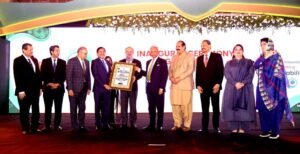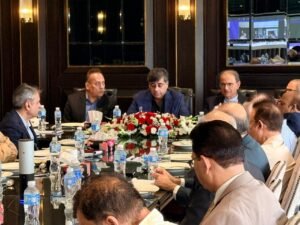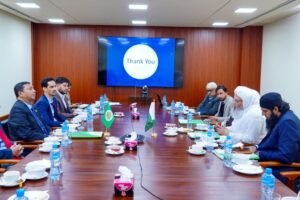
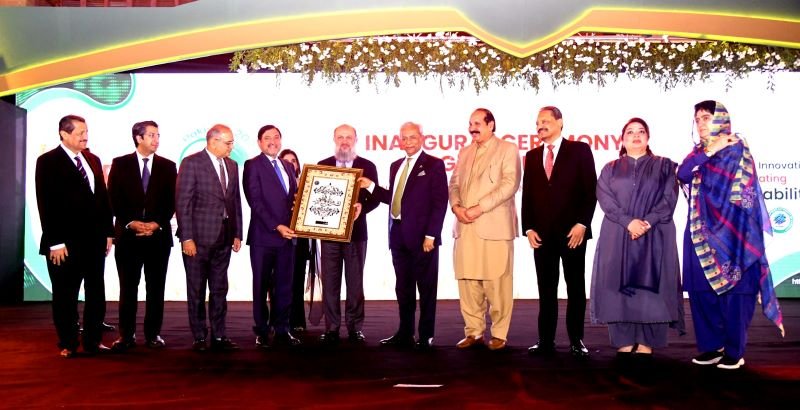
Karachi (GNP): Federal Minister for Commerce Jam Kamal Khan has called for growth in Pakistan’s value-added food exports and invited foreign businesses to invest in cold chains, logistics and food processing. He gave the keynote address as chief guest at the inaugural ceremony and gala dinner of FoodAg Pakistan 2026 at Governor House, Karachi. Sindh Governor Syed Muhammad Nehal Hashmi spoke before him as guest of honour.
Governor Hashmi welcomed the international delegates and praised the Commerce Minister for bringing overseas buyers, business leaders and industry representatives to Karachi, calling it a valuable platform for promoting Pakistan’s trade and business opportunities.
He described Pakistan as an agricultural country with great potential to produce high-quality, healthy and organic food for home and export markets. Pointing to the farming heritage of the Indus Valley, he said the fertile land, natural resources and mineral-rich soil of the Indus basin offer an excellent base for agriculture. He also paid tribute to Pakistani farmers for their hard work and devotion to the land.
Pakistan produces a wide range of farm and food products, he said, including rice, mangoes, citrus, meat and poultry, and there is considerable room to improve quality, value addition and exports. He added that Pakistani biryani, traditional sweets and many varieties of rice are enjoyed around the world. He invited the delegates to sample the country’s cuisine, culture and hospitality, and hoped they would come to regard Karachi as a second home and form lasting business and cultural ties with Pakistan.
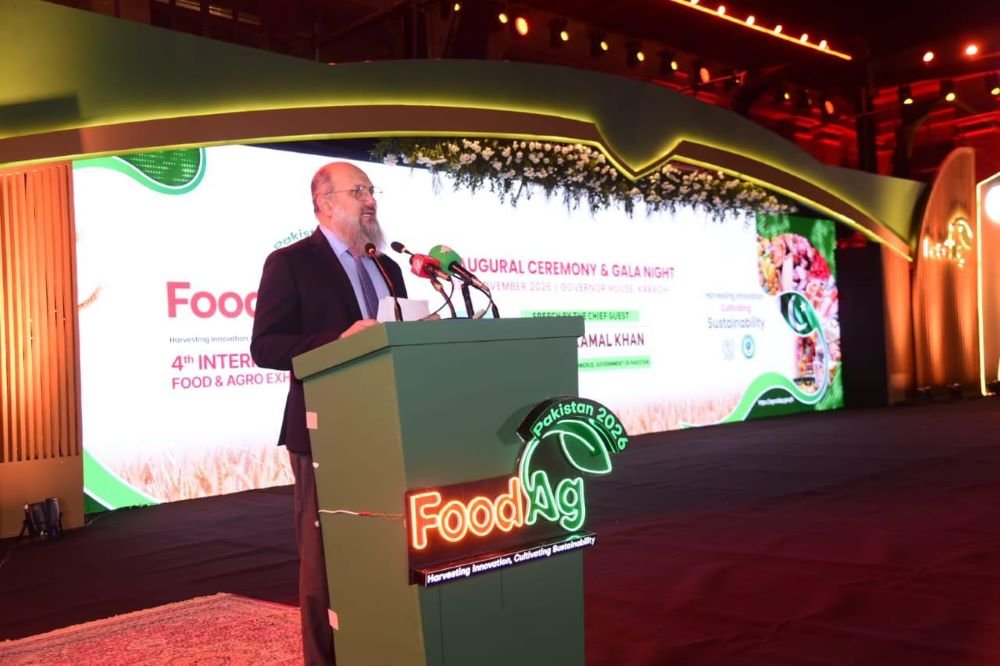
In his keynote, Jam Kamal Khan passed on greetings from Prime Minister Shehbaz Sharif to the delegates. He said the fourth edition of FoodAg was designed to help Pakistani producers add value at home, meet international standards and build lasting relationships with foreign buyers. To win buyers’ trust, he said, Pakistan must deliver consistent quality, credible certification and traceability from farm to fork.
He invited international firms to invest in cold chains, logistics and packaging to cut post-harvest losses, and pointed to openings in dairy and meat processing, edible oils and horticulture. The Special Investment Facilitation Council, he said, stands ready to help investors.
The minister said 68 smaller firms are exhibiting this year and that the government is working with banks to widen access to export finance and credit insurance for new exporters. On the Prime Minister’s instructions, SME Export Promotion Councils are being set up with provincial governments and local chambers, starting with pilots in Karachi, Lahore, Quetta and Peshawar, to bring market information and export support to businesses in smaller districts.
He said the exhibition’s programme covers water-efficient farming, premium basmati rice, meat and dairy exports, aquaculture, olive oil, pink rock salt and halal certification. Talks between visiting regulatory and certification bodies and their Pakistani counterparts on halal certification, quarantine requirements and mutual recognition of standards, he added, could help exporters meet market-entry conditions.
Jam Kamal Khan said the event’s success would be judged by how many business meetings turn into agreements. The Trade Development Authority of Pakistan (TDAP) will follow up with exhibitors and buyers afterwards, he said, while Pakistan’s trade and investment offices abroad will keep linking foreign buyers with Pakistani exporters.
Also read: Pak – China to Estb Maritime Institute in Gwadar
TDAP Chief Executive Faiz Ahmad Chadhar gave the welcome address earlier. Speakers also included Muhammad Raza, Chairman of the Rice Exporters Association of Pakistan; Ali Hassam Asghar, President of the Lahore Chamber of Commerce and Industry; Talat Mahmood, President of the Karachi Chamber of Commerce and Industry; and Atif Ikram Sheikh, President of the Federation of Pakistan Chambers of Commerce and Industry.

Sohail Majeed is a Special Correspondent at The Diplomatic Insight. He has twelve plus years of experience in journalism & reporting. He covers International Affairs, Diplomacy, UN, Sports, Climate Change, Economy, Technology, and Health.