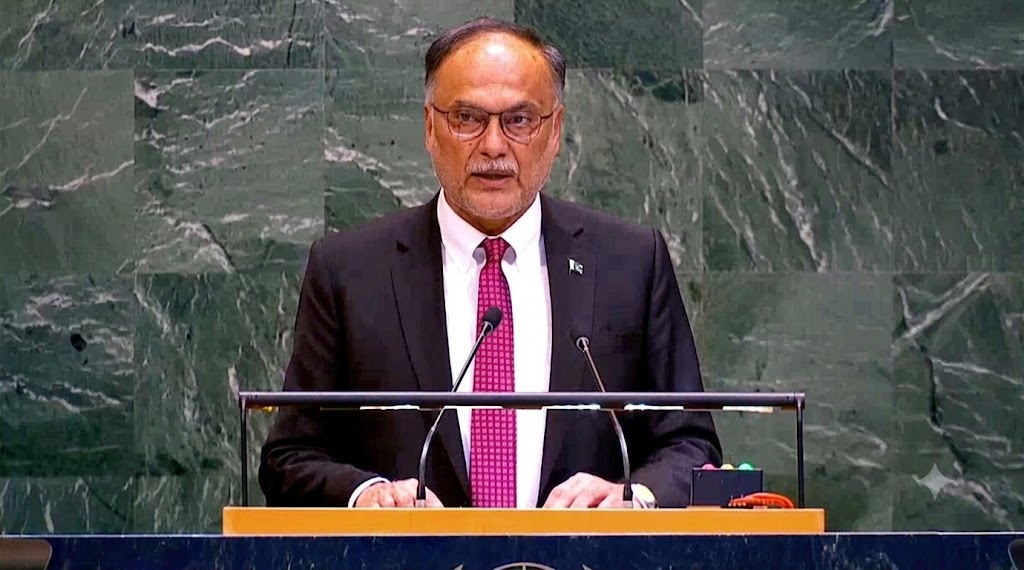
ISLAMABAD (GNP): Federal Minister for Planning, Development and Special Initiatives Prof. Ahsan Iqbal told the United Nations High-Level Political Forum on Sustainable Development that the unilateral suspension of the Indus Waters Treaty threatens the water security of 240 million Pakistanis, in a Ministerial Segment address that also called for sweeping reform of the global financial system to help developing countries meet the 2030 Agenda.
Addressing world leaders and delegates at UN Headquarters in New York, Iqbal said the Indus Waters Treaty had functioned as a model of peaceful cooperation between neighbouring states for more than six decades, and warned that its suspension by one party undermined not just bilateral water security but respect for international treaty obligations more broadly.
Halfway Point, Widening Gap
Iqbal framed his remarks around the halfway mark to the SDG deadline, noting that five years out from 2030, successive economic shocks, climate disasters, geopolitical tensions and mounting debt burdens have slowed progress for developing countries. Despite this, he said, Pakistan remains committed to the 2030 Agenda through Uraan Pakistan, a national transformation strategy aligned with the SDGs that aims to accelerate economic growth, expand productive employment, strengthen climate resilience and energy security, and extend the benefits of development to every segment of society.
He pointed to two years of economic reforms undertaken to restore macroeconomic stability and fiscal sustainability, describing sound policy and strong institutions as prerequisites for sustainable development rather than optional extras.
Iqbal described Pakistan as among the countries that have suffered most acutely from climate change, citing the catastrophic floods of 2022 and a further destructive flood cycle in 2025 that claimed lives, displaced communities, damaged infrastructure and set back years of development gains.
He said Pakistan’s response has focused on restoring ecosystems, strengthening water security, integrating climate resilience into national planning, and accelerating the transition to clean and affordable energy.
Iqbal Call For Financial Reform
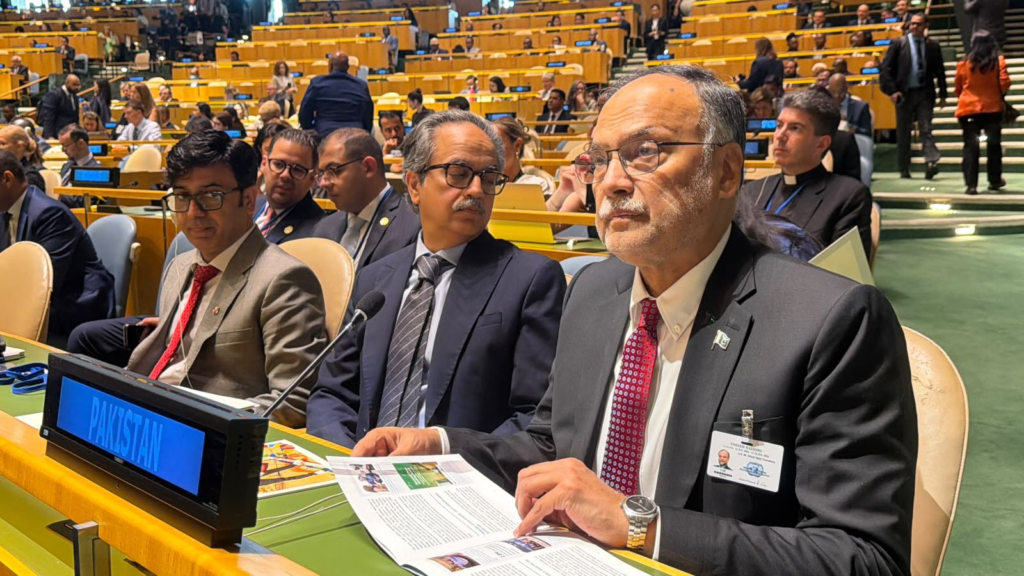
The minister argued that national efforts alone cannot deliver the SDGs, and pressed for the post-World War II international financial architecture to be updated for present-day realities. He said countries on the frontlines of climate change should not have to finance recovery from disasters they did little to cause, and called for greater access to concessional finance, delivery on existing climate finance commitments, instruments such as debt-for-climate swaps, and financing mechanisms that invest in resilience ahead of disasters rather than only responding after them.
“The time for incremental progress has passed. We must act together, decisively and urgently,” Iqbal said.
Also Read: UN Prison Standards Draw Fresh Attention Ahead Of Mandela Day
About the High-Level Political Forum
This year’s HLPF carries the theme “Transformative, equitable, innovative and coordinated actions for the 2030 Agenda for Sustainable Development and its Sustainable Development Goals for a sustainable future for all.”
The Forum’s 2026 session is focused on five Sustainable Development Goals: SDG 6 on water and sanitation, SDG 7 on affordable and clean energy, SDG 9 on resilient infrastructure and industrialization, SDG 11 on sustainable cities, and SDG 17 on strengthening global partnerships for development.
Thirty-six countries, including Brazil, Italy, Saudi Arabia, Switzerland and the United Arab Emirates, are presenting Voluntary National Reviews at this year’s session, alongside ministers, high-level government representatives, UN officials, and participants from civil society and the private sector.