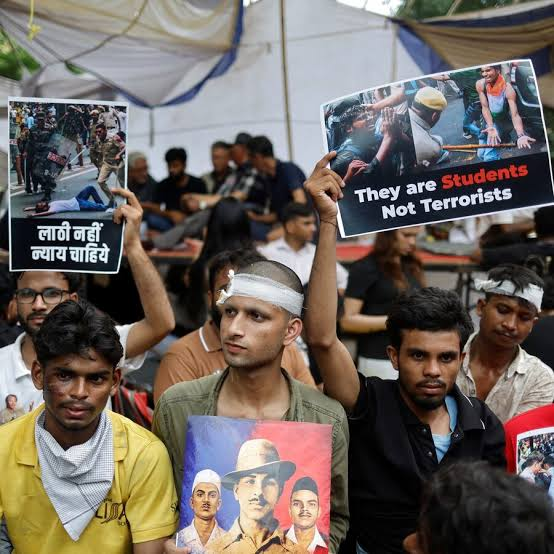
NEW DELHI (GNP): Thousands of demonstrators gathered at Delhi’s Jantar Mantar protest site on Tuesday, a day after violent clashes with police left nearly 180 people injured, as Prime Minister Narendra Modi pledged strict punishment for those responsible for a national medical entrance exam leak that has convulsed India’s youth for months.
More than 5,000 supporters of the youth-led Cockroach Janta Party (CJP) movement assembled at the protest site after Monday’s march toward parliament, which had demanded the resignation of Education Minister Dharmendra Pradhan, ended in clashes with police. Delhi Police said 118 security personnel and 60 protesters were injured in the confrontation, during which officers used batons and tear gas to disperse the crowd. CJP founder Abhijeet Dipke said more than 150 protesters were receiving hospital treatment, though these figures could not be independently verified.
The exam leak, which affected roughly 2 million young people who sat the national medical college entrance test in May, has been linked by local media reports to the suicides of about a dozen students. It has emerged as one of the most significant domestic challenges of Modi’s third term in office.
Speaking to lawmakers of his ruling alliance, Modi said the government had acted immediately upon receiving reports of exam irregularities, according to Parliamentary Affairs Minister Kiren Rijiju, who said 13 people had already been arrested and jailed in connection with the case. Rijiju said Modi called for unity in ensuring “strict steps are taken, those guilty punished, and a foolproof system is created” to protect the future of the country’s youth. Modi also said a re-examination had since been conducted successfully.
Delhi Police described the protesters’ conduct on Monday as having “displayed unruly, aggressive and violent behaviour” and said demonstrators had “deliberately violated the prohibitory orders in force.” Dipke apologised to supporters, particularly women he said had been beaten by male police officers during the clashes.
Opposition Congress party leader Rahul Gandhi and his sister Priyanka Gandhi Vadra staged a separate protest outside Modi’s residence on Tuesday alongside party members, before being detained by police. Gandhi wrote on social media platform X that the protest was intended to seek accountability from Modi for what he described as “brutalities against young students” during Monday’s clashes. Samajwadi Party chief Akhilesh Yadav was also detained during the demonstration outside the prime minister’s residence.
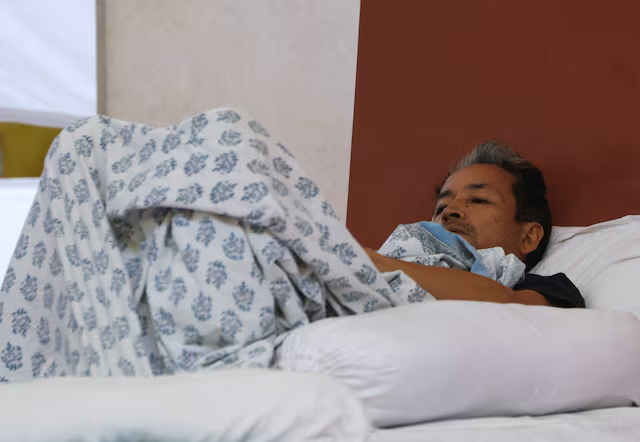
In a separate development, the Delhi High Court on Tuesday permitted activist Sonam Wangchuk to be moved from a government hospital to a private facility, following a petition from his wife alleging he was being held in “illegal detention.” Wangchuk, 59, had been on hunger strike since June 28 in solidarity with the protest movement before being taken to hospital by police on Saturday, a move authorities said was carried out under a prior court order to monitor his health.
Also Read: Thousands March Toward Indian Parliament in Delhi Education Protest
The CJP movement said it would continue its campaign against the government but would not attempt another march on parliament, citing fears that supporters would again face police action. The movement’s core demands include Wangchuk’s release, Pradhan’s resignation, the release of detained protestors by Delhi Police, and compensation of 10 million rupees ($104,000) each for the families of students who died by suicide following the leak. Health Minister J.P. Nadda has sought time to discuss the demands within the government after meeting CJP representatives on Monday.
The scale and persistence of the protests suggest the exam-leak controversy has evolved beyond a single administrative failure into a broader referendum on governance and accountability among India’s youth, a demographic increasingly vocal about employment prospects and institutional trust. Modi’s public remarks, delivered indirectly through a cabinet minister rather than in a direct address, may reflect an attempt to acknowledge public anger without elevating the issue to a matter requiring his personal, sustained engagement.
The involvement of opposition figures such as Rahul Gandhi and regional leaders like Akhilesh Yadav also signals that the movement, which began as youth-led and largely apolitical, is increasingly being drawn into India’s broader political contest ahead of future electoral battles. The court’s intervention on Wangchuk’s hospitalization, while addressing one demand, leaves the more politically sensitive questions, Pradhan’s resignation and compensation for victims’ families, unresolved, suggesting the standoff between the government and the movement is likely to continue.

Managing Editor at Global News Pakistan (GNP), with a Bachelor's degree in International Relations from Riphah International University, graduated with a Gold Medal. Reach out at sabahtareengnp@gmail.com