Central Asian and South Asian ancestors, especially in Tajikistan, Pakistan, and India, have had widespread crafts and talents that have fascinated the world with such art since ancient times. It should be noted here that architecture was one of the arts and crafts of the people, their traces can be seen in countries around the world, including India and Pakistan.
Handmade architecture is one of the arts through which culture, politics, and folk arts and crafts are transparently and openly reflected. World culture and civilization are evaluated and valued based on architectural achievements.
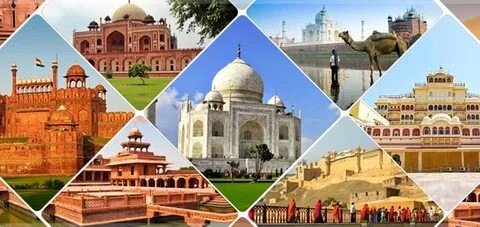
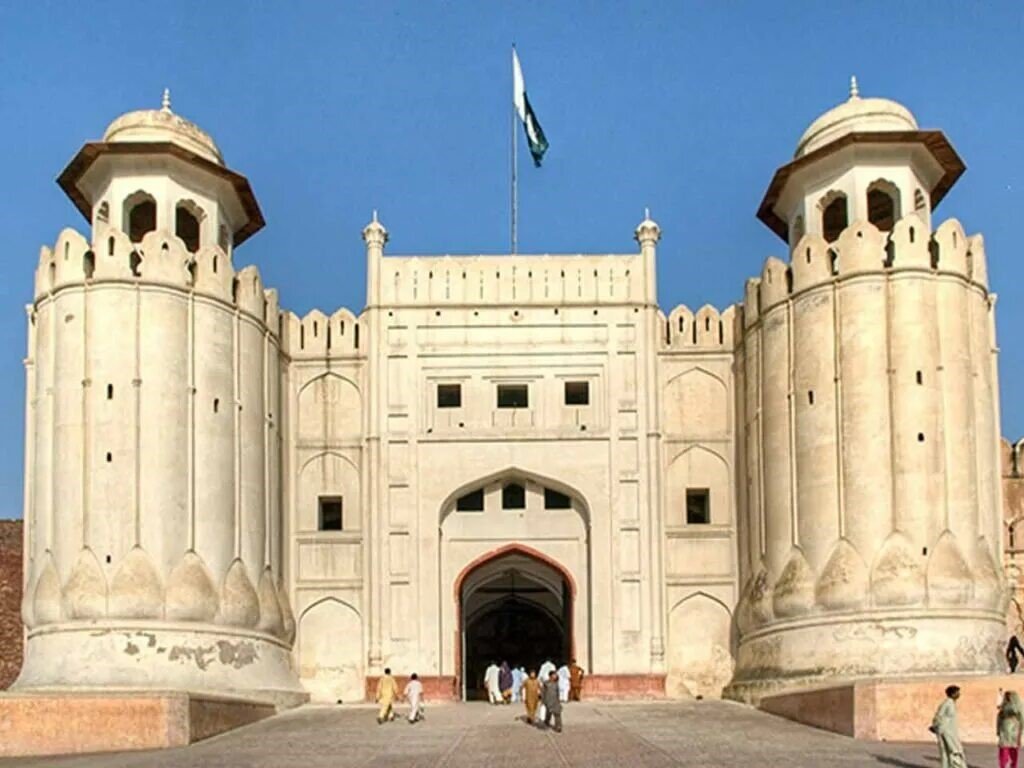
Presently the artistically works of Taj Mahal in India, Shahi mosque, Fort in Lahore of Pakistan, and other parts of South Asia indicate that our ancestors beautified and decorated the world with such art and craft.
Among the aforementioned places, the Taj Mahal is recognized for its grandeur of beauty, artistic sophistication, and expensive decorations, perfect construction, and charming proportions of the design, and is considered one of the wonders of the world.
The President of the Republic of Tajikistan, His Excellency Emomali Rahmon «Year of Tourism and Folk Crafts Development” declared so that the civilized and cultured people can present their skills and talents and their ancestors to the world.
It is worth noting that these places are not only the achievements and discoveries of Subcontinent craftsmen, but also the embodiment of the rich tradition and subtleties of Central Asian architectural art, as they were designed and built with the collaboration of architects and craftsmen from these regions. The poet and philosopher of the East, Allama Muhammad Iqbal, was impressed by skills and expertises of Central Asia scholars, scientists and skilled artists praising them in his poems.
It is a matter of pride that Tajikistan is located in a region that is truly considered a paradise, peaceful and legendary land, and the announcement of the Year of Tourism and Folk Crafts Development is a reflection of the progress of relations in this direction, the presentation of our unique national history, culture and traditions.
To discuss and rediscover the architectural art and works of our ancestors, we wanted to turn to Subcontinent regions especially Pakistan and India states. It should be noted that Pakistan and India gained independence on August 14 and 15, 1947 accordingly and become regional players progressing in economy, defense and political shares globally.
The diplomatic relations between the Republic of Tajikistan and states of Pakistan and India were established in the beginning Independence times celebrating their anniversary in 2026. Both states cooperate friendly with Tajikistan signed several agreements and legal documents accordingly.
In addition, the Tajik-Pakistan and Tajik-India Friendship Societies are active promoting public diplomacy for the strengthening literature and culture, socio-politics and people travels between countries.
In the past period the relationship between countries thru the correspondence, writings and literary relations of Tajikistan poets and writers such as Mirza Tursunzoda(1911-1977), Sotim Ulughzoda (1911-1997), Mirsaid Mirshakar (1912-1993) with the writers of South Asian region, especially Pakistan and India as Muhammad Iqbal (1877-1938), Faiz Ahmad Faiz (1911-1984), as luminaries of the path of science and literature.
The Urdu and Hindi languages department established at National University of Tajikistan promoting culture, languages and science accordingly. For strengthening and scientific and literary exchange, the National Academy of Sciences of the Republic of Tajikistan allocated distinct department to the countries of South Asia at the Institute for the Study of Issues of Eurasian States indicating the importance of strategic cooperation of the region’s connectivity.
The countries’ regional cooperation opens more opportunities for close coordination. This article promotes understanding and importance of mutual cooperation, especially cultural cooperation between Tajikistan with Pakistan and India states accordingly.
Modern Tajikistan and Central Asia regions are place of an ancient civilization, and the role of their museums considered very important. In fact, museums are like the memory of mankind, the researches and discoveries of scientists are preserved in them, and they help people to use them in the development of science and literature preserving and promoting historical monuments and artifacts of material and social cultures consequently.
Central Asian is the region of traditions and cultures having a rich history. For two millennia, the history closely intertwined with the formation and development of Zoroastrian, Buddhist, Hellenistic and Islamic cultures. Numerous archaeological finds presented in the National Museum of Antiquities of Tajikistan are evidence of this.
The historical places especially Panjakent city, preserved cultures, museums exposition consist of thousand materials collecting of archaeological expeditions of modern Tajikistan. The collection contains about 5 thousand unique samples of ceramics, stone wares, metal and glass, jewelry, household items, sculpture and painting. There a Golden room houses are the rarities of the gold and numismatic collections, a collection that counts several tens of thousands of coins of gold, silver, bronze and copper coins.
The wall paintings from ancient Penjikent (5th – 7th cc.), presented in the Museum are included in the Golden Fund of world culture. The image of the harpist, which has been exhibited in the most famous museums over the world, is the diamond of this collection.
Also Read: ASEAN Committee Celebrates 59th ASEAN Day, Showcasing Unity and Cultural Richness
No less interesting are the wall paintings of the palaces, temples and monasteries from other regions of Tajikistan: Bunjikat, Ajinattepa, Kala-i Kafirnigan and Khulbuk. Visitors are amazed by the virtuosity of the carving of the tympanum decorated with scenes from the “Shahnameh”, the epic poem of Firdowsi, from the palace of the ruler at early medieval site of Bunjikat (Shahristan district, Sughd region).
It was found in the Buddhist monastery of Ajinateppa, active about 1500 years ago and located near Qurghonteppa in southern Tajikistan functioning.
It is good to mention that there are several centers and institutes as such Sadriddin Aini Literary Museum, the Literary and Memorial Museum of Mirza Tursunzoda keeping rare Persian-Tajik books and manuscripts to be used by the researchers and readers respectively.
All rare books and manuscripts collected by writers, historians and their families. The well-known writer, architect of modern Tajikistan literature, the first president of the Tajikistan Academy of Sciences, Sadriddin Ainy (1878-1954) who had many rare books inhered to his son Kamoliddin Ainy (1928-2010), who was friend of Pakistani scholar and historian and late famous South Asia ancient historic Hasan Dani.
Recently, Pakistani scholars, expert of Persian and Tajik language and literature, Dr. Arif Navshahi, has given his thoughts about the greatness and knowledge of Kamoliddin Aini in his book entitled “From Punjab to Panjrud” (From Punjab to Panjrud) accordingly.
Dr. Arif Navshahi explained in his book that the list of Kamal Aini’s research works is long, and they compiled several ancient Persian texts, including Firdavsi’s “Shahnoma” and the compositions “Nowruz Flower”. He noted that first time he met Kamal Aini at the international Firdavsi conference in Iran during December 1990.
Both scholars exchanged different scientific opinions and Kamal Aini informed him that his parents and the family of were descendants of Mirsaid Ali Hamadoni. Later on Dr.Arif Navshahi’s second meeting with Kamal Aini took place on June 22, 2006 at the Iranian Studies Foundation in Tehran sharing memoirs of Kamal Aini’s visit to Pakistan and acquaintance with the late Ahmed Hasan Doni and Pir Hisomuddin Rashidi.
Consequently both scholars met at Dushanbe in 2009 exchanging their views about people peace prosperity and friendship. At the end of their conversation the son of Sadriddin Aini quoted the poetry of his father as he said :
Tarsam, ki man bimiramu gham bepadar shavad,
Vin tifli nozparvari man dar badar shavad.
I fear that I will die and my soreness will be fatherless,
And my lovely baby will become homeless. (Unofficial translation)
Dr.Arif Navshahi articulated that Kamal Aini asked his father about the kind of soreness made him hopeless. His father replied: “The soreness or grief of the nation”.
With such sweet and memorable memories, the rare and historic meeting of Central Asia and South Asia’s scholars ending their live friendly communication with a couple of poetry pened on his personal writer’s notebook as following:
Didori yori ghoib doni, chi zawq dorad,
Abre ki dar biyobon bar tashnae biborad.
Meaning that:
What is the pleasure of seeing an absent friend?
A cloud that rains on a thirsty person in the desert.
In summary, it can be mentioned that historical places, museums, literatures, cultures and their preservations are like book of memories and symbol of sympathy, harmony and people connectivity and cooperation. Hence it is suggested that these all as amenities items must be preserved.
The releted departments may organize special programs for visitors and enthusiasts, holding events, providing fresh, rare and memorable information, close cooperation with countries sharing useful information.
Consequently, all of human history lovers, especially we ought to protect our history, culture, language, literature and museums where the human ancient times are kept as memorable sources as treasures for the future generations.
In Fulfilling the above recommendations and agreements within the framework of the signed agreements can play a fundamental role in the development and expansion of cooperation in the spheres of economy, culture, tourism, energy, and industrialization of the friendly states.
Mirsaid Rahmonov
Mirsaid Rahmonov is a Senior Researcher in the Department of South East Asia at the Institute of Asia and Europe Studies, Tajikistan, where his work focuses on regional cultural heritage, historical connectivity, and diplomatic relations between Central and South Asia.