Islamabad (GNP): A unanimous ruling by the Court of Arbitration in The Hague has significantly reinforced Pakistan’s legal position on the Indus Waters Treaty (IWT), with legal experts describing it as a turning point in the country’s long-running water dispute with India. The tribunal’s August 31 award found that the 1960 treaty remains fully in force and binding on both countries, dismissing every ground India had cited to justify placing the agreement unilaterally in abeyance.
The ruling matters because it strips away the central argument New Delhi has relied on since April 22, 2025, when it announced the treaty’s suspension following the Pahalgam attack. India has maintained that suspension ever since, but the tribunal has now made clear that the IWT can only be modified or terminated through a fresh treaty concluded jointly by both nations, not through a one-sided declaration.
The court examined a wide range of justifications India put forward, including sovereignty, an alleged Pakistani breach, terrorism, changed circumstances and armed conflict, and concluded that none met the legal threshold required to suspend or terminate the agreement.
Among the arguments rejected, India’s attempt to tie the treaty to terrorism allegations drew particular attention. The tribunal held that even if those allegations were accepted as true, they would not constitute a material breach of the IWT, since the treaty governs the use and management of the Indus river system rather than matters of terrorism or force.
Claims based on demographic shifts, India’s energy needs, advances in dam technology and climate change were also found insufficient to meet the threshold for a fundamental change of circumstances, a finding that legal experts say could carry weight well beyond this specific dispute.
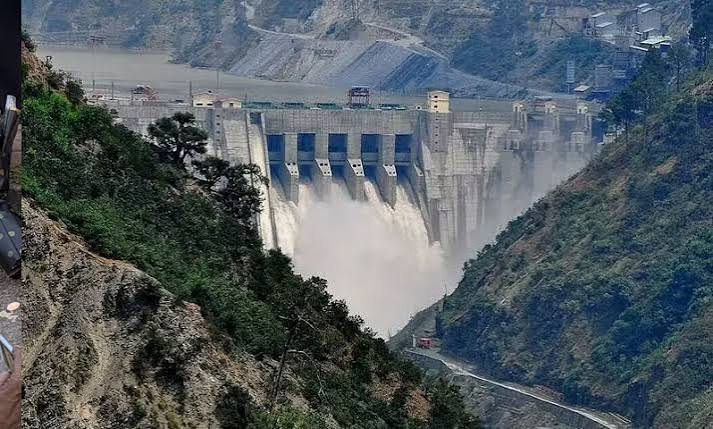
Pakistan also secured a concrete gain on the Ratle hydroelectric project on the Chenab River, where the tribunal granted three interim measures with modifications. India has been barred from concreting specified portions of the Ratle dam wall and power-intake structure beyond prescribed levels while a World Bank-appointed Neutral Expert reviews whether the project’s design complies with treaty requirements.
India must also report any changes to the project’s construction schedule, and the restrictions will stay in place until 90 days after the Neutral Expert delivers a final decision, expected around July 2027. The measure closes off the possibility of India creating a fait accompli through construction before the technical review concludes.
With the legal groundwork now firmly established, attention turns to how Pakistan converts the ruling into practical compliance. Legal experts point to several avenues Islamabad can pursue in parallel: formally calling on India to resume the treaty’s institutional mechanisms, citing the award as authoritative support in the ongoing Neutral Expert proceedings on Ratle and Kishenganga, and building international diplomatic pressure if India continues to resist implementation.
Pakistan’s Foreign Office has previously held that awards issued under the IWT’s dispute-resolution mechanism are final and binding, and that India’s refusal to participate cannot invalidate them on its own.
Also Read: PM Arrives in Kyrgyzstan on Three-Day Visit
The award also strengthens Islamabad’s footing for future disputes over Indian hydropower projects on the western rivers, since Pakistan can now point to a broader tribunal finding that the treaty remains fully operational rather than arguing each project violates the agreement in isolation.
This is expected to matter increasingly as India expands hydropower infrastructure on the Indus, Jhelum and Chenab, rivers the treaty primarily assigns to Pakistan while allowing India limited, conditional uses. At the same time, the ruling has been described as a diplomatic opening as much as a legal one, since it preserves the treaty framework both countries are expected to operate within, giving Islamabad room to press for compliance while keeping channels like the Permanent Indus Commission available for renewed engagement.
The treaty has endured wars and prolonged diplomatic breakdowns since it was signed in 1960, and the Hague ruling has reaffirmed that its legal standing remains intact. Whether that legal continuity translates into renewed cooperation between the two nuclear-armed neighbours is now the central question facing both governments.
Ahmer Bilal Soofi said, “The treaty contains no provision allowing either party to place it unilaterally in abeyance.”
Hamid Khan said, “Article XII requires modification or termination through a jointly ratified treaty, not a one-sided move.”

Managing Editor at Global News Pakistan (GNP), with a Bachelor's degree in International Relations from Riphah International University, graduated with a Gold Medal. Reach out at sabahtareengnp@gmail.com