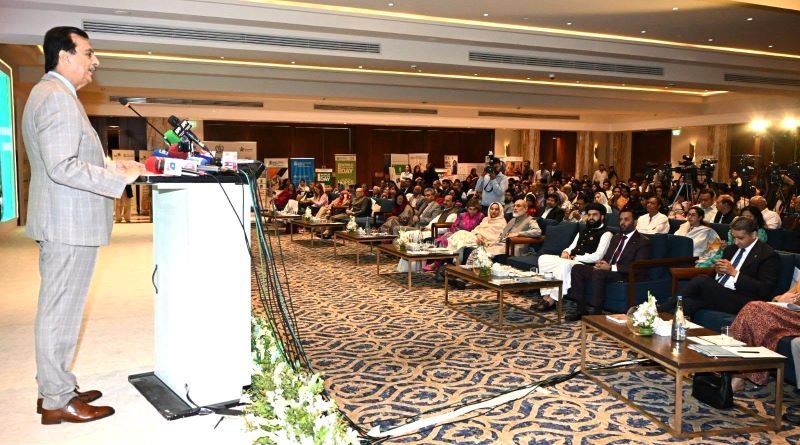
Islamabad (GNP): Senate Chairman Syed Yousaf Raza Gilani has called for a unified national approach to responsible population planning, stressing that Pakistan’s future hinges on empowering its youth through greater investment in education, healthcare, and skills development.
Speaking at Islamabad’s World Population Day 2026 ceremony, Gilani described the country’s growing population as both a challenge and an opportunity, noting that with over 65% of Pakistanis under age 30, the country holds a significant demographic advantage — one that can only be unlocked through sustained investment in human development.
Chairman Gilani emphasized that managing population growth requires coordinated efforts across health, education, employment, and food security sectors, underscoring Parliament’s role in shaping supportive legislation and policy. He commended the health ministry, provincial governments, UNFPA, and development partners for their continued work on the issue.
The commemoration, organized by the Ministry of National Health Services, Regulations and Coordination (MoNHSR&C) alongside the UN Population Fund (UNFPA) and other development partners, was held under this year’s global theme, “Realizing the hopes and aspirations of young people – today and for the future.” The gathering brought together lawmakers, senior officials, religious scholars, diplomats, academics, civil society representatives, youth delegates, and media, reaffirming Pakistan’s commitment to youth investment and voluntary family planning as pillars of sustainable development.
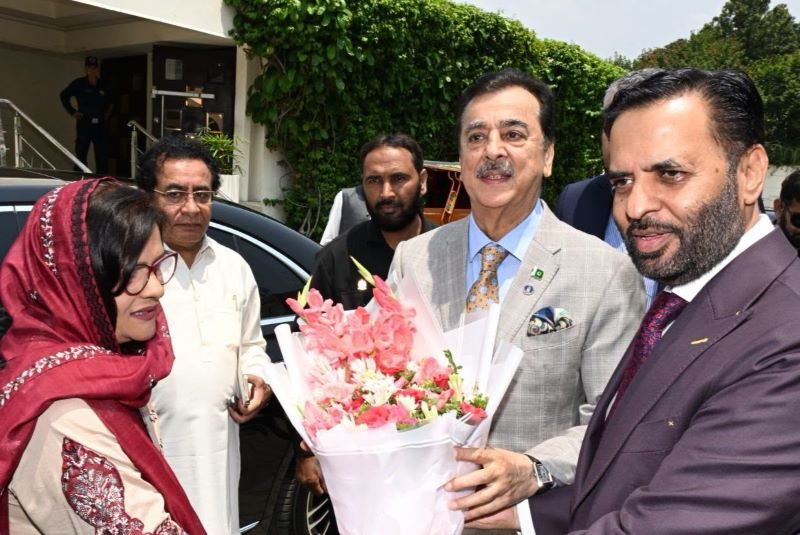
Federal Minister for National Health Services Syed Mustafa Kamal welcomed attendees, including Chairman Senate Gilani, Finance Minister Senator Muhammad Aurangzeb, Senators Saira Afzal Tarar and Samina Mumtaz Zehri, Allama Muhammad Hassan Haseeb-ur-Rehman, and representatives from UNFPA and the UK’s FCDO. He emphasized that addressing Pakistan’s population challenges requires collective leadership and cross-sector collaboration.
Kamal described population stabilization as a matter of national security and economic sustainability, not just public health. He cited Pakistan’s population of roughly 241 million, growing at 2.55% annually, and highlighted the toll of inadequate maternal and child healthcare — noting that around 11,000 mothers die annually from pregnancy-related complications, while approximately 400,000 children die each year from preventable causes.
He pointed to Pakistan’s fertility rate of about 3.6 children per woman, higher than neighboring countries, and called for stronger healthcare access, reproductive health services, and family planning awareness. He also proposed revisiting population-related metrics within the National Finance Commission Award, suggesting performance-based incentives for provinces that make progress on family planning and human development. He welcomed the government’s recent decision to eliminate taxes on contraceptives and menstrual hygiene products as a step toward improving affordability.
Finance Minister Aurangzeb linked population trends to economic planning and fiscal sustainability, noting the direct impact of rapid population growth on public spending and employment. He highlighted the upcoming 10-Year National Population Stabilization Program — a joint initiative between the health and finance ministries — as a key tool for integrating population considerations into national economic strategy.
Senator Samina Mumtaz Zehri stressed the need for sustained political will and inclusive policymaking, particularly around girls’ education, women’s empowerment, and maternal healthcare. MNA Saira Afzal Tarar, coordinator to the Punjab Chief Minister on population, spoke about Parliament’s commitment to maternal health and family planning policy, also referencing Punjab CM Maryam Nawaz’s focus on strengthening primary healthcare and immunization services.
Allama Muhammad Hassan Haseeb-ur-Rehman, representing the religious community, spoke on Islamic teachings regarding the rights and welfare of mothers and children, citing the Quran and Hadith in support of responsible parenthood.
International Partners’ Remarks
UNFPA Pakistan Country Representative Dr. Luay Shabaneh reaffirmed the organization’s partnership with Pakistan on reproductive health, family planning, and youth empowerment, stressing that expanding access to reproductive health services is essential to capturing the country’s demographic dividend and advancing the Sustainable Development Goals.
FCDO Acting Development Director Henrietta Hamilton reiterated the UK’s continued support for Pakistan’s reproductive health and youth engagement initiatives, emphasizing that tackling population challenges requires coordinated action across government, civil society, and development partners.
Documentary and Campaign Briefing
The event featured a documentary examining the effects of rapid population growth on healthcare, education, employment, and climate resilience, while also highlighting the ministry’s recent efforts — including the development of the National Population Stabilization Roadmap 2026–2035 and the Waqfa Social and Behaviour Change Communication Campaign.
Mir Khalil-ur-Rahman Foundation CEO Shahrukh Hassan briefed attendees on the Waqfa campaign, which aims to raise awareness about the impacts of rapid population growth and promote healthy birth spacing through community outreach, media engagement, and collaboration with religious and community leaders.
Also read: Muslim Man Stabbed Multiple Times in Utah in Suspected Hate Crime, Police Say
The event closed with a vote of thanks from the health ministry, reaffirming the government’s commitment to expanding family planning access, empowering women and youth, and building multi-sectoral partnerships for sustainable population growth.

Sohail Majeed is a Special Correspondent at The Diplomatic Insight. He has twelve plus years of experience in journalism & reporting. He covers International Affairs, Diplomacy, UN, Sports, Climate Change, Economy, Technology, and Health.