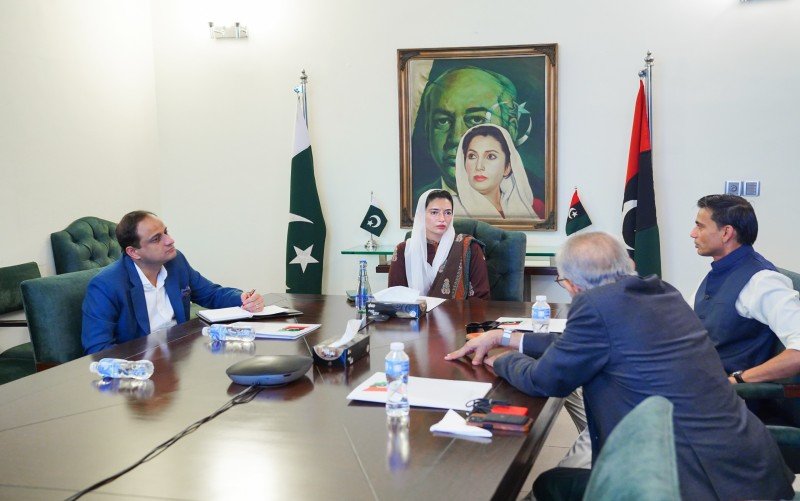
Karachi (GNP): First Lady Bibi Asifa Bhutto Zardari, MNA, received a briefing on plans and implementation steps for the proposed Jinnah Postgraduate Medical Centre (JPMC) Comprehensive Stroke Center. The briefing was delivered by Dr. Syed Fazal Zaidi, a Professor of Neurology at the University of Toledo and internationally recognized specialist in vascular and interventional neurology, who is also the Founding Director of the JPMC Comprehensive Stroke Program, alongside Mushtaq Chapra, Chairman of the Patient Aid Foundation.
Dr. Zaidi outlined the scale of stroke-related illness in Sindh, noting that the province, home to more than 55 million people, sees roughly 500 stroke cases daily, around 50 of which involve severe strokes needing specialized treatment. He stressed the pressing need to build up public healthcare capacity through a Comprehensive Stroke Center able to deliver urgent, potentially life-saving care.
The First Lady learned that although NICVD and SICVD already offer important care for ischemic stroke patients, Sindh still has no facility equipped to handle the full range of stroke care — spanning both ischemic and hemorrhagic strokes, complex neurovascular emergencies, advanced interventional procedures, neurocritical care, and specialized rehabilitation.
According to Dr. Zaidi, the project is being driven by the Pakistan Stroke Initiative, a US-based nonprofit focused on advancing stroke treatment in Pakistan, working alongside the Patient Aid Foundation, JPMC, and the Sindh government. Together, they aim to build Sindh’s first public-sector Comprehensive Stroke Center, which would offer advanced treatment, specialist training, and research capacity, while also anchoring a province-wide tele-stroke network.
Mushtaq Chapra reaffirmed the Patient Aid Foundation’s long-term commitment to supporting Pakistan’s public healthcare system through philanthropic partnerships, and to helping build modern medical infrastructure at JPMC that ensures wider access to advanced care.
The delegation also outlined a broader three-to-five-year vision for creating Pakistan’s first public-sector Comprehensive Stroke Network — training stroke neurologists and neuro-interventional specialists, expanding regional stroke care, strengthening emergency referral systems, standardizing treatment protocols, and linking district hospitals through an integrated tele-stroke network.
The First Lady praised the joint efforts of the Pakistan Stroke Initiative, the Patient Aid Foundation, and JPMC to improve stroke treatment in the country. She recognized the value of expanding specialized stroke services and voiced her full backing for efforts to cut down on preventable deaths and long-term disability caused by stroke, noting that such work would ultimately save lives and improve outcomes for patients.
The meeting closed with all parties reaffirming their commitment to moving forward with the JPMC Comprehensive Stroke Center as a major public healthcare project — one that would work alongside existing services, strengthen stroke care across Sindh, and widen access to specialized treatment for people across the province and the country.
Karachi Mayor Barrister Murtaza Wahab also attended the briefing.

Sohail Majeed is a Special Correspondent at The Diplomatic Insight. He has twelve plus years of experience in journalism & reporting. He covers International Affairs, Diplomacy, UN, Sports, Climate Change, Economy, Technology, and Health.