Quetta (GNP): The Food and Agriculture Organization of the United Nations (FAO), under the EU-funded “Post Floods Resilient Recovery and Strengthening of the Livestock Sector in Balochistan” Project, supported a study conducted by the University of Balochistan to identify pathways for enhancing rural women’s role in the value addition, marketing and utilization of livestock products in Balochistan.
The study drew evidence from 735 households across 147 villages in seven districts. It examined food production and consumption patterns, intra-household decision-making, and food safety practices related to milk, meat and other livestock products, using household surveys, focus group discussions, key informant interviews and field observations.
The study synthesized this evidence into gender-responsive pathways for women’s empowerment, focusing on access to resources, decision-making power and women’s participation and leadership in livestock markets.
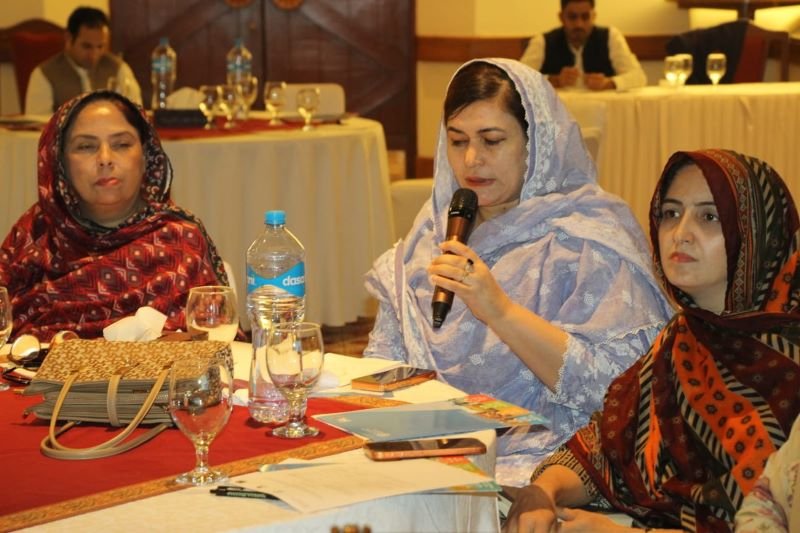
The findings and recommendations were disseminated today at a workshop in Quetta attended by senior government officials, UNagencies, development partners, academia and sector stakeholders.
James Okoth, Office in Charge FAO, while emphasizing theimportance of evidence-based approaches to strengthening women’s meaningful participation in livestock value chains said:
“Understanding women’s roles, opportunities and constraints within livestock-based livelihoods is essential to designing interventions that respond to their realities and unlock their economic potential. This study provides valuable evidence on access to resources, decision-making and markets, helping identify practical pathways towards greater economic empowerment for rural women and more inclusive livestock development in Balochistan.”
Chief guest, Sher Shah Ghilzai, Secretary, Women Development Department, Government of Balochistan said”
“Strengthening women’s access to resources, skills, markets and decision-making is essential to creating greater economic opportunities for women and their households. We appreciate FAO’s collaboration with the University of Balochistan in generating evidence that can inform practical policies and programmes, and welcome continued partnerships to translate research into action for rural communities across Balochistan.”
The workshop featured remarks by Dr. Muhammad Farooq Tareen, Director General Livestock Department, Government of Balochistan, and Batool Asadi, Chief Foreign Aid, Planning & Development Department, Government of Balochistan and Prof. Dr. Saubia Ramzan, Dean, Faculty of Management and Information Sciences, University of Balochistan,
The University of Balochistan team presented the study’s key findings and recommendations, followed by discussion on strengthening women’s engagement in value addition and marketing, and improving access to resources and markets.
The study contributes to FAO’s broader work to advance gender equality and women’s economic participation in agriculture and livestock. In Balochistan, FAO has supported several women through capacity building, market exposure, branding and marketing, and market linkages, strengthening their participation across agricultural and livestock value chains.
The Post Floods Resilient Recovery and Strengthening of the Livestock Sector in Balochistan Project is funded by the European Union (EU) and implemented by FAO to enhance food security and resilience among livestock-dependent households. The project aims to restore and strengthen livestock-based livelihoods affected by the 2022 floods while building long-term climate resilience.
Also read: The Hidden Pressure Behind Being the “Good Child”
The project promotes sustainable livestock production, improved veterinary services, rangeland management and stronger livestock value chains in targeted districts of Balochistan.

Sohail Majeed is a Special Correspondent at The Diplomatic Insight. He has twelve plus years of experience in journalism & reporting. He covers International Affairs, Diplomacy, UN, Sports, Climate Change, Economy, Technology, and Health.