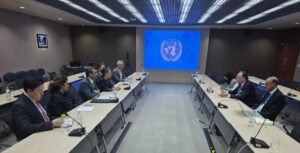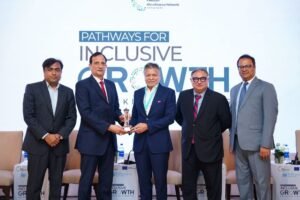
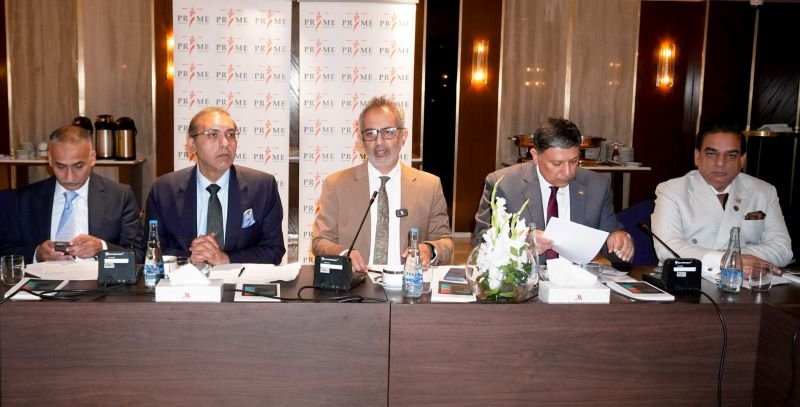
Islamabad (GNP): Policy Research Institute of Market Economy (PRIME) hosted the “Islamabad Policy Exchange” where experts discuss critical reforms within Pakistan’s General Sales Tax (GST) framework.
The roundtable, titled “GST Framework: Levelling the Playing Field,” brought together leading economists, policymakers, and industry leaders to evaluate GST restructuring, Third Schedule expansion, and the formalization of the retail economy, aiming to formulate urgent recommendations for the upcoming Federal Budget FY27.
The session opened with a presentation of a working paper by Maryam Ayub, Research Economist at PRIME, titled “GST Framework in Pakistan: Leveling the Playing Field through the Third Schedule”.
The paper highlighted critical tax discrepancies, noting that while Sales Tax contributed 65.5% of total tax collection in 2024-25, 92% of the 3.7 million retailers in Pakistan remain undocumented. It emphasized that an additional 6.5% indirect levy on unregistered retailers places an unfair burden on the manufacturing sector. To resolve this, the paper advocated expanding the Third Schedule to essential items, charging a uniform 18% GST at the manufacturing level based on printed retail prices.
Dr. Ali Salman, Chief Executive Officer, PRIME, highlighted the tax shortfall of 684 billion in the last 10 months. He stressed that this shortfall and the failure of the FBR to formalize the informal sectors of the economy place a disproportionate burden on the formal sector, creating an anti-investment environment. He further proposed the adoption of a low, flat tax rate, such as an 8% Harmonized Sales Tax, to enhance revenue through standardization.
Sardar Tahir Mehmood, President, Islamabad Chamber of Commerce & Industry (ICCI) emphasized the need to prioritize economic expansion rather than contraction through the burden of indirect taxes. He stated that most retailers remain reluctant to enter the documented regime because the current structure penalizes formal businesses. He also acknowledged that the Third Schedule has potential advantages related to consumer protection and transparency, lower compliance complexities, and increased tax collection, while avoiding excessive harassment of businesses by tax authorities. “Any third schedule implementations should include broad-based consultation with all stakeholders”, stated Mr. Mehmood.
Also Read: JPP and LAJA Train Lawyers to Expand Women’s Legal Aid
Usman Shaukat, President, Rawalpindi Chamber of Commerce & Industry (RCCI) stated, “Tax is a byproduct of business”. He emphasized that higher energy costs, taxes, and interest rates have made the industry uncompetitive in the region. He presented the case for the business community, calling for a level playing field instead of specific tax reliefs.
Sheikh Waqar Ahmad, Head of Corporate Affairs & Sustainability, Nestle, underscored that operating a formal business model has become significantly more difficult than it was two years ago. He explained that the third schedule is the way forward for Pakistan and the proper way of doing business.
Dr. Nasir Iqbal, Senior Economist, Pakistan Institute of Development Economics (PIDE), discussed the need for a self-enforcement mechanism for tax collection based on an incentive system. He stated that to achieve a trillion-dollar economy, Pakistan needs to ease the business registration process. He further stressed, “It should be a two-way transaction: Tax Collection should be complemented by the provision of incentives to the taxpayers, and only then will the third schedule become successful”.
Also Read: Commerce Minister Kamal Consults PBC on Tariff Reforms
Mukarram Jah Ansari, Member of Customs, FBR, in his concluding remarks, supported the overall roundtable agenda. He acknowledged that incentives, along with the integration of technology, have the potential to increase tax collection without simply raising taxes and hurting the compliant sector of the economy.
The Islamabad Policy Exchange serves as a recurring platform for rigorous economic debate, aiming to bridge the gap between academic research and actionable policy reform in Pakistan.

Sohail Majeed is a Special Correspondent at The Diplomatic Insight. He has twelve plus years of experience in journalism & reporting. He covers International Affairs, Diplomacy, UN, Sports, Climate Change, Economy, Technology, and Health.