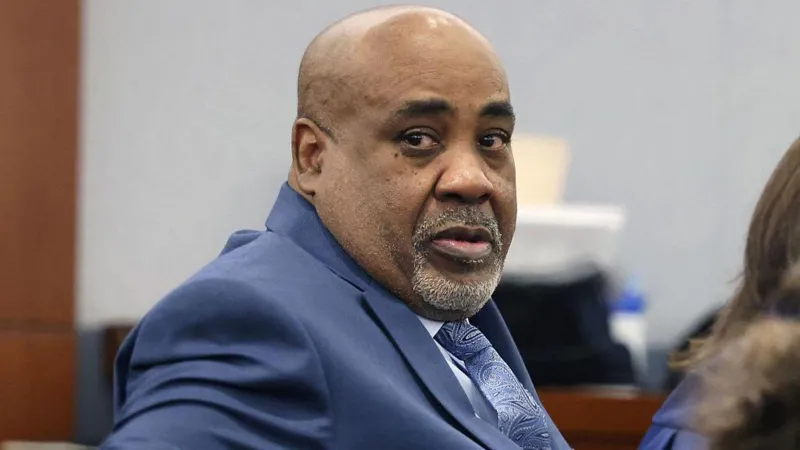
Las Vegas (GNP): The long-delayed murder trial of Duane “Keffe D” Davis opened this week in Las Vegas, with prosecutors alleging that the former gang leader orchestrated the 1996 drive-by shooting that killed rapper Tupac Shakur. Davis, 63, has pleaded not guilty to the charge, and his defence team has dismissed the prosecution’s account as a work of fiction built on a flawed, decades-long investigation.
Chief Deputy District Attorney Binu Palal told the jury that Davis did not personally fire the fatal shots but planned the attack in retaliation for a beating his nephew suffered earlier that night. Palal said the evidence supporting this claim would come largely from Davis’s own words, referencing a memoir he co-authored in 2019 in which he described his role in the shooting in detail. A judge has ruled that the book can be used as evidence in the trial, despite objections from the defence.
Davis’s attorney, Michael Sanft, pushed back on the prosecution’s narrative during opening statements, questioning why no arrest had been made for nearly three decades and arguing that no independent evidence corroborates the case against his client. The defence has pointed to missing police reports and what it described as incomplete detective work, while also alleging that witnesses changed their accounts over time due to financial motivations, media attention, or information supplied by investigators.
The prosecution’s account places the origins of the shooting in a dispute between gangs. According to prosecutors, Davis acquired a firearm and organised two vehicles carrying several men, including his nephew, Orlando Anderson, to travel to a Las Vegas nightclub on the night of 7 September 1996. While en route, the group spotted Shakur and Death Row Records co-founder Marion “Suge” Knight travelling in a separate convoy of vehicles. Prosecutors allege that Davis’s vehicle made a U-turn to confront the pair, at which point Davis passed a firearm to Anderson, who fired into Shakur’s car.
Also Read: Afghanistan marks 5th anniversary of “Day of Victory”
Testimony from witnesses present that night added further detail to the timeline. Garry Dale, a former officer with the Las Vegas Metropolitan Police Department, testified that he rode in the ambulance with Shakur immediately after the shooting and that the rapper declined to identify his attacker. Ingrid Stokes, who was driving nearby with friends at the time, testified that she noticed a vehicle following closely behind her group before gunfire erupted. She recalled the chaos of the moment, describing how everyone in her car ducked down as shots rang out.
Shakur was 25 years old when he was shot following a boxing match involving Mike Tyson on 7 September 1996. He died six days later from his injuries. The case remained unsolved for decades, hindered in part by a lack of cooperation from witnesses within the gang and hip-hop communities, a dynamic prosecutors described to the jury as rooted in the belief that “silence means survival.” Davis, prosecutors said, was the exception, having made numerous public statements about the case between 1998 and 2003 that ultimately formed the basis of the charges now against him.
The trial is expected to continue over the coming weeks, with additional witnesses, investigators, and experts scheduled to testify as both sides present their case to the jury.

Managing Editor at Global News Pakistan (GNP), with a Bachelor's degree in International Relations from Riphah International University, graduated with a Gold Medal. Reach out at sabahtareengnp@gmail.com