Geneva (GNP): The World Health Organization has warned that the ongoing Ebola outbreak in the Democratic Republic of the Congo is on pace to surpass the deadliest outbreak of the disease in history. WHO Director-General Dr Tedros Adhanom Ghebreyesus said that at its current trajectory, the 2026 outbreak would eclipse the 2014-2016 epidemic, which claimed at least 11,000 lives.
The outbreak, formally declared on 15 May, has so far resulted in at least 4,300 cases and more than 2,000 deaths, though health officials believe transmission actually began roughly three months before the official declaration.
The severity of the situation was underscored by a joint high-level mission conducted by the Africa Centres for Disease Control and Prevention and the WHO to Uganda and the DRC on 4 and 5 August. Led by Dr Tedros, Africa CDC Director-General Dr Jean Kaseya, and WHO Regional Director for Africa Dr Mohamed Janabi, the mission drew lessons from Uganda’s successful containment effort, assessed operational challenges in the DRC city of Bunia, and carried community concerns directly into discussions with national leadership in Kinshasa.
Speaking at a news conference in Bunia, near the epicentre of the outbreak, Dr Janabi acknowledged that response efforts remain behind the pace of transmission. He noted that research indicates the virus began spreading as early as February, when it was initially misdiagnosed as malaria or typhoid. Ongoing regional instability in eastern DRC has further complicated containment efforts, limiting health workers to reaching only about 30 percent of cases.
By contrast, the mission highlighted Uganda as a model for successful containment. Uganda declared the end of its own outbreak on 28 July, having recorded 20 confirmed cases and two deaths, with all listed contacts completing follow-up. Africa CDC and WHO commended the country’s early detection systems, rapid contact tracing, coordinated national response, and strong cross-border surveillance, while cautioning that neighbouring countries must maintain vigilance given continued transmission across the border in the DRC.
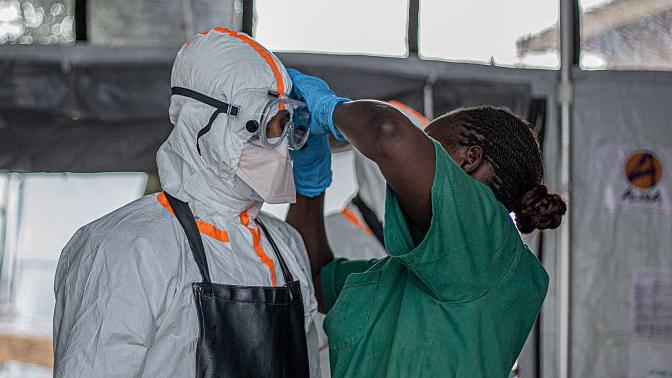
In Ituri Province, which accounts for nearly 90 percent of confirmed cases in the DRC, the delegation met with provincial authorities, frontline health workers, and community representatives, and visited the Rwangole Ebola Treatment Centre to assess its capacity. The visit reinforced the conclusion that stopping the outbreak will depend heavily on community involvement, including early symptom reporting, trust in local information sources, and community participation in surveillance, treatment, and safe burial practices.
As of 4 August, the DRC had reported 3,973 confirmed cases, 1,801 deaths, and 776 recoveries across 51 health zones in five provinces, with 99 new cases and 52 deaths recorded in a single 24-hour period. Contact follow-up stood at only 75 percent, well below the 95 percent target needed to rapidly trace transmission chains, while treatment-centre occupancy in North Kivu had reached 139 percent of capacity, straining beds, staff, and resources.
Also Read: Weak Memory: Why You Forget Things and How to Improve It
The current outbreak is caused by the rare Bundibugyo species of Ebola, which has previously triggered only two known outbreaks, in 2007 and 2012. No approved vaccine or recognised therapeutic treatment currently exists for this particular strain. However, the United Kingdom’s medicines regulator has authorised the first human trials of a Bundibugyo vaccine, developed by a University of Oxford team using the same technology behind the Oxford-AstraZeneca Covid-19 vaccine. Three additional research groups are working on separate vaccine candidates, though none have yet reached clinical trials. Separately, the WHO is sponsoring a clinical trial within the DRC to evaluate whether two existing antiviral therapies can improve patient survival rates.
Africa CDC and WHO issued a joint call for urgent action, including raising daily contact follow-up to at least 95 percent, expanding treatment and laboratory capacity, ensuring frontline health workers are protected and paid on time, and improving secure access to insecure and hard-to-reach areas. Dr Tedros said the outbreak was outpacing the response in some areas of eastern DRC, calling for sustained international commitment and greater resources. Dr Kaseya echoed the emphasis on community trust, stating that breaking transmission chains depends on people having reliable information and the ability to seek care without fear.
Both organizations reaffirmed their commitment to supporting a government-led, nationally coordinated response and said they would continue mobilizing technical expertise and resources to interrupt transmission. They advised against imposing unnecessary travel or trade restrictions, instead urging countries to strengthen surveillance, laboratory readiness, and cross-border coordination.