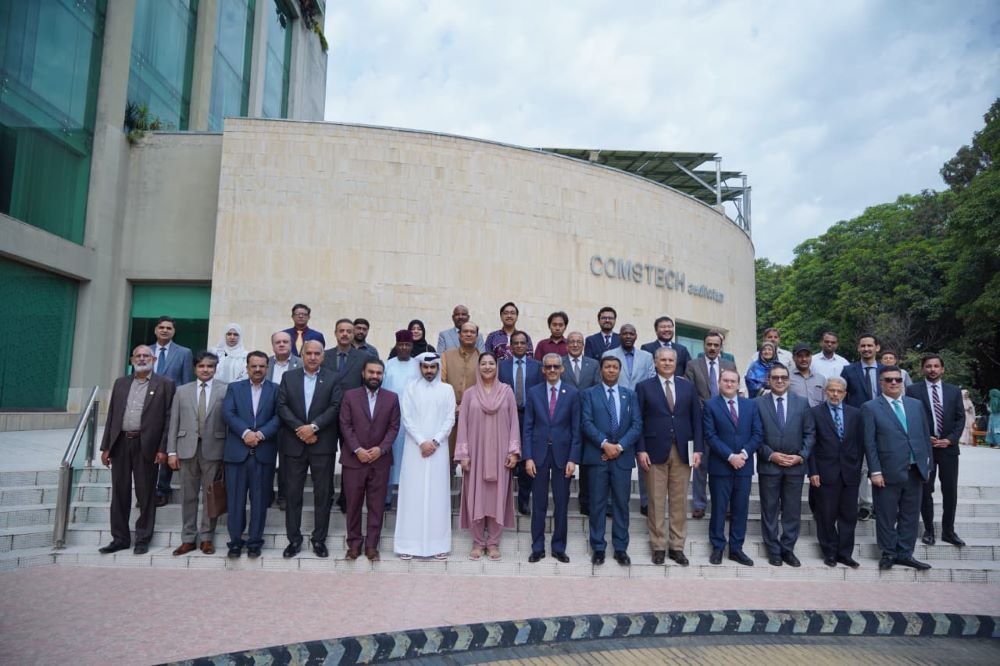
Islamabad (GNP): The Organisation of Islamic Cooperation’s Standing Committee on Scientific and Technological Cooperation (OIC-Comstech) and the Arab League Educational, Cultural and Scientific Organisation (Alecso) on Wednesday signed a joint executive programme for 2027–2028 to promote scientific, technological and academic cooperation across the Arab and Islamic worlds.
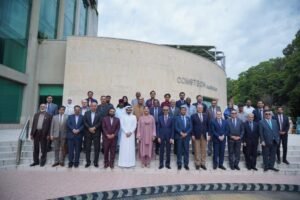
The programme was signed by OIC-Comstech Coordinator General Prof Dr Muhammad Iqbal Choudhary and Alecso Director General Prof Dr Mohamed Ould Amar during a strategic dialogue held at the Comstech Secretariat on Wednesday.
Minister of State for Federal Education and Professional Training Wajiha Qamar attended the ceremony as chief guest. HEC Executive Director Prof Dr Ziaul Haq, Ambassadors from Jordan, Yemen, Syria, Libya, Tunisia and representatives from Embassy of Kazakhstan, Russia, Qatar , Sudan, vice chancellors, scientists, academics and government officials were also present.
The two-year programme will facilitate institutional coordination, exchange of experts, joint scientific activities, technical cooperation and mobilisation of partner organisations and financial resources.
Its implementation will be monitored through periodic meetings, annual progress reports and a final evaluation. The programme is expected to connect Alecso’s academic and scientific institutions in Arab countries with Comstech’s network of universities, research institutions and centres of excellence in OIC member states.
Speaking on the occasion, Ms Wajiha Qamar said science and technology had become essential for economic development and international cooperation. She said challenges such as climate change, food and water insecurity, emerging diseases, energy transition and rapid technological change required coordinated regional responses.
She called for joint research projects, academic mobility, professional training, university networks and partnerships with industry and development institutions.
Artificial intelligence, cybersecurity, digital transformation, climate resilience, water conservation, space sciences, biotechnology, healthcare, renewable energy and green technologies were identified as potential areas for cooperation.
Ms Qamar also stressed the need to expand scholarships, fellowships and mentorship opportunities for young researchers and ensure greater participation of women in science, technology, engineering and mathematics.
Welcoming the Alecso delegation, Prof Choudhary said the Arab and Islamic worlds shared a rich scientific and intellectual heritage that should be used to inspire new generations of researchers.
“No war should end a scientific career,” he said, calling for greater support for researchers and scholars displaced from conflict-affected countries.
He also proposed expanding fellowships for women scientists, promoting inclusive education and improving the international standing of universities in Arab and Islamic countries.
Prof Choudhary said the partnership should create stronger linkages among universities, laboratories, scientists and young researchers across the two regions.
Prof Amar thanked Comstech for hosting the delegation and said the visit had provided an opportunity for meaningful consultations between the two organisations.
He described the executive programme as a practical step towards achieving their shared objectives and expressed the hope that the partnership would produce tangible outcomes in education, culture, science and technology.
HEC Executive Director Prof Ziaul Haq appreciated the initiative and said stronger institutional linkages could create new opportunities for universities, scientists and young researchers in Pakistan and other participating countries.
Also read: Oman Praises Pakistan’s Role in Promoting Regional Peace
The dialogue concluded with an agreement to translate the programme into measurable activities and regularly review its progress.

Sohail Majeed is a Special Correspondent at The Diplomatic Insight. He has twelve plus years of experience in journalism & reporting. He covers International Affairs, Diplomacy, UN, Sports, Climate Change, Economy, Technology, and Health.