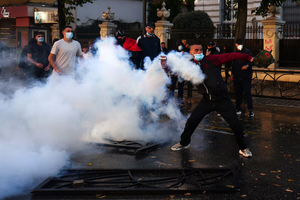
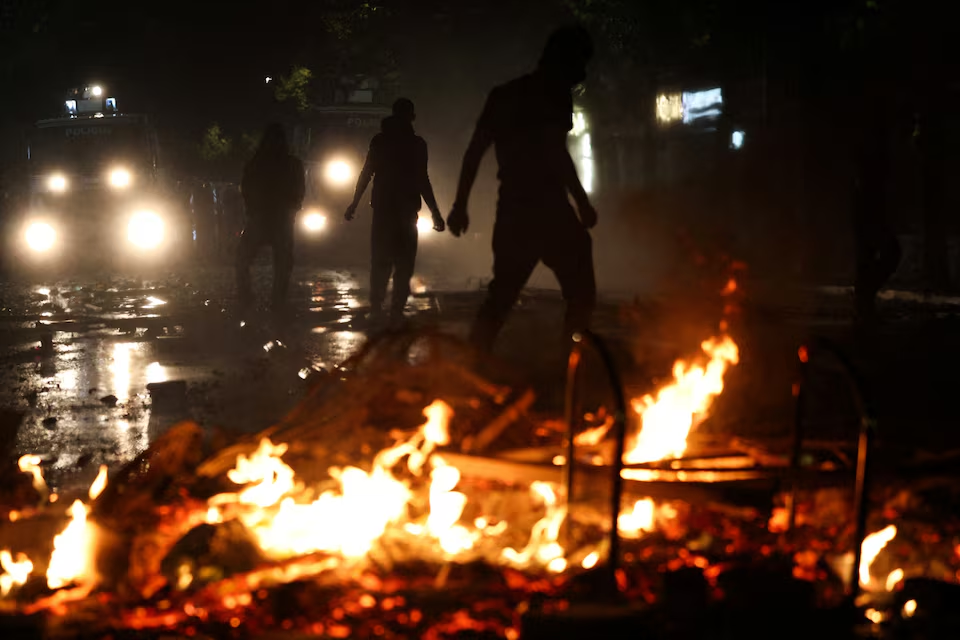
Tirana (GNP): A student protest in front of Albania’s Ministry of Education in Tirana turned violent on Tuesday, 13 October, with police firing tear gas and water cannon at crowds hurling stones at the building.
Dozens of young people had gathered to protest over conditions at universities and student dormitories, the cost of studying and a lack of prospects after graduation. Activists from the “Flamingo Revolution” movement, which began in late May against development projects in the Zvërnec area, also joined.
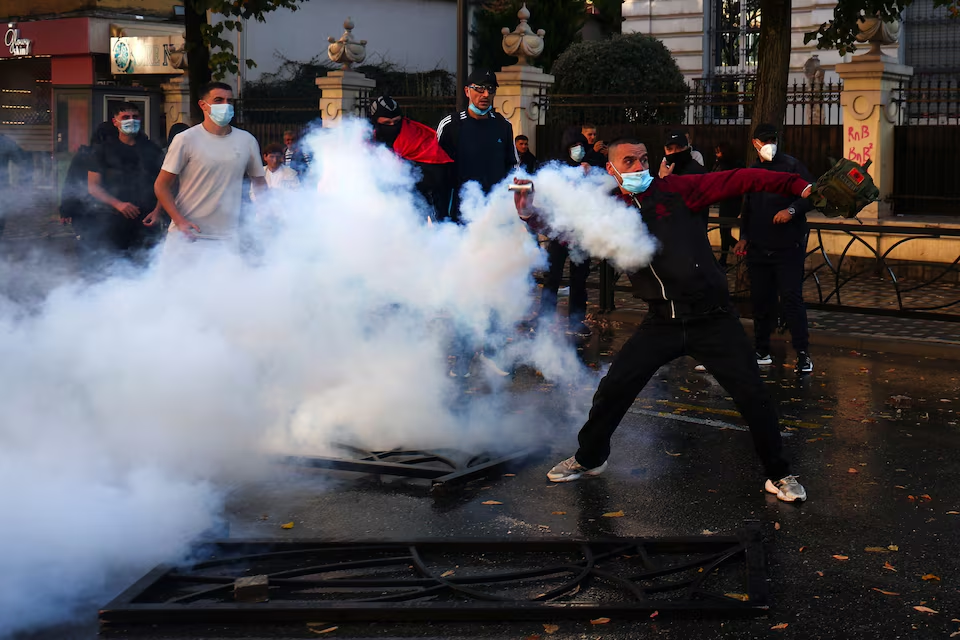
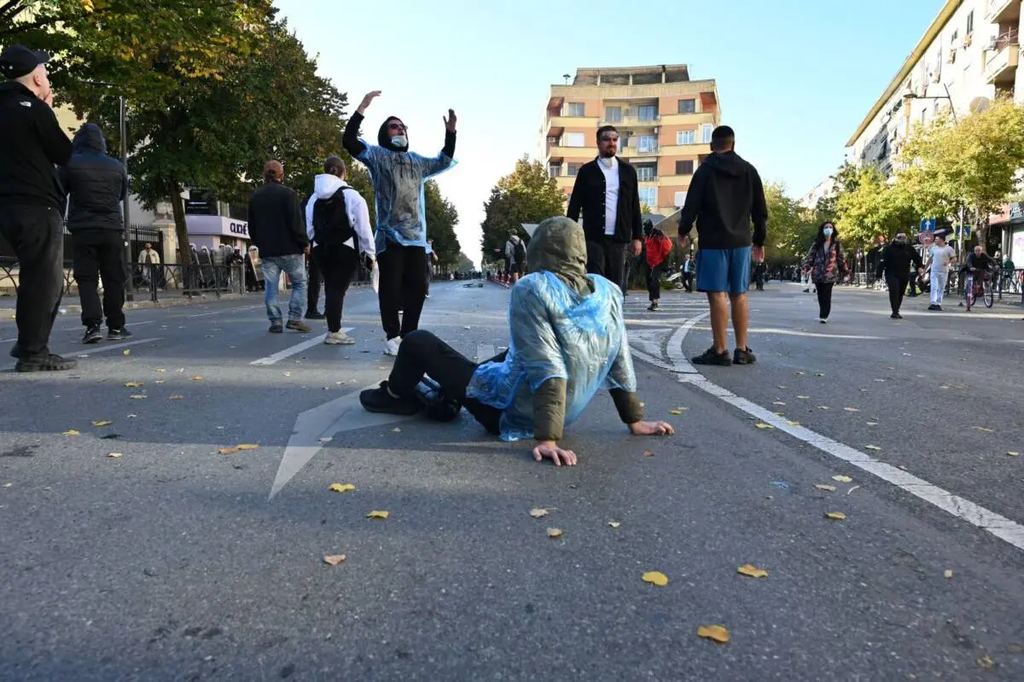
The protest began with banners and chants against the government. After about an hour, some protesters tore metal railings and pavement slabs from the ground and struck the ministry building with them.
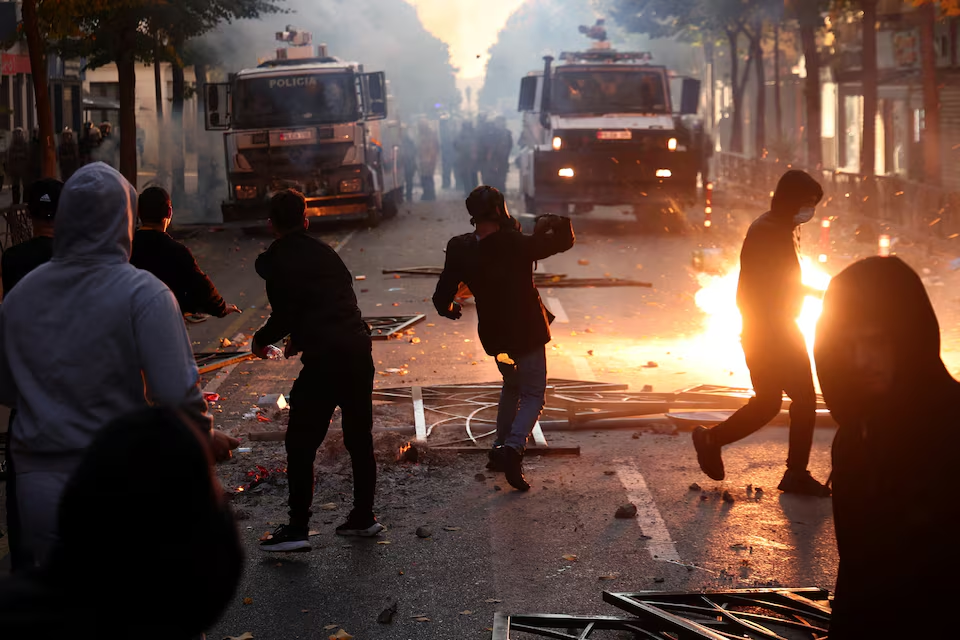
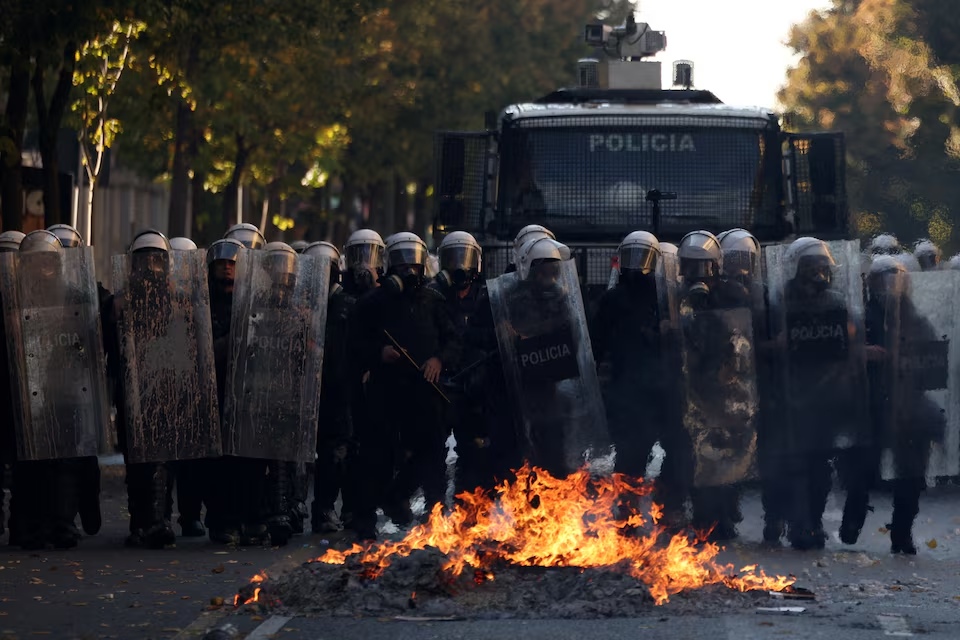
Stones and other objects damaged its windows and perimeter fence, and some protesters entered the courtyard. Police then moved in with tear gas and high-pressure water, and clashes continued after the crowd left the ministry area and spread to other streets of Tirana in the evening.
Protesters set fires in the streets, particularly around Durrës Street, and several private businesses were damaged. A fire was also set at the entrance hall of the Municipality of Tirana building.
Injuries were reported among protesters, police officers and journalists. The head of emergency at the Trauma Hospital said a 19-year-old man was admitted with a broken leg, which he attributed to police violence, and an Austrian diplomatic representative received treatment for head injuries.
According to the State Police, 49 people have been taken to police stations so far. Five officers have been suspended, and the Police Supervision Agency has opened investigations in cooperation with the Prosecutor’s Office.
The violence marked a break from earlier rallies by the movement, which had stayed largely peaceful for months. Protesters said the anger could not be separated from what they called a lack of institutional response and the general state of the country.
Their grievances go beyond lecture halls. Student Redjan Shkëmbi said the dormitories lack proper conditions and that university degrees have become little more than passports for emigration.
Architecture student Laura Kërtalli said protesters want better facilities and a system that rewards academic results with study and employment opportunities. She added that, unlike in 2018, students do not want to negotiate with the government and expect real change rather than promises.
These complaints fed into demands for Prime Minister Edi Rama’s resignation. Protester Albina Ruko said he is responsible for the mass departure of young people from the country, and other protesters linked that departure to the lack of economic and social prospects at home.
Fees were another concern. Megi Mustafaraj, who has completed a second master’s degree in Albania, opposed the higher charges for students pursuing further studies and called for quality, free public education.
Another protester, Luljeta Kola, said Albania needs a complete change of system because of deep social injustice and a gulf between rich and poor. Megi Marku, who took part in the December 2018 student protests, said education has not been a government priority and that young people deserve more investment.
The scenes prompted reactions from rights and media groups. The Albanian Helsinki Committee (AHC) condemned all violence regardless of who committed it and urged all parties to show restraint.
The AHC said the right to peaceful assembly and freedom of expression are guaranteed by the Albanian Constitution and the European Convention on Human Rights. It added that violence by some individuals cannot justify treating all protesters as violent, while the right to protest does not legitimise attacks on police officers or journalists.
On the police response, the AHC said any use of force must be lawful, necessary and proportionate. It called for impartial investigation of all incidents, including allegations of excessive force and violence against officers.
Also Read: India Remands Two CJP Leaders After Jantar Mantar Protest
Journalists’ safety drew particular concern. The Association of Albanian Journalists (AGSH) condemned the violence and the obstruction of reporters by State Police officers.
It said journalist Fatime Halmusa was physically assaulted by officers and that one broadcast crew was forcibly stopped from reporting. It also denounced an attack on Izmir Akulli, an editor-in-chief who, according to a statement from his outlet’s director, was assaulted near the Bank of Albania while filming violence against a student. Journalist Vjolanda Peca was also injured.
The unrest in Tirana comes amid a wider wave of student activism in Europe, where French high school students have staged weeks of protests and school blockades demanding more teachers and better facilities.
Deputy Prime Minister Albana Koçiu said, “Violence has not been, is not, and will never be a solution.”

Managing Editor at Global News Pakistan (GNP), with a Bachelor's degree in International Relations from Riphah International University, graduated with a Gold Medal. Reach out at sabahtareengnp@gmail.com