Islamabad (GNP): Senate Standing Committee on Federal Education was briefed on the issue of degree attestation for graduates of unauthorized campuses of PIMSAT, the University of South Asia, Lahore, and NICE, Karachi.
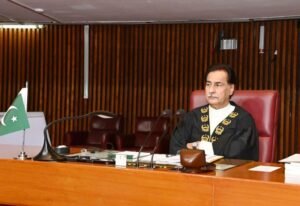
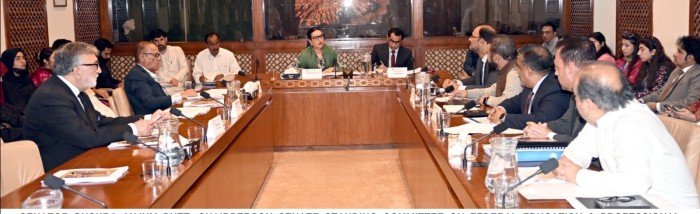
Senate Standing Committee on Federal Education and Professional Training, chaired by Senator Bushra Anjum Butt, convened at Parliament House, Islamabad, with Senators Syed Masroor Ahsan, Kamran Murtaza, Rahat Jamali, and Khalida Ateeb in attendance.
The Higher Education Commission (HEC) briefed the Committee on the protracted issue of degree attestation for graduates of unauthorised campuses of PIMSAT, the University of South Asia Lahore, and NICE Karachi. Out of roughly 6,000 students affected by the matter, HEC confirmed that 4,383 cases had been cleared for degree attestation consideration. The Committee was also told that an online portal had been introduced to ease the attestation process. The Chairperson directed the relevant authorities to present a detailed account at the next sitting, showing how many degrees had been attested through the online system to date.
The Committee also took up the long-unresolved matter of degree non-attestation concerning Al-Khair University graduates. Members were told that HEC had initially planned to administer a test to students before verifying their qualifications, but that the test had not yet taken place. The Committee recommended that HEC handle the matter by following the same approach previously applied in the case of Global University, Lahore, and present a comprehensive report to the Committee within 10 to 15 days.
Chairperson Senator Bushra Anjum Butt voiced strong displeasure at the years-long delay, saying HEC had demonstrated a clear lack of urgency in addressing the issue. She pointed out that it would be wholly unfair to require people who completed their studies years ago to sit an examination at this stage in their lives. The Committee called for a swift and equitable resolution to protect the academic and professional futures of those affected.
On the matter of plagiarism, HEC informed the Committee that permissible plagiarism thresholds differ by subject, with a maximum ceiling of 19 percent across all disciplines. The Commission also confirmed that it relies on Turnitin software to identify and measure plagiarism in academic research submissions.
The Committee additionally received a briefing from the Inter Board Coordination Commission (IBCC) regarding reported paper leakage in the Cambridge A-Level examinations. Students impacted by the alleged leak appeared before the Committee to share their concerns firsthand.
The IBCC told the Committee that all available evidence had been forwarded to both Cambridge Assessment and the National Cyber Crime Investigation Agency (NCCIA) for investigation and follow-up action.
Senator Bushra Anjum Butt expressed considerable concern over the matter and stressed that it must be treated as an urgent priority to spare students any further academic disruption and uncertainty. She directed that formal letters be sent to all relevant authorities, pressing them to fast-track the investigation and bring the matter to a resolution no later than 21 July 2026.
On the initiative of the Chairperson, a panel of writers has been constituted to assist visually impaired students during examinations, a step that was warmly welcomed by both Committee members and blind participants present at the meeting.
The Committee also turned its attention to the registration requirements and infrastructure benchmarks for private educational institutions.
Senator Syed Masroor Ahsan questioned the prescribed building standards for schools and asked whether every institution was obligated to provide facilities such as playgrounds and libraries. The Committee was told that not all schools currently possess playgrounds or laboratories.
Chairperson Senator Bushra Anjum Butt raised concern over the number of private schools functioning out of residential properties and called for a thorough review of the existing registration criteria. She noted that many such institutions charge considerable tuition fees while falling short on basic educational and recreational amenities for their students.
The Committee was also updated on the implementation of the policy requiring private schools to reserve ten percent of their seats for students from low-income backgrounds.
Members were informed that the Association of Private Schools had challenged the policy in the High Court, which had issued an interim order suspending its enforcement. The Chairperson expressed clear dissatisfaction, observing that private schools were resisting their legal and social obligation to open their doors to underprivileged children.
She remarked that Pakistan has struggled with the issue of out-of-school children for decades, yet many private institutions continued to fall short of government policy on free education for deserving students.
She stressed that firm enforcement of the policy was the only way to guarantee every child a genuine chance at quality education.

Sohail Majeed is a Special Correspondent at The Diplomatic Insight. He has twelve plus years of experience in journalism & reporting. He covers International Affairs, Diplomacy, UN, Sports, Climate Change, Economy, Technology, and Health.