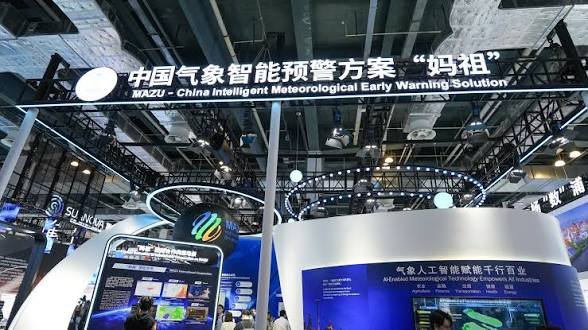
China (GNP): China’s commitment to international climate cooperation has taken another significant step forward with the expansion of its Multi Hazard Alert, Zero-Gap and Universal (MAZU) platform across African countries.
Developed as an artificial intelligence powered meteorological early warning system, the platform is helping nations improve weather forecasting capabilities and strengthen disaster preparedness in regions increasingly vulnerable to climate change.
The MAZU platform integrates artificial intelligence, satellite observations, meteorological data, and predictive analytics to provide timely warnings about extreme weather events.
These include heavy rainfall, floods, droughts, tropical cyclones, heatwaves, and other climate related hazards that have become more frequent due to global warming.
African countries are among those most affected by climate change despite contributing only a small share of global greenhouse gas emissions.
Many communities continue to experience severe flooding, prolonged droughts, food insecurity, and infrastructure damage, placing millions of people at risk.
Reliable forecasting systems have therefore become essential for reducing disaster losses and protecting lives.
According to Chinese scientific authorities, the AI driven platform has enhanced forecasting accuracy by rapidly processing large volumes of weather data and providing early alerts to government agencies, emergency responders, farmers, and local communities.
Timely warnings enable authorities to organize evacuations, protect agricultural production, and minimize economic losses before disasters strike.
The initiative also reflects growing scientific cooperation between China and African countries.
Also Read: 17 Sudanese Engineers Complete COMSTECH Digital Training
Beyond providing technology, the project includes technical support, training programmes, and knowledge sharing aimed at strengthening local meteorological institutions.
Such partnerships contribute to long-term resilience rather than temporary disaster response.
Artificial intelligence is increasingly transforming weather forecasting worldwide.
Traditional forecasting models often require significant computational resources and time, whereas AI systems can analyze vast datasets more efficiently and improve prediction accuracy.
As climate related disasters become more frequent, combining advanced technology with international cooperation is becoming essential for protecting vulnerable populations.
Experts believe that investments in early warning systems generate substantial economic benefits by reducing disaster related losses and enabling governments to make informed decisions before emergencies escalate.
The United Nations has repeatedly emphasized that universal access to early warning systems is critical for achieving the Sustainable Development Goals and reducing disaster risk globally.
China’s support for African climate resilience also aligns with broader international efforts to improve adaptation capacity in developing countries.
Through technological innovation and scientific collaboration, countries can share expertise that strengthens global preparedness against increasingly unpredictable weather patterns.
While technology alone cannot eliminate the impacts of climate change, initiatives such as the MAZU platform demonstrate how innovation can significantly improve resilience.
By combining artificial intelligence with international partnerships, governments are better equipped to protect communities, infrastructure, agriculture, and economies from extreme weather events.
As climate risks continue to grow worldwide, collaborative solutions that integrate science, technology, and capacity building will play an increasingly important role in safeguarding sustainable development and enhancing global climate resilience.