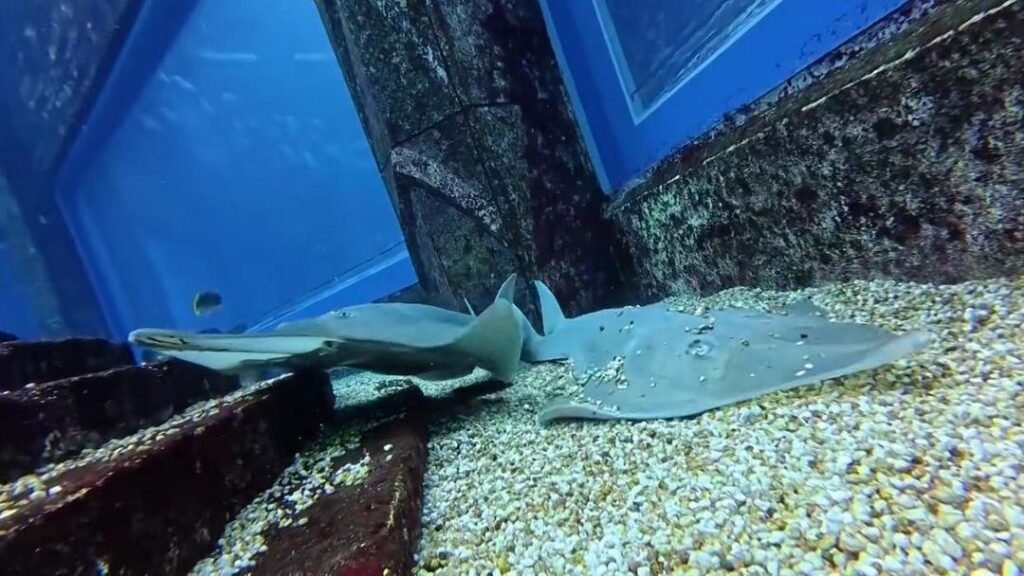
Beijing (GNP): China has achieved a notable milestone in marine conservation after successfully breeding 12 common shovelnose rays in captivity, according to China Science and subsequent reporting.
The young rays were born on July 31 in Sanya, in China’s southern Hainan Province, marking an important development for the conservation of a critically endangered species.
The 12 pups reportedly measured around 34 to 35 centimetres at birth and have begun feeding. The successful breeding is significant because common shovelnose rays are difficult to reproduce in controlled environments.
The species is a bottom-dwelling cartilaginous fish found in tropical and subtropical coastal waters of the Indian and Pacific oceans.
It plays an important role in marine ecosystems, but its conservation status has made successful captive breeding particularly valuable.
One of the biggest challenges is the species’ sensitivity to its surroundings. According to researchers cited in the report, shovelnose rays require high-quality water and suitable environmental conditions.
Even relatively small disturbances in water quality, temperature or habitat conditions can affect reproduction.
Their reproductive cycle also makes conservation more difficult. The species can reportedly take eight to 10 years to reach sexual maturity, meaning population recovery in the wild is a slow process.
Also Read: China Establishes First Regular Arctic Shipping Route to Europe
Successful captive breeding could therefore provide researchers with valuable knowledge about reproduction, development and long-term conservation.
The achievement in Sanya is particularly important because conservation of endangered marine species cannot depend solely on protecting animals after their populations have already declined.
Understanding how threatened species reproduce and survive can help strengthen broader conservation strategies.
The newborn rays are now being monitored as they develop. Their survival could provide researchers with an opportunity to learn more about the species while demonstrating the potential of carefully managed captive-breeding programmes.
The achievement also highlights a broader challenge facing marine conservation, protecting species whose habitats are under pressure while developing scientific methods that can support their recovery.
For the 12 young shovelnose rays in Sanya, survival is more than a successful breeding story. It represents another opportunity to better understand and protect a species facing serious threats in the wild.