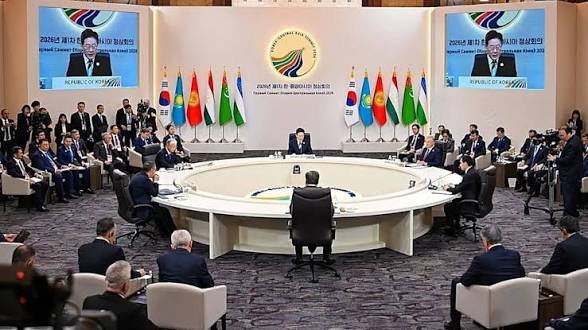
It is worth noting that the Republic of Korea is a reliable and long-standing ally of Central Asian nations and their diplomatic relations have expanded through effective political dialogues, forums, and agreements at various levels, resulting in a robust and enduring strategic partnership.
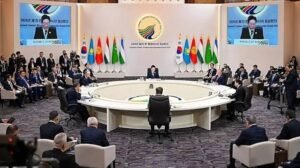
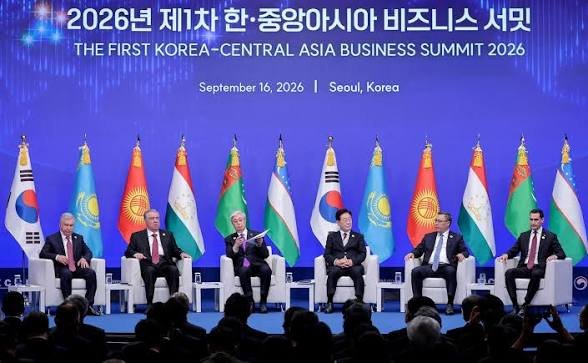
According to political and regional research experts the inaugural “Central Asia – Republic of Korea” summit demonstrates that the framework of multilateral diplomacy acquired a new quality within the context of global politics.
Dr. Shamsiddin Karimov Senior Researcher at the Department of South and East Asia of Tajikistan Institute for the Study of Asian and European States said that as a global leader in technology and economics, the Republic of Korea recognizes Central Asia as a unified and vitally important geopolitical link.
In this context, Nigora Fayzullaeva—a Korea specialist from the Department of South and East Asia at the Institute for Asian and European Studies of the National Academy of Sciences of Tajikistan believes that the “C5+1” format is gradually evolving into a key mechanism for cooperation between the Republic of Korea and Central Asia. She notes that its future effectiveness depends on political will, the development of coordination mechanisms, the implementation of concrete projects, and the consideration of the interests of all countries in the region.
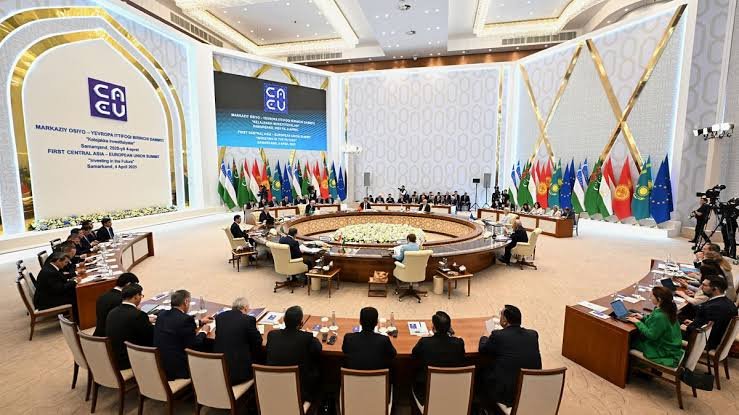
Bekzod Normatov, Leading Research Fellow at the Institute for Strategic and Regional Studies under the President of Uzbekistan (ISRS), said that moving cooperation to the highest political level could open opportunities to take relations between the two sides to a qualitatively new stage. Acccording to his assessment, of particular significance are the development of technological partnership, localization of manufacturing, deep processing of raw materials, implementation of regional projects and the training of engineering personnel.
The inaugural “Central Asia – Republic of Korea” Summit as a significant milestone in the institutionalization of relations between the region and one of its most technologically advanced and proven partners. Thus the effective utilization of existing opportunities could enable cooperation between Korea and Central Asia to foster economic and technological growth, diversify the region’s external ties, strengthen economic connectivity, and promote the sustainable development of interstate relations.
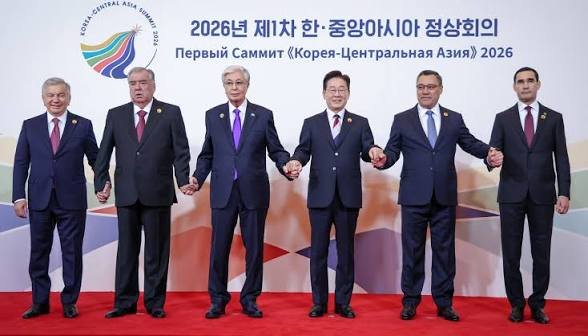
The countries regularly meet at various forums and sessions, emphasizing strategies to advance economic cooperation.
According to official data, Korea maintains extensive ties—including over 1,000 joint ventures, as well as investment and trade activities—with Central Asian nations, particularly Uzbekistan, which is an inseparable friend and neighbor of Tajikistan. Trade turnover has increased, negotiations and dialogues to foster trade and commerce are ongoing, and cooperation with the Korea International Cooperation Agency (KOICA)—which invests in major socially significant projects in the region—is expanding.
The Republic of Korea plays a vital role in the modernization of Central Asian nations, providing financial support to accelerate development across various sectors, including automotive manufacturing, chemicals, and metallurgy, oil and gas, and information and communication technologies. Since the establishment of diplomatic relations, trade turnover between Central Asian countries and South Korea has grown 600-fold; by 2022, the figure had risen from $15 million in 1992 to $9 billion, with the total volume of Korean investment in the region now exceeding $15 billion.
Furthermore, cultural and humanitarian ties between the two regions have flourished; a large Korean diaspora—numbering over 300,000 people—resides in Central Asia, playing a significant role in the development of people-to-people diplomacy. Within this framework, the region’s youth are becoming increasingly familiar with each other’s customs and cultures, showing great interest in language learning, music, and cinema—areas where cultural and language centers play a pivotal role.
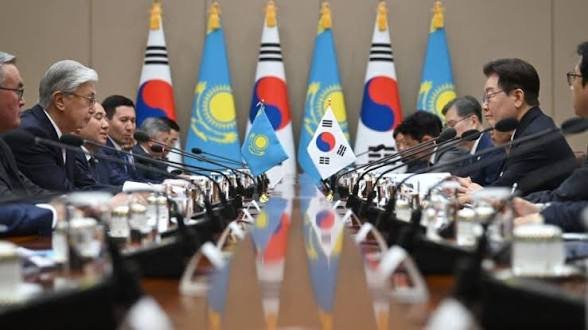
Thus, the “Central Asia – Republic of Korea” Cooperation Forum serves as an effective platform for discussing and implementing joint projects. The forum creates significant trade and investment opportunities for Central Asian nations and various institutions, opening avenues for investment in sectors such as physical infrastructure, transport, energy, and trade.
It is worth noting that the Republic of Korea is a highly developed, modern nation—a leader in digitalization and a key investor in Central Asia—actively investing across various sectors, a partnership that has continued to grow throughout the 35 years of these countries’ independence.
In the author’s view, the Republic of Tajikistan could further expand cooperation with Korea—both through bilateral agreements and the “Central Asia – Republic of Korea” cooperation forum—on projects involving the construction of new urban transport infrastructure, including the Dushanbe metro. It is worth noting that Korea, through multinational corporations like Daewoo, has invested in many countries—most notably Pakistan.
Between 1993 and 1997, it constructed the M-2 motorway (a limited-access highway) connecting Lahore and Islamabad—cities that share a sister-city relationship with Dushanbe; this highway stands as a prime example of cooperation between Pakistan and the South Korean private sector. Tajikistan and Korea The relations between countries are further strengthened through the establishment of the diplomatic ties. Upon gaining state independence, Tajikistan molded its relations with countries worldwide based on an “open-door” policy.
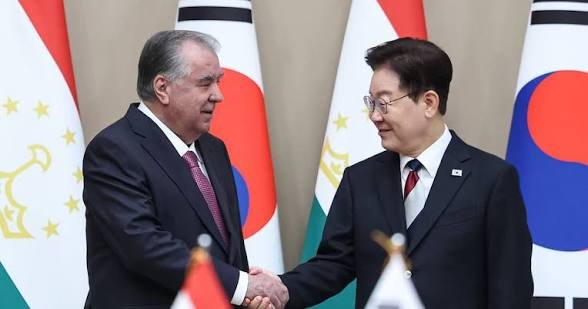
In this context, diplomatic relations between the Republic of Tajikistan and the Republic of Korea were established on April 27, 1992; the Embassy of the Republic of Korea in Tajikistan opened in 2008, and the Embassy of Tajikistan in the Republic of Korea opened in April 2015. These diplomatic ties laid a solid foundation for the development of a bilateral legal and treaty framework.
Over the past three decades, relations between the two countries have been further consolidated and expanded through various agreements and milestones, including:
- Creation of the “South Korea – Central Asia” cooperation format in 2007
- Working visit of the Founder of Peace and National Unity – Leader of the Nation, President of the Republic of Tajikistan, His Excellency Emomali Rahmon, to the Republic of Korea on May 24–25, 2005.
- Official visit of the President of the Republic of Tajikistan, His Excellency Emomali Rahmon, to the Republic of Korea to attend the 7th World Water Forum (April 12–17, 2015).
- “Republic of Korea – Central Asia” Cooperation Forum of the Permanent Secretariat in 2017.
- Working visit of the First Deputy Prime Minister of the Republic of Tajikistan to the Republic of Korea to participate in the “Kor-Asia Forum 2018” (November 6–8, 2018).
- Official visit to the Republic of Tajikistan by the Prime Minister of the Republic of Korea, Lee Nak-yon, at the invitation of the Prime Minister of the Republic of Tajikistan, Kohir Rasulzoda (July 15–17, 2019).
- The Economic Council of the Forum has been operational since 2020,
- Official opening of the KOICA office in Dushanbe (February 21, 2022).
- October 30 – November 1, 2023: Participation of a delegation from the Republic of Tajikistan, led by Minister of Foreign Affairs Sirojiddin Muhriddin, in the 16th Central Asia – Republic of Korea Cooperation Forum in Ashgabat.
- November 6, 2024: Meeting between the Deputy Minister of Foreign Affairs of the Republic of Tajikistan and Ban Ki-moon, President of the Assembly and Chair of the Council of the Global Green Growth Institute (GGGI), on the sidelines of the working visit.
- July 2024: The Republic of Tajikistan was admitted as a member of the Asian Forest Cooperation Organization (AFoCO), the secretariat of which is based in Korea. ·
- On October 31, 2024, the Ambassador of the Republic of Korea to the Republic of Tajikistan met with the Minister of Labor, Migration and Employment of the Population of the Republic of Tajikistan to discuss the deployment of labor migrants through the Employment Permit System (EPS).
- Trade turnover between Tajikistan and Korea exceeded 150 million USD in 2024.
- On September 6, 2024, the President of the Republic of Tajikistan, Leader of the Nation Emomali Rahmon, received the President of the Korea International Cooperation Agency (KOICA), Chang Won-sam.
- The first “Central Asia – Republic of Korea” High-Level Meeting in Seoul on September 15, 2026.
In conclusion, South Korea will enhance its investment in the region especially in Tajikistan’s transport sector, metro construction within the framework of projects and forums. Such efforts would help maintain a free, prosperous, and peaceful world while strengthening friendships and multifaceted relations. Within such approach the “Central Asia – Republic of Korea” will infuse its format with concrete substance agendas and enhance its practical returns for the nations of the region accordingly.
The author is a Senior Researcher at the Department of South and East Asia, Institute for the Study of Asian and European States, National Academy of Sciences of Tajikistan (NAST).