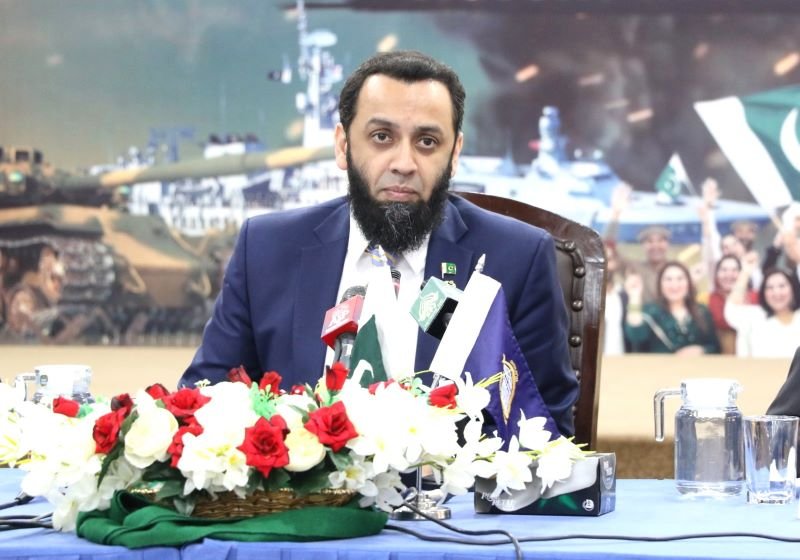
Islamabad (GNP): The Chief Guest, Attaullah Tarar called out India for relying on unsubstantiated allegations and politically motivated narratives following a false flag operation, noting that an FIR was registered within minutes without a credible investigation or evidence.
Tarar emphasized that Pakistan effectively countered misinformation through timely and fact-based engagement with international media and diplomatic forums, further strengthened by Pakistan’s offer for a transparent joint investigation, which remains unanswered. Highlighting the role of the younger generation in the information domain,
Moreover, Atta Tarar said Pakistan successfully projected its narrative globally while exposing the weaknesses and contradictions in India’s claims. He also praised the professionalism of Pakistan’s Armed Forces and the role of indigenous technological capabilities in defending the country, noting that national unity enabled Pakistan to emerge stronger and more respected internationally, while attempts to isolate or intimidate Pakistan ultimately failed.
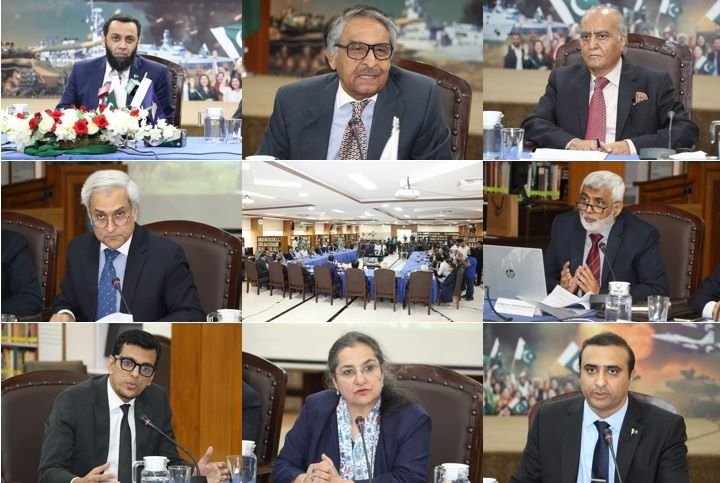
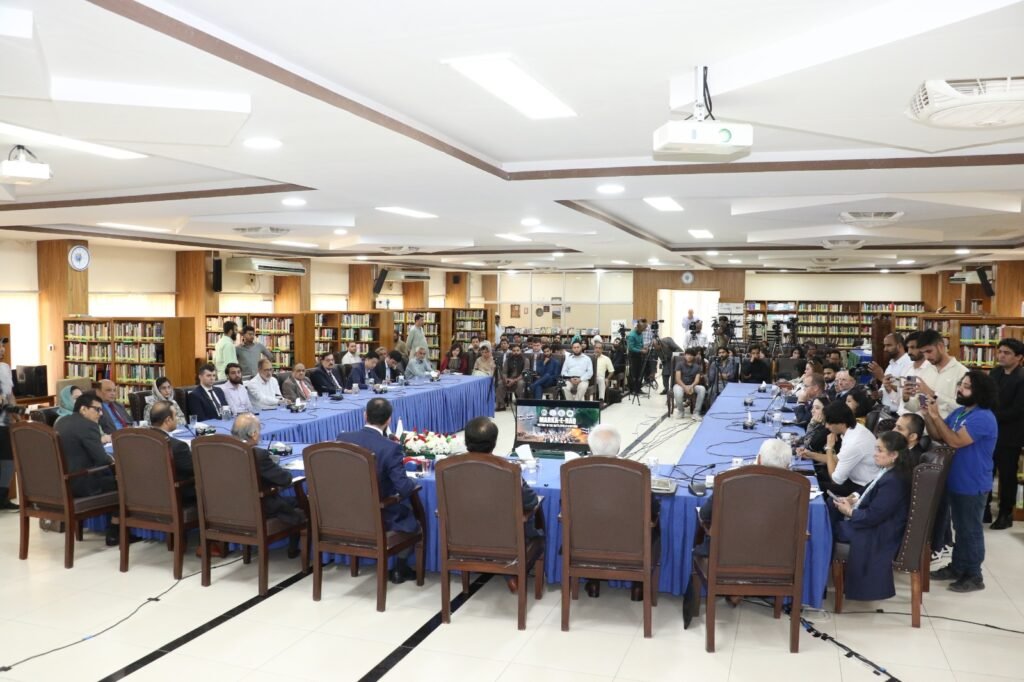
India Study Centre at the Institute of Strategic Studies, Islamabad (ISSI), and Digital Debate jointly hosted a Seminar titled “Marka-e-Haq: Victory in the Battlefield and Beyond”.
Federal Information Minister Attaullah Tarar graced the occasion as Chief Guest, while the former Foreign Minister, Ambassador Jalil Abbas Jilani, was the Guest of Honour.
The speakers included Ambassador Khalid Mahmood, Chairman ISSI; Ambassador Tahir Hussain Andrabi, Foreign Office Spokesperson; Air Marshal (Retd) Farooq Habib, former Vice Chief of Pakistan Air Force; Ms. Nasim Zehra, renowned author and anchorperson; Dr. Khurram Abbas, Director ISC at ISSI; and Ahmad Hassan Al-Arbi, Defense Analyst.
Ambassador Khalid Mahmood observed that the month of May has repeatedly emerged as a defining month in Pakistan’s strategic history. He noted that Pakistan’s response in May conflict combined battlefield success with diplomatic outreach, information management, and political coherence, projecting the country as a confident, responsible, and resilient state committed to regional peace while firmly safeguarding its sovereignty and security interests.
Highlighting the role of the armed forces, diplomats, media, and strategic experts in countering disinformation and shaping international discourse, Chairman ISSI stressed the need to transform these strategic gains into long-term institutional, economic, diplomatic, and intellectual strength through continued national unity and strategic foresight.
Ambassador Jalil Abbas Jilani observed that India’s aggressive posture toward Pakistan has intensified since 2014 under Narendra Modi, with anti-Pakistan rhetoric repeatedly used for domestic political purposes. He argued that the May 2025 crisis followed a familiar pattern of false flag operations, citing Pulwama and Chattisinghpura, noting that India’s narrative failed internationally due to concerns over its transnational assassination campaigns, Hindutva-driven extremism, and strained regional relations. He added that India’s suspension of the Indus Waters Treaty was widely viewed as irresponsible weaponization of water resources.
Dr. Khurram Abbas, Director of the India Study Centre, emphasized in his opening remarks that the May 2025 conflict was imposed upon Pakistan despite its efforts to avoid armed confrontation, yet Pakistan’s response conveyed a clear strategic message that coercion and intimidation as instruments of foreign policy would neither be accepted nor succeed. He further highlighted the centrality of the Jammu and Kashmir dispute, noting that the absence of a just resolution remains a persistent source of instability in South Asia.
Ambassador Tahir Hussain Andrabi outlined Pakistan’s diplomatic efforts to counter India’s maligning campaign, noting that the Prime Minister’s offer for a joint investigation strengthened Pakistan’s narrative internationally. Within two weeks, the Foreign Minister engaged with 60 capitals, and while India propagated misleading narratives, global attention increasingly shifted toward Pakistan’s perspective, translating military success into meaningful diplomatic capital.
Also Read: Syedaal Khan lauds Wazir-e-Azam Apna Ghar Program
Air Marshal Farooq Habib highlighted the coordinated preparations of the Pakistan Air Force, Army, and Navy to convert tactical achievements into strategic gains, while calling for vigilance in light of the evolving character of modern warfare, driven by advanced technologies, unmanned air vehicles, and reduced likelihood of direct physical contact.
In her remarks, Ms. Nasim Zehra noted that Pakistan continues to resist India’s hegemonic tendencies in South Asia while adapting to evolving security dynamics, including developments in IIOJK. She further highlighted Pakistan’s strengthening strategic partnerships, particularly with China, its expanding engagement in West Asia, and its growing role as a responsible diplomatic actor contributing to regional dialogue and stability.
Ahmad Hassan Al-Arabi emphasized that strategic narrative formation has become a core pillar of modern power, where mobile platforms, AI, OSINT, and citizen journalism now define the information battlefield. He noted that contemporary disinformation ecosystems operated by India function through large-scale propaganda and saturation of the information space, blending fact and fiction to distort narratives and shift adversaries into a reactive position.
Al-Arabi stated that Pakistan’s approach during the May 2025 events marked a significant shift by prioritizing truth, transparency, and real-time communication, effectively countering a highly resourced disinformation apparatus. He further emphasized the role of digital media practitioners and youth-led digital warriors in shaping the narrative space through innovative tools such as memes and humor, underscoring that perception itself has become a decisive force multiplier in modern conflicts.

Sohail Majeed is a Special Correspondent at The Diplomatic Insight. He has twelve plus years of experience in journalism & reporting. He covers International Affairs, Diplomacy, UN, Sports, Climate Change, Economy, Technology, and Health.