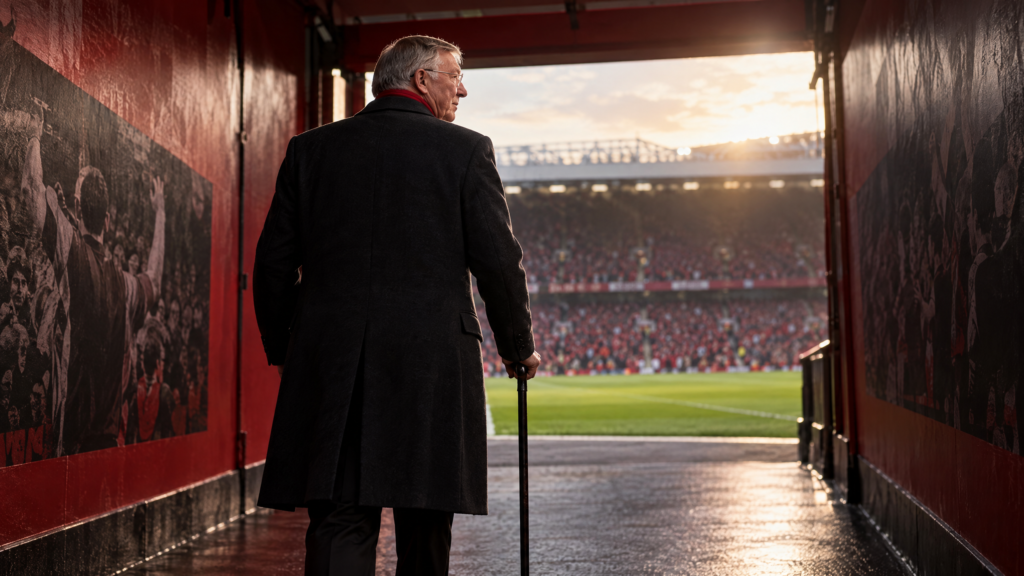
Manchester (GNP): Sir Alex Ferguson has reflected on the brain haemorrhage that nearly ended his life and the football matches that shaped his remarkable career. Speaking as he approaches his 85th birthday, the former Manchester United manager recalled the frightening period following his emergency surgery in May 2018.
Sir Alex Ferguson has openly discussed how the brain haemorrhage became one of the most difficult experiences of his life.
After the haemorrhage, Ferguson was back in Old Trafford, four months later, as Manchester United were playing against Wolves. He and his wife, Cathy, were given a standing ovation by the fans. This was one of the most emotional times in the history of the stadium where most of Ferguson’s achievements occurred.
Sir Alex Ferguson’s return to Old Trafford showed the emotional connection he continued to have with Manchester United and its supporters.
When he had the haemorrhage, Ferguson was 76 years old. By then, he had already been out of Manchester United for five years. Throughout 26 years at Manchester United, Ferguson has won 38 titles, 13 Premier League titles, and two Champions League titles.
Sir Alex Ferguson remains closely associated with one of the most successful periods in Manchester United’s history.
In his latest book, Games of My Life, he tells about 21 games which were influential in his life. These games tell his life story from his days in Glasgow to his times at Manchester United.
Sir Alex Ferguson uses these important games to explain the experiences that influenced his football career and personal journey.
The book also gives some insights into how difficult the recovery process was for him. Ferguson lost his voice after the surgery and used a speech therapist to help him get it back. He used to write about various things like birds, animals and rivers.
For Sir Alex Ferguson, recovery involved patience, rehabilitation and a gradual return to everyday communication.
It all started when Ferguson’s mother, Elizabeth, boosted his confidence while his father, Alexander, who used to work in the shipyard gave Ferguson some tough but productive criticism. When he was 13 years old, Ferguson participated in his first cup final game, playing for Govan High School in 1955.
Sir Alex Ferguson’s early family life played an important role in shaping the determination that later became visible throughout his career.
One of the most significant moments in Ferguson’s life was the time when he played for St Johnstone. He was disappointed in football and wanted to leave for Canada; however, he managed to score a hat-trick playing against Rangers in 1963 when there was an outbreak of flu.
Later in life, Ferguson became one of the most successful football managers. In 1986-2013, he managed Manchester United in about 1,500 games, assembling squads which competed with other clubs in various national and international competitions.
Also Read: Pakistan Rolls Out National Mental Health Policy in Islamabad
There were also several disputes and controversies in Ferguson’s career. For instance, the transfer of Paul Ince to Inter Milan in 1995 made many fans angry. Also, later Ferguson admitted his regret on calling Ince a “big time Charlie.”
One other key milestone was the rise of the Manchester United Class of 92, featuring the likes of Ryan Giggs, Gary Neville, Paul Scholes, and David Beckham, after the departure of some of their veteran teammates such as Ince and Mark Hughes.
In addition to winning trophies and maintaining good records on the football pitch, there are other aspects of Ferguson’s career that go beyond those achievements. His experience with a life-threatening health challenge, reminiscences about his family, and thoughts about key games he has played in indicate that his career has been marked by tenacity, tough choices, and people.