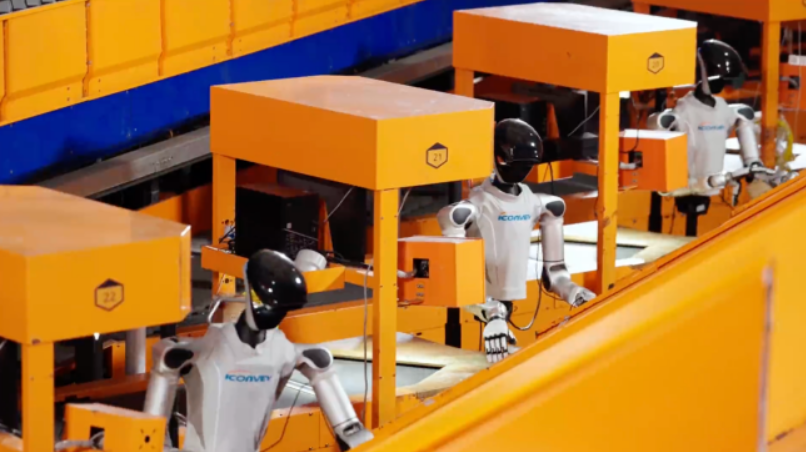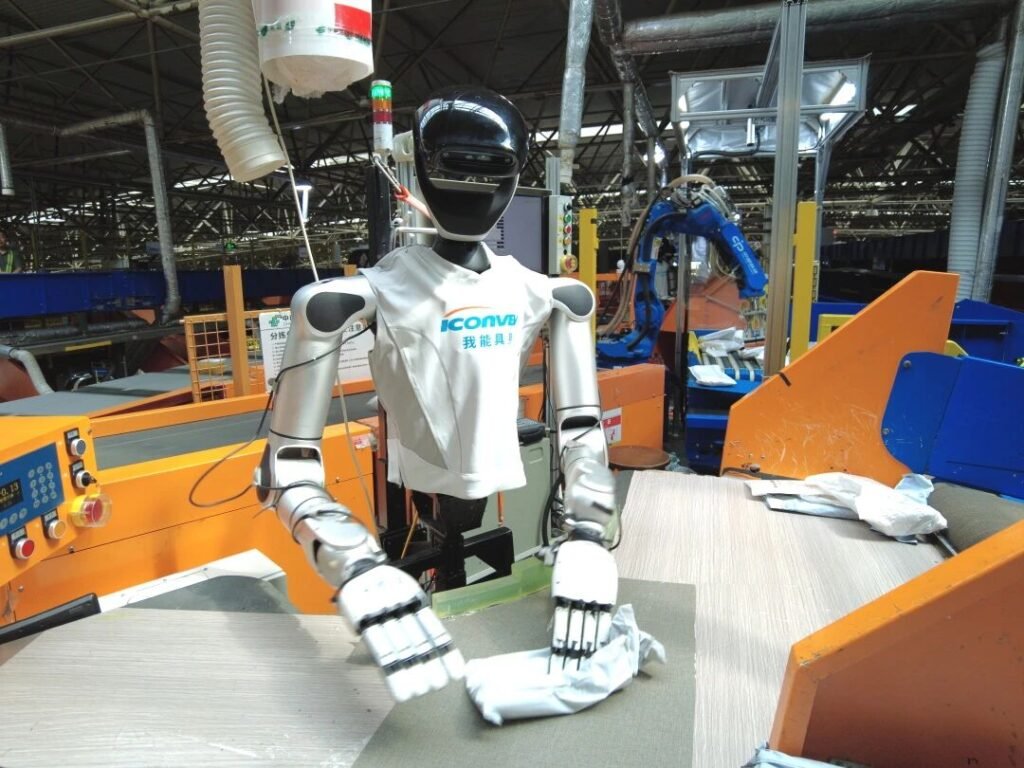
China (GNP): Artificial intelligence and robotics are transforming logistics operations in southern China, with AI-powered robots being deployed to improve parcel sorting and handling at China Post’s Guangzhou Mail Processing Center in Guangdong Province.
According to China Science, the facility handles approximately 6.5 million mail items each day, with the volume rising to more than 10 million items during peak periods.
The growing scale of operations has created a strong demand for faster, more efficient and technologically advanced logistics systems.
The AI-powered robots deployed at the centre are equipped with multimodal perception and autonomous decision-making capabilities.
These technologies allow the machines to perform a range of tasks involved in parcel processing, including loading packages, identifying irregular items and sorting large quantities of parcels.
Also Read: NASA Tests Innovative Wheel Designs for Future Moon Base
The robots are reportedly capable of sorting up to 1,200 parcels per hour, helping streamline operations in one of the key stages of the logistics process.
Their deployment reflects the increasing use of artificial intelligence and automation in large-scale logistics and postal networks.
The integration of intelligent machines is expected to improve operational efficiency while helping logistics facilities manage rapidly increasing parcel volumes.
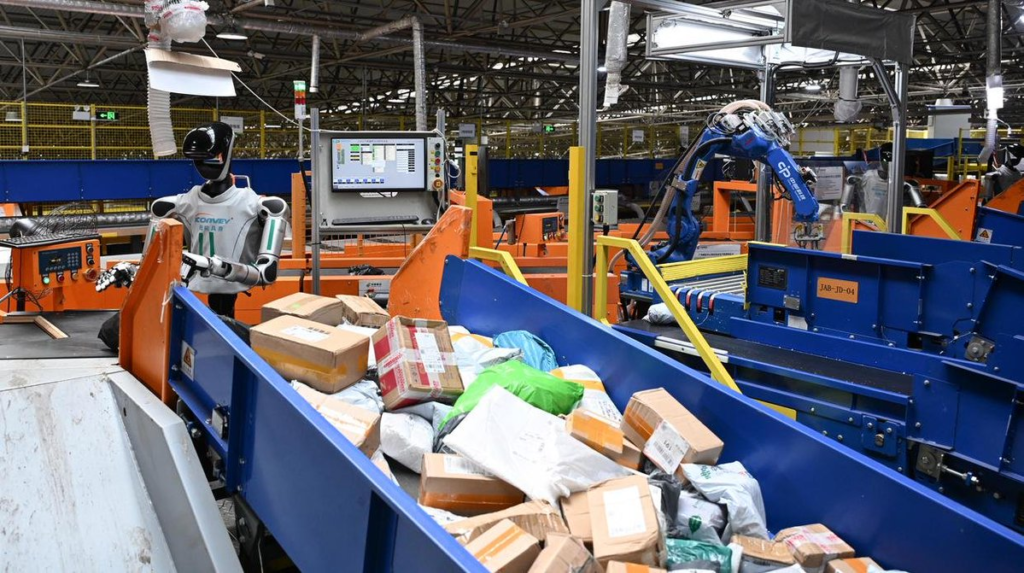
Automated systems can perform repetitive sorting and handling tasks continuously, reducing pressure on conventional processing operations.
The development also highlights the broader transformation taking place in China’s logistics sector, where artificial intelligence, robotics and autonomous technologies are increasingly being integrated into industrial and commercial operations.
With e-commerce and parcel deliveries continuing to expand, logistics providers are under growing pressure to process shipments quickly and accurately.
The Guangzhou facility’s use of AI-powered robots demonstrates how advanced technologies are being applied to meet these demands and build smarter logistics infrastructure.
The development marks another step in the integration of artificial intelligence into everyday industrial operations and highlights the growing role of robotics in shaping the future of logistics.