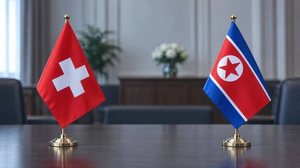
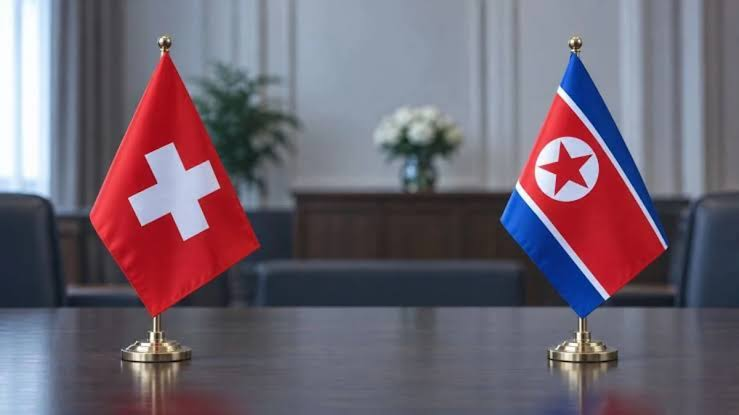
Seoul (GNP): Can sanctions imposed by one country lead to the breakdown of diplomatic relations with another? North Korea’s latest decision against Switzerland has brought this question into focus.
On November 25, 2026, North Korea ordered the head of Switzerland’s diplomatic office in Pyongyang to leave the country within 48 hours.
The decision came after Switzerland imposed sanctions on a North Korean children’s camp over allegations connected to the transfer of Ukrainian children from Russian-occupied territories.
The development has created a new diplomatic dispute between two countries that had recently taken steps to improve communication. It also highlights how the Russia-Ukraine war continues to influence relations far beyond Europe.
North Korea Orders Swiss Diplomat to Leave
North Korea’s Foreign Ministry declared Sylvain Astier, head of Switzerland’s diplomatic office in Pyongyang, persona non grata. This diplomatic term means that a country considers a foreign diplomat unacceptable and requires that person to leave its territory.
The North Korean Foreign Ministry summoned Astier and delivered an official memorandum demanding the closure of the Swiss diplomatic office. The order gave him 48 hours to leave the country.
North Korea’s state-run Korean Central News Agency (KCNA) reported that the decision was a response to what Pyongyang described as Switzerland’s hostile action against its sovereignty and national interests.
The timing is particularly important because Switzerland had only recently reopened its diplomatic office in North Korea. The decision now places that diplomatic presence at risk just weeks after both countries showed interest in improving their relationship.
The main reason behind the dispute is the Songdowon International Children’s Camp, located in the eastern coastal city of Wonsan, North Korea.
Switzerland added the camp to its sanctions list in November 2026 as part of its measures connected to Russia’s war against Ukraine. Swiss authorities accused the facility of participating in programmes involving the transfer of Ukrainian children from Russian-occupied territories to North Korea.
They also raised concerns that children were exposed to propaganda and activities promoting pro-Russian narratives. These are serious allegations involving children’s rights and the effects of war on young people.
However, it is important to distinguish between the allegations made by Western governments and North Korea’s response. Pyongyang has rejected the sanctions and defended the camp as part of legitimate cooperation with Russia.
Also Read: Eisenkot Lands First Coalition Deal in Race to Lead Israel
The United Kingdom and European Union had also imposed similar sanctions on the facility before Switzerland’s decision.
These measures included freezing assets and restricting financial transactions connected to the camp. Their practical impact remains uncertain because North Korea has limited financial links with European countries.
Kim Yo Jong Condemns Switzerland’s Decision. The diplomatic tension increased after Kim Yo Jong, the influential sister of North Korean leader Kim Jong Un, publicly criticised Switzerland.
She described the sanctions as an open hostile act and argued that they violated North Korea’s sovereignty. She also defended the camp, presenting it as a place that provides children with cultural and recreational opportunities through cooperation with Russia.
On November 24, she indicated that North Korea should reconsider its relationship with Switzerland and that the Foreign Ministry should examine whether the Swiss diplomatic office should be withdrawn.
Her statement was followed by the Foreign Ministry’s decision to declare the Swiss diplomat persona non grata and demand his departure.
This sequence suggests that the expulsion was not an isolated diplomatic disagreement. Instead, it followed a series of warnings from senior North Korean officials.
Switzerland Wants to Maintain Diplomatic Dialogue
Despite North Korea’s response, Switzerland has defended the purpose of its diplomatic presence in Pyongyang.
Switzerland’s Federal Department of Foreign Affairs explained that reopening its diplomatic office was independent of its sanctions policy. The government said the office was intended to maintain communication with countries even when disagreements exist.
Switzerland has maintained diplomatic relations with North Korea since 1974. It is also one of the few Western countries that has continued to maintain diplomatic engagement with Pyongyang.
The Swiss diplomatic office was previously closed in 2020 during the COVID-19 pandemic, when North Korea shut its borders. Its reopening was therefore an important step towards restoring direct communication.
Swiss Foreign Minister Ignazio Cassis visited North Korea in late October 2026 and held talks with senior North Korean officials, including Foreign Minister Choe Son Hui. The visit focused on promoting dialogue and cooperation.
However, the latest dispute has raised questions about whether those diplomatic efforts can continue.
Russia’s Role in the Growing Tension
The disagreement also reflects North Korea’s increasingly close relationship with Russia. Since Russia launched its full-scale invasion of Ukraine in 2022, Moscow has faced growing international pressure and sanctions.
North Korea has strengthened its relationship with Russia during this period. Pyongyang has provided Moscow with weapons and thousands of troops in support of its war effort, while the relationship may also involve Russian assistance and military technology transfers.
This growing partnership has become an important part of North Korea’s foreign policy. Its relationship with Russia provides opportunities for political and military cooperation, while also increasing tensions with Western governments.
The dispute over the Songdowon camp demonstrates how the Russia-Ukraine war can affect countries that are geographically far from the battlefield.
Switzerland’s sanctions, North Korea’s response and the involvement of the United Kingdom and European Union show how the conflict has expanded into diplomatic and economic relations.
North Korea’s decision sends a strong message about how it responds to foreign sanctions. It also creates a difficult situation for Switzerland, which wants to maintain diplomatic communication while continuing to implement its foreign policy decisions.
The incident raises an important question: can countries maintain diplomatic relations when they strongly disagree over international conflicts, sanctions and sovereignty? For Switzerland, keeping communication channels open is an important part of its diplomatic approach.
For North Korea, accepting sanctions against a facility inside its territory appears to be a challenge to its sovereignty. The situation may also influence how other Western countries approach diplomatic engagement with Pyongyang.
If North Korea continues to link diplomatic relations with sanctions decisions, future efforts to improve communication could become more difficult.
North Korea’s order for Swiss diplomat Sylvain Astier to leave within 48 hours marks a significant setback in relations between Pyongyang and Bern.
What began as a disagreement over sanctions against the Songdowon International Children’s Camp has developed into a wider diplomatic confrontation.
The dispute is also connected to the broader Russia-Ukraine war, North Korea’s growing partnership with Moscow and Western concerns over the treatment of Ukrainian children.
Although Switzerland has expressed its intention to preserve diplomatic dialogue, North Korea’s latest decision raises doubts about the future of its diplomatic office in Pyongyang.
The coming days will be important in determining whether both countries can prevent this disagreement from turning into a longer diplomatic engagement.