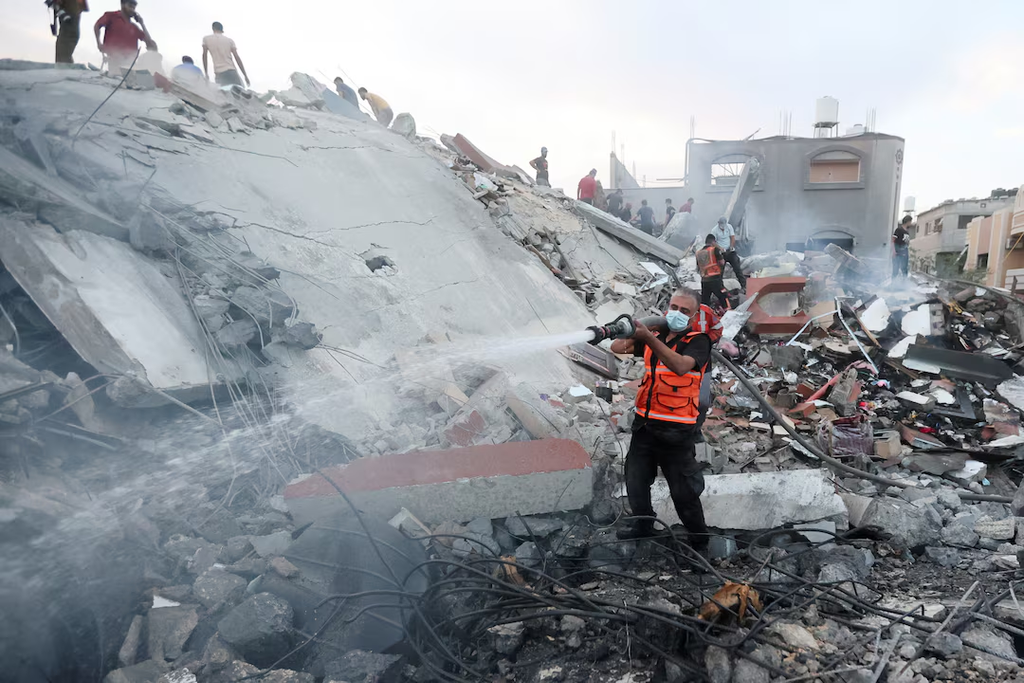
For most of the past three years, the story of Israel in South America was one of rupture. Bolivia cut diplomatic ties in late 2023. Colombia’s Gustavo Petro followed in May 2024, after joining South Africa’s genocide case against Israel at the International Court of Justice. Brazil and Chile became among the hemisphere’s sharpest critics of the war in Gaza.
That story has reversed with striking speed. In December 2025, Bolivia’s new center-right president, Rodrigo Paz, restored relations through a declaration signed, tellingly, in Washington. In August 2026, Colombia’s Abelardo de la Espriella took office promising the same. Within weeks Bogotá had scrapped visa requirements, moved to withdraw from the ICJ case and recognized Israeli sovereignty over the Golan Heights; in October it opened an embassy in Jerusalem. Argentina’s Javier Milei, meanwhile, has made Israel a pillar of his foreign policy and championed the “Isaac Accords”, a framework modelled on the Abraham Accords to draw more Latin American states into Israel’s orbit.
It is tempting to read this as one chapter of a larger story: Israel growing into a global actor in its own right just as American hegemony frays, and perhaps hastening the fraying. That argument deserves a serious hearing. It also deserves more care than it usually gets, because it bundles together three claims that are not the same.
Three claims, not one
The first is that Israel’s influence in South America is expanding. The evidence for that is strong. The second is that American power is in relative decline. That is plausible and widely argued, though easily overstated. The third is that Israel’s rise is contributing to that decline, or imposing strategic costs on Washington. This is the most consequential claim and the hardest to prove. Two trends unfolding at once do not establish that one drives the other, yet much public debate slides from the first two claims to the third without showing the mechanism.
What is driving the realignment
Several forces are at work, and they do not all point the same way. The most visible is the electoral pendulum. The governments that broke with Israel were on the left; those restoring ties are on the right. Support for Israel has become part of a broader conservative identity in the region, bundled with anti-socialism, hardline security policy and hostility to Iran.
A second force is religious. The rapid growth of evangelical Christianity, particularly in Brazil and Central America, has created constituencies whose support for Israel rests on theology rather than strategy. Political scientist Tom Ziv, examining 198 UN General Assembly votes by 18 Latin American states between 2009 and 2019, found that larger evangelical populations were associated with more pro-Israel voting. This gives Israel something few small states possess: committed advocates inside other countries’ politics who owe it nothing institutionally.
Third is practical demand. Israeli expertise in irrigation, water management, cybersecurity, surveillance and defense technology appeals to governments facing drought, organized crime and porous borders. Colombia’s military has long fielded Israeli-made rifles and fighter-bombers. Purchases, training programs and intelligence links of this kind tend to outlast the rhetoric of any single government. This is not new. During the Cold War, Israel sold arms to and trained the forces of several military governments in the region, and the Israel–Mercosur free trade agreement, signed in 2007, gave the relationship a commercial floor that did not depend on which party held power. Today’s realignment builds on that scaffolding rather than starting from nothing.
The fourth force complicates the story of Israeli autonomy: much of the realignment runs through Washington. Bolivia’s restoration was signed there, and so was Colombia’s roadmap with Israel’s foreign minister. The Isaac Accords were launched with the US ambassador to Israel in attendance and are explicitly framed as extending the Abraham Accords of Donald Trump’s first term. For leaders such as Paz and de la Espriella, warming to Israel is partly a way of warming to the Trump administration.
Governments are moving; publics are not
Whatever its drivers, the shift belongs to governments more than societies. Pew Research Center’s spring 2026 survey found majorities with unfavorable views of Israel in five of the six Latin American countries polled, from 52 per cent in Brazil to 60 per cent in Chile. In Argentina, under the region’s most pro-Israel president, unfavorable views rose from 46 per cent in 2025 to 55 per cent in 2026.
That gap matters. Bolivia and Colombia show how quickly policy can flip with a change of government, and it can flip back just as fast. A partnership anchored in presidential palaces but not in public opinion is real while it lasts, but it is not yet durable.
The most accurate description of Israel’s position, then, is not a regional power but something closer to a transregional network power. It does not dominate South America economically or militarily. Instead it occupies a node in several overlapping networks, diplomatic, religious, commercial and security, and draws influence from all of them at once.
The American side of the ledger
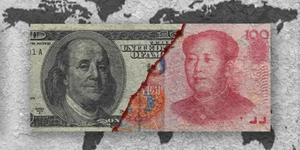
The case for relative American decline is real but often exaggerated. China is now the largest trading partner of Brazil, Chile and Peru, and Latin American governments routinely hedge between Washington and Beijing. American credibility on international law has suffered across much of the Global South over Gaza, and domestic polarization makes long-term commitments harder to sustain. Yet the United States retains unmatched military reach, financial centrality and alliance networks. The better description is a declining ability to convert power into predictable outcomes, not a collapse of power itself.
Within that frame, what does Israel cost America, and what does it give? The benefits are tangible: intelligence sharing, co-developed missile defense, defense-industrial cooperation and a capable partner in a volatile region. So are the outlays. The Congressional Research Service puts cumulative US bilateral assistance and missile-defense funding at about $174 billion in nominal terms, and the current memorandum commits $3.8 billion a year through fiscal 2028.
The harder costs are less easily priced. The joint US-Israeli military campaign against Iran, launched in February 2026, shows how the partnership can draw Washington directly into regional war. Supporters argue it advanced long-standing American aims against Iran’s nuclear program and proxies; critics argue it diverted attention from the Indo-Pacific and pushed up fuel prices at home. Both readings can be tested against outcomes; neither should simply be assumed.
Then there is domestic politics. In March 2026, Pew found that 60 per cent of Americans viewed Israel unfavorably, up from 53 per cent a year earlier and about 42 per cent in 2022. Among adults under 50, the figure reached 70 per cent, while White evangelicals and Jewish Americans remained roughly two-thirds favorable. A bipartisan consensus is becoming a partisan and generational divide, even as congressional support has moved far less than public opinion.
Influence is not control
That divergence is where the debate over pro-Israel lobbying belongs, and where it most needs discipline. Organized advocacy by groups such as AIPAC is a normal part of American democracy; so is the evangelical vote. The existence of lobbying proves nothing about control, and claims that Israel “runs” US policy are unfounded and corrosive.
The legitimate question is narrower. When Washington backs Israel, is it because both governments independently want the same thing, or because changing course would carry domestic costs that policymakers prefer to avoid? The first is preference alignment; the second is policy constraint. Specific episodes, such as decisions to condition or release arms shipments, or to veto UN resolutions, can be examined to tell them apart. That is a question for evidence, not conviction.
Also Read: G7 Nations Act as ‘Responsible Great Powers’ of Crisis-driven World
The real question
Taken together, the evidence does not show that Israel is pulling down American power. In South America, Israel’s recent gains have largely travelled alongside American influence rather than against it. What the evidence does show is subtler, and arguably more important for Washington.
American support has helped make Israel a capable state with its own networks of partners and sympathizers abroad. Those networks give Israel options, and options reduce any patron’s leverage. The United States increasingly finds that equipping an ally does not mean steering it.
The test will come when the political winds change. If Israel’s ties in Buenos Aires, La Paz and Bogotá survive a future US administration less aligned with its government, that would be strong evidence of genuine autonomy. If they survive a swing back to the left in those capitals, it would show Israel has built something deeper than a club of like-minded presidents. Neither has happened yet.
Until then, the most defensible conclusion is a question. Can the United States remain the world’s leading power while its options are increasingly shaped by the choices of the allies it arms? South America may be where that question is answered first.
The views presented in this article are the author’s own and do not necessarily reflect the views of Global News Pakistan