U.S. sanctions on Indian and Turkish businesses raise questions about sovereignty and expose U.S. economic power over global financial relations.
The recent sanctions on individuals and companies in India and Turkey for supporting Iran show how economic power remains a significant tool of modern foreign policy. The motive is to limit Tehran’s access to the money that funds its oil business and financial networks, as the U.S. prioritises cutting off Tehran’s finances. The consequences reach beyond Iran, because they affect the financial sovereignty of other nations.
US Targeting States for Supporting Iran
A major point to highlight is the power a single country holds to affect commercial activity in other countries, even on other continents. Washington’s authority over key economic infrastructure, its ability to block dollar transactions and its influence over global financial markets make foreign businesses vulnerable to serious economic risks. Businesses that deal with sanctioned companies may be restricted from accessing part of the American financial system. Hence, even companies that do not operate directly in the U.S. must remain alert to U.S. sanctions in their business transactions.
This shows a significant paradox in the global economic structure. Globalisation has facilitated the liberalisation of trade and economic activity across borders, but major economic powers still dominate the financial architecture. While states hold the legal authority to form and implement their own economic policies, their dependence on international financial networks can greatly limit their financial autonomy.
US Versus Iran: Sanctions on India and Turkey
This raises diplomatic and economic problems for India and Turkey. Both countries safeguard their own regional agendas and foreign policy requirements, which do not always align with Washington’s agenda on Iran. American sanctions put strain on governments and businesses that pursue economic ties with Iran, mainly by applying pressure and maintaining an upper hand.
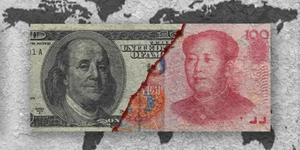
Also Read: Yuan Challenge to Dollar: A Currency Competition
However, the potential of sanctions also needs to be evaluated critically. Financial restrictions can increase economic pressure, but they do not automatically lead to political compliance or a change in state behaviour. In fact, targeted countries may eventually move towards alternative trading and financial networks and partnerships to reduce their reliance on Western institutions. This could create an alternative path that slowly fragments the international financial system.
The issue is not simply that Washington is constantly attempting to limit Iran’s economic activities. It raises a more complex question about who holds the power to decide the terms of international trade and what the future holds for targeted states. Economic interdependence can become a geopolitical strain when one state’s domestic and foreign policy disputes affect other states’ businesses and governments. The global community’s challenge is to balance national economic sovereignty with a globalised financial system.