ISLAMABAD (GNP): Former Federal Minister Khurram Dastgir Khan said in SDPI Conference: Urges Energy Diversification and Western-Border Engagement; Lawmakers Press for Renewable Push.
He said US withdrawal from its traditional global role is among the most significant shifts in the international order, and warned that the long-standing guarantee of freedom of navigation, which global maritime trade depends on, is under threat.
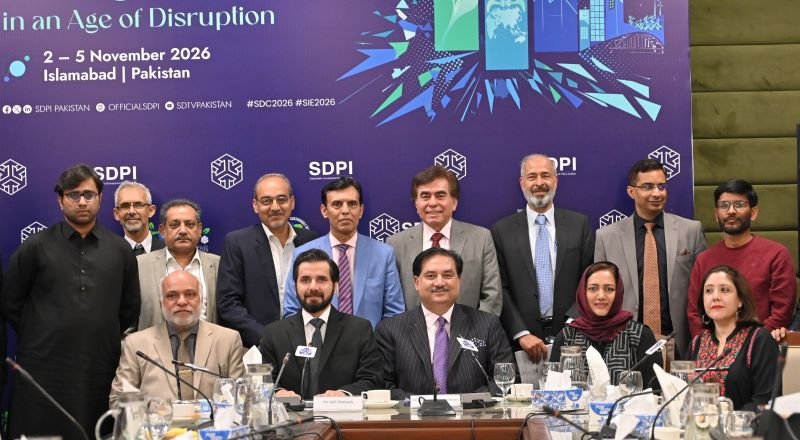
He spoke at a session titled “Shifting Geopolitics: Risks, Resilience and Prosperity” on the third day of the 29th Sustainable Development Conference, organised by the Sustainable Development Policy Institute (SDPI).
Dastgir said the threat to navigation could spread from the Strait of Hormuz to the Bab el-Mandeb, and then possibly to the Suez or Panama canals. He added that a change in US leadership could alter Washington’s approach toward Islamabad, and repeated that Pakistan should prioritise energy diversification and step up engagement along its western borders.
SDPI Executive Director Dr Abid Qaiyum Suleri reviewed the changing geopolitical landscape after the US-Israel-Iran war. He stressed Pakistan’s delicate position and the need to meet new challenges with strategic foresight and resilience.
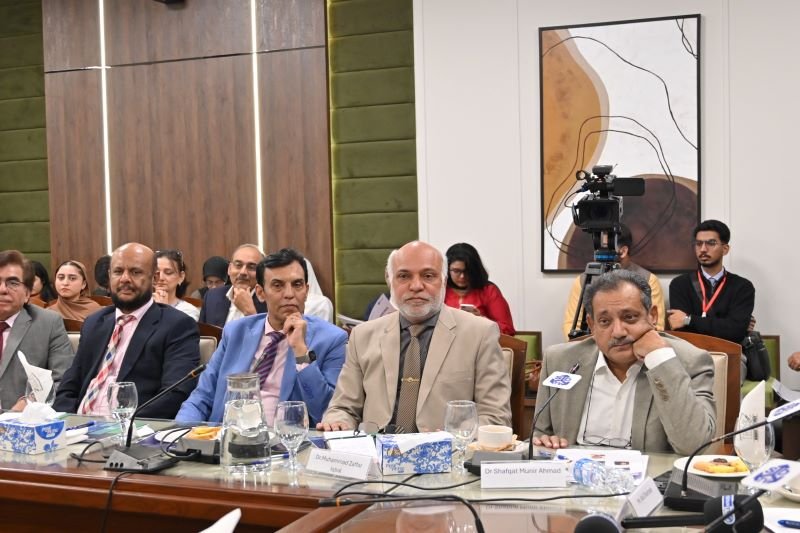
Haroon Sharif, Chairman of the Pakistan Regional Economic Forum (PREF), said the ability of one country to use force to control others has changed, and that persistent global economic uncertainty and rising macroeconomic risk have altered the investment climate worldwide. A major intervention in the ongoing US-Iran conflict, he warned, would raise risk premiums for trade, particularly Pakistan’s exports.
Riffat Masood, a former Pakistani ambassador to Iran, said the region has lived with conflict for generations and developed its own capacity to cope, citing Iran as an example. She said Pakistan has neglected its borders, especially the western frontiers with Iran and Afghanistan.
At a plenary titled “Utility-Scale Renewable Energy: Federal Policy, Provincial Priorities and Implementation Gaps,” parliamentarians, policymakers and development professionals urged federal and provincial governments to speed up the shift to utility-scale renewables by improving intergovernmental coordination, resolving policy inconsistencies and closing implementation gaps in the power sector. Participants said provinces must be part of energy planning and decision-making, resources must be shared equitably and the climate for renewable investment must improve.
They argued that centralised policymaking alone cannot solve the country’s energy problems and called for stronger parliamentary oversight, better implementation of existing policies and stronger provincial institutions to tap solar, wind, hydropower and other sources.
MNA Dr Nafisa Shah said the disconnect between federal policymakers, provincial governments and elected representatives is a major cause of the energy problems. She described two stories of Pakistan, one of energy crisis and one of renewable success, and blamed the crisis partly on expensive power purchase agreements, take-or-pay contracts and dollar indexation.
New federal energy initiatives, she warned, could add stranded costs for consumers, and she stressed energy federalism, equity and democracy. Problems will not be resolved, she said, unless policy is equitable, democratic, devolved and inclusive of all stakeholders, and she urged provinces to raise these concerns in their assemblies.
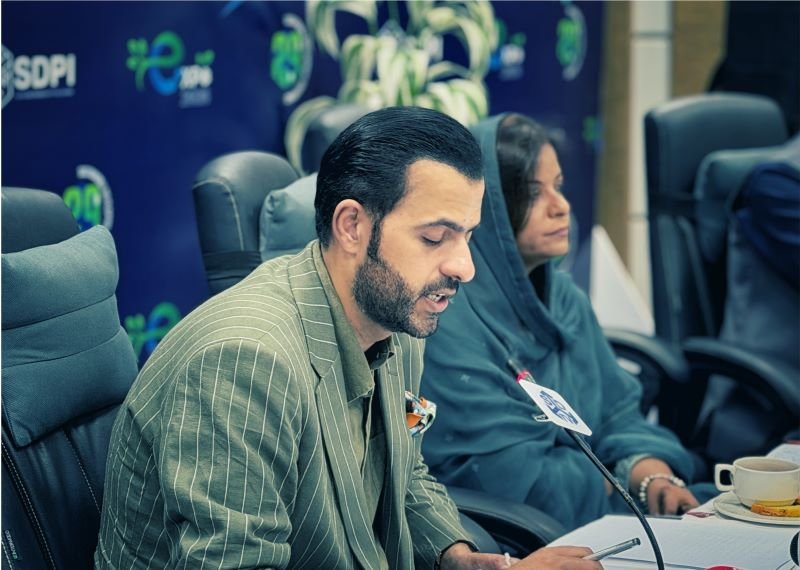
MNA Barrister Danyal Chaudhry called the energy transition an economic necessity, a strategic imperative and a chance to redefine the national future. He noted that citizens have taken up rooftop solar out of resilience, pushing net-metering capacity sharply higher, and urged policymakers to prioritise utility-scale solar and reform legislative frameworks. A future for 250 million people, he said, cannot be built without a policy and work to implement it.
Also read: SDPI Conference Tackles Water Security and Energy Transition
MNA Riaz Fatyana said Pakistan has about 50,000 megawatts of installed generation capacity, with renewables making up roughly 20 per cent. That share could reach 30 per cent by 2030 if the 2019 renewable energy policy stays in place. He asked for the solar net-metering system to be restored, saying its suspension has caused unrest among consumers who invested in solar.

Sohail Majeed is a Special Correspondent at The Diplomatic Insight. He has twelve plus years of experience in journalism & reporting. He covers International Affairs, Diplomacy, UN, Sports, Climate Change, Economy, Technology, and Health.