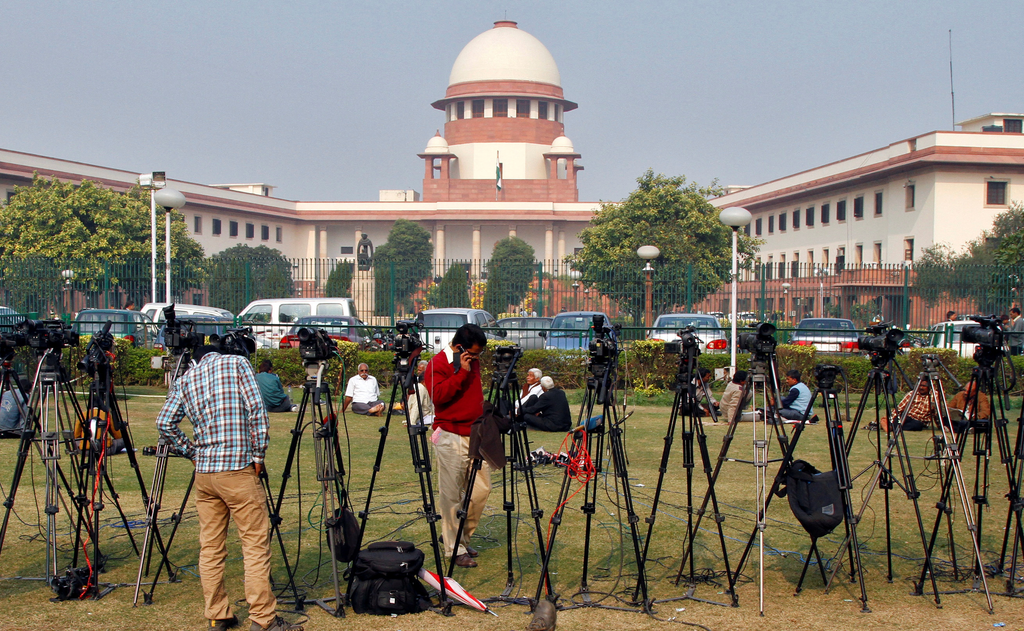
New Delhi (GNP): Twenty-one major Indian news publishers have asked the Supreme Court to strike down parts of the government’s digital privacy law. They argue that it endangers press freedom and investigative journalism.
The petitioners include media companies controlled by billionaires Mukesh Ambani and Gautam Adani. The case is scheduled for a hearing today, making it one of the most significant legal challenges to India’s data protection framework.
The Digital News Publishers Association (DNPA) filed the petition on October 6. It targets provisions that could force journalists to disclose confidential sources, obtain consent from the subjects of their investigations and remove published reports.
At the centre of the dispute is the Digital Personal Data Protection law, which was introduced under Prime Minister Narendra Modi to safeguard citizens’ personal information. The publishers say it offers no adequate exemption for journalistic activity.
That gap, they argue, creates practical problems. Journalists could be required to seek consent before processing personal information during an investigation. The association warns that notifying a subject could allow them to destroy evidence or intimidate witnesses.
The same logic applies to reports already in print. The law lets individuals withdraw consent and request deletion of their personal data, and the publishers fear this could push news organisations to take down factual reporting.
Also Read: Tehran Talks Put Iran and Makkah Pact Allies at One Table
The petition also challenges the government’s power to demand information from organisations that handle personal data. According to the publishers, such demands could expose journalists’ confidential communications and discourage whistleblowers from coming forward.
DNPA members include Ambani’s Network18, the Adani-owned NDTV, the Indian Express and Times Internet. The publishers say assurances given by government officials in August are not enough without explicit legal protection for journalism.
The timing adds urgency. The disputed provisions are scheduled to take effect in May 2027.
The government maintains that it respects press freedom and has defended India’s media environment against international criticism.
The Supreme Court’s decision could shape how India balances the protection of personal data against the freedom of the press to investigate and report.

Managing Editor at Global News Pakistan (GNP), with a Bachelor's degree in International Relations from Riphah International University, graduated with a Gold Medal. Reach out at sabahtareengnp@gmail.com