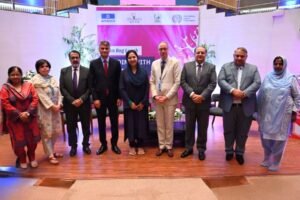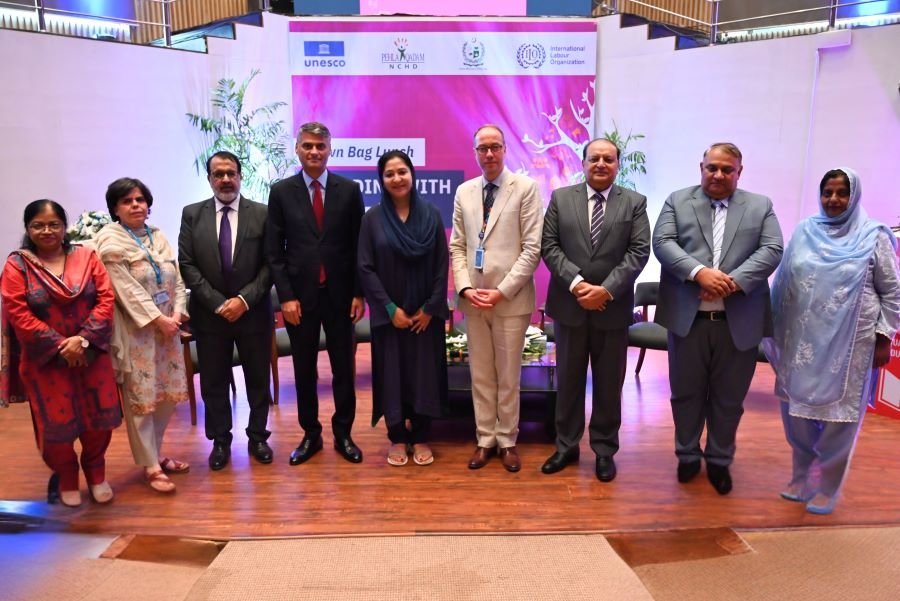
ISLAMABAD (GNP): An ILO–UNESCO Brown Bag Lunch dialogue was held at the ILO Office in Islamabad to mark World Teachers’ Day 2026 and the 60th anniversary of the ILO/UNESCO Recommendation concerning the Status of Teachers. The event was organised with the Federal Directorate of Education (FDE) and the National Commission for Human Development (NCHD) under the theme “Standing with Pakistan’s Teachers: Decent Work, Professional Status and the Future of Teaching.”
Wajeeha Qamar, Minister of State for Federal Education and Professional Training, attended as chief guest. She said teachers are central to Pakistan’s education transformation. As the country pushes reforms to improve learning outcomes, widen access and adopt new technologies, she argued, it must invest in teachers’ professional growth, build their capacities and give them the support and resources to deliver quality education. Empowering teachers, she added, is essential to an inclusive and equitable education system.
Representatives of government, educational institutions, UNESCO, UNICEF and the ILO took part to discuss an urgent national problem: more than 25 million children are out of school, and much of the burden of this crisis falls on teachers.
Front-line educators are coping with overcrowded classrooms, changing technologies and evolving learning environments, and lasting reform, participants said, cannot succeed without direct investment in teachers’ professional status, working conditions and well-being.
While international partners and state officials stressed the need to align education policy with decent work, local educators brought the realities of the classroom into the policy conversation. A speaker from the FDE colleges said teachers know from practice what works, and that policies become more responsive and effective when that experience feeds into curriculum development and reform.
Lubna Mahmood, Headmistress of Islamabad Model College for Girls G-10/2, said that after 26 years in the classroom she has watched the teacher’s role keep changing. Professional development, she explained, lets teachers keep learning, try new methods, respond to shifting needs and carry those skills back to their students.
Participants identified three linked priorities:
- Education reform should connect policy with practice by involving educators directly in curriculum design and national decision-making.
- Education financing should become steady, direct investment in the teaching workforce and classroom resources, especially in underserved communities.
- As classrooms adopt digital tools and artificial intelligence, technology should empower teachers and improve their work rather than deepen existing inequalities.
Also read: COMSTECH, Alecso sign two-year programme for scientific cooperation
The dialogue ended with a joint appeal: supporting, protecting and resourcing teachers is not merely a workplace matter but the foundation for inclusive, high-quality education for every child in Pakistan.

Sohail Majeed is a Special Correspondent at The Diplomatic Insight. He has twelve plus years of experience in journalism & reporting. He covers International Affairs, Diplomacy, UN, Sports, Climate Change, Economy, Technology, and Health.