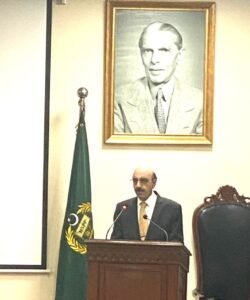
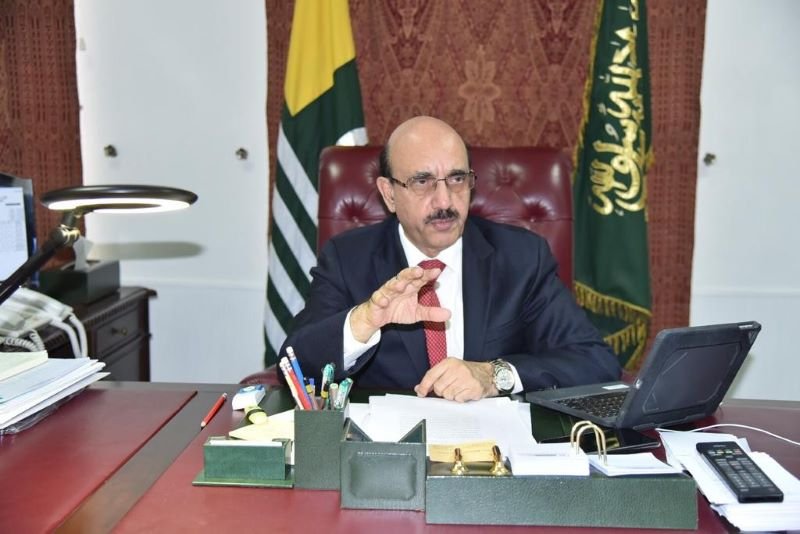
Islamabad (GNP): Pakistan’s emergence as a leading peacemaker in 2026 adds to its decades of service as one of the UN’s major peacekeeping contributors and upholds the principles of the UN Charter, according to Sardar Masood Khan, a former Pakistani ambassador to the United States, China and the United Nations, and a former President of Azad Jammu and Kashmir.
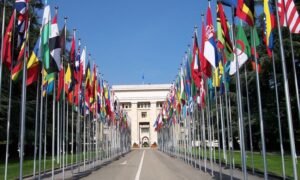
In a television interview after UN Secretary-General António Guterres’s trip to Pakistan, Khan described the visit as important in both symbolic and practical terms for Pakistan and the UN. He recalled that Pakistan has taken part in UN peacekeeping since 1960, deploying personnel on several continents and paying a heavy price in the process. Thousands of Pakistani troops, he said, still serve under the UN flag. Seen in that light, he argued, Pakistan’s peacemaking role this year is a natural extension of its long-standing dedication to global peace and the Charter.
Khan said Pakistan first brought together regional states, among them Saudi Arabia, Egypt and Türkiye, to form a common position behind its mediation efforts. Backing then followed from China, the European Council, Canada, Australia, the OIC and Gulf states. In effect, he said, Pakistan carried out a function the UN itself is meant to perform, by helping to prevent conflict and open the way to peace.
The visit, he added, gave the UN a chance to recognise Pakistan’s work in both peacekeeping and peacemaking. He also pointed to Guterres’s long connection with Pakistan, including his support in times of humanitarian crisis and his drive to mobilise international aid after the catastrophic 2022 floods.
Khan observed that splits within the Security Council, especially among its five permanent members, are hampering decision-making at the UN. Even so, he said, Guterres has kept working to settle disputes and to help people living through conflict and oppression.
On Jammu and Kashmir, the Indus Waters Treaty and terrorism originating on Afghan soil, Khan said Pakistan has had moral and diplomatic support from the UN and its Secretary-General. Institutional limits, however, have kept the organisation from offering active help beyond statements and diplomatic messaging.
Khan said he hopes the next Secretary-General will give Jammu and Kashmir a higher place on the international diplomatic agenda, calling it a possible nuclear flashpoint that needs lasting global attention.
Also read: CDF reaffirms Pakistan’s commitment to int’l peace
He added that Pakistan still faces a grave terrorism threat. While the global war on terror has ended for many countries, he said, Pakistan is contending with terrorism just as intensely and lethally as it did when NATO forces were present in Afghanistan.

Sohail Majeed is a Special Correspondent at The Diplomatic Insight. He has twelve plus years of experience in journalism & reporting. He covers International Affairs, Diplomacy, UN, Sports, Climate Change, Economy, Technology, and Health.