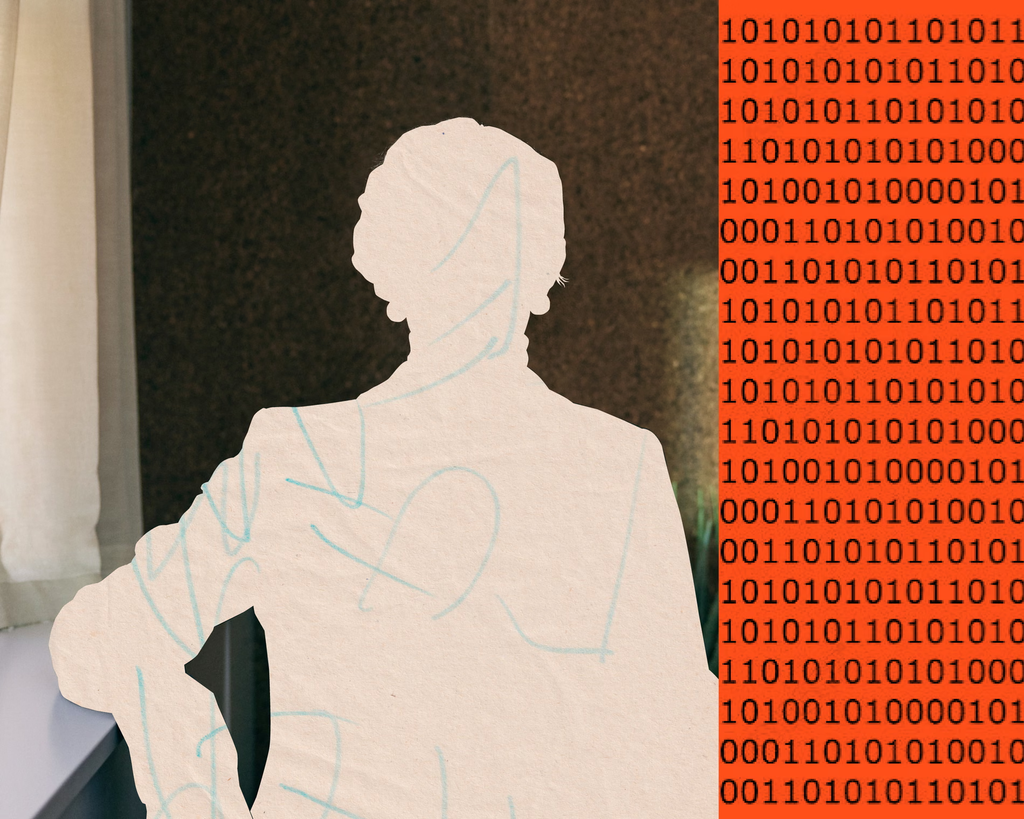
Islamabad (GNP): Women made up only about a quarter of new hires in artificial intelligence (AI) roles over the last year, according to LinkedIn research. In non-AI roles, women accounted for 50 per cent of new hires.
The gap widens at the top. In executive roles, women’s share of AI hiring falls to just 13 per cent.
The imbalance matters because of what these jobs pay. LinkedIn’s research shows AI job postings have doubled since 2023, and the roles pay on average more than twice as much as jobs that do not involve AI.
Women who do work in AI are not sharing equally in that premium. Sarah Steinberg, head of global public policy partnerships at LinkedIn, said they are concentrated in lower-paying roles such as data annotation. Across all AI occupations, men earn $45,000 more in median pay, partly because of the types of jobs they are likelier to hold.
At the same time, women face greater risk from the technology itself. The research finds they are more likely to work in roles highly exposed to AI disruption, such as customer service, which also puts them at higher risk of losing work to automation.
Advocates for women in tech warn that this trend could produce the largest gender pay gap in generations. They say it could also leave women out of building a technology that is shaping the economy.
Brenda Darden Wilkerson, president of the non-profit AnitaB.org, called it a form of backsliding. This comes after years of initiatives to promote women in the industry that have delivered mixed results. Women now hold about one-third of tech jobs in the United States (US), but research shows they leave the industry at a much higher rate than men, citing non-inclusive cultures and barriers to advancement.
Hiring practices are part of the problem. Wilkerson said companies are recruiting at breakneck speed but finding people through the same networks, referrals and filters they have always used. In her view, that has not given women the exposure they deserve.
Women in the field describe the same pattern from the inside. Urvashi Batra, co-founder and chief executive officer (CEO) of the AI platform Prioriwise, said people take her less seriously than her male co-founder. She said the pair have learned that investors are more likely to back them when he does the pitching.
The pace of the work adds another barrier. Jayeeta Putatunda, an AI engineering lead at the investment firm Turing, said it is not uncommon to be the only woman engineer on a team. She said a culture of 12-hour days is also common, and that mentorship, especially from other women, can be hard to find.
Putatunda said that when she returned from four months of maternity leave, the frameworks and models had changed completely. She caught up only with help from supportive colleagues and a husband who shared childcare equally. In her view, women are pushed out of AI not for lack of interest or ability, but for lack of the infrastructure that makes keeping up possible.
Support structures are also shrinking. Companies have scaled back their diversity, equity and inclusion (DEI) programmes in recent years, largely in response to the political climate. That leaves fewer firms with formal programmes to hire and promote women.
Also Read: SpaceX Crew-12 Leaves ISS and Heads Home to Earth
Felicia Newhouse, founder of AI Powered Women, an organisation that promotes women’s participation and leadership in AI, said it is getting harder to work with companies on women-focused initiatives. She pointed to the Department of Justice targeting corporations with DEI programmes, claiming they violate anti-discrimination laws. Accenture, Deloitte, IBM and PayPal have agreed to multimillion-dollar settlements under this enforcement.
Newhouse said the prospect of women being left behind keeps her awake at night, because the question is who captures a major new source of economic mobility. She said, “The deepest risk is that a participation gap becomes a power gap.”