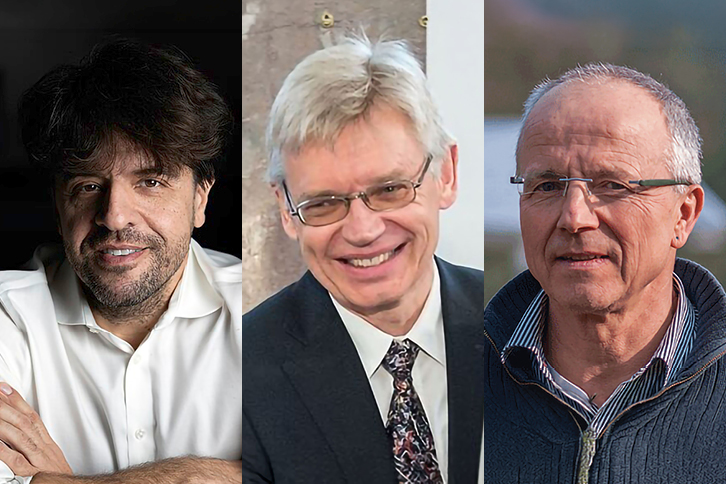
Stockholm (GNP): The 2026 Nobel Prize announcements have begun. The Nobel committees named Karl Deisseroth, Peter Hegemann and Georg Nagel as winners of the prize in physiology or medicine on Monday 5 October.
The committees described the trio’s work as the foundation of a new era in neuroscience. The award recognises their pioneering discoveries in optogenetics, a method that uses light to study how cells operate in the brain and even to control those processes.
According to the committee, the technique will help researchers identify which nerve cells in a complicated bundle control different brain functions. These include pain, social behaviour, thirst and hunger, and reward and attention.
The three laureates work at different institutions. Hegemann is a professor of biophysics at Humboldt University in Berlin, and Nagel teaches plant physiology at the University of Würzburg in Germany. Deisseroth is a professor of behavioural sciences at Stanford University.
The winners have reacted with surprise. Nagel told the Nobel Institute he was very surprised and felt it was too early for a medicine prize for optogenetics. He believes other medical discoveries have benefited more people. Hegemann said he was overwhelmed by the news.
Deisseroth also said he was quite surprised and told Stanford Medicine that he could not be happier. He noted that the three winners span the full journey from early work on algae to advanced neuroscience experiments.
Also Read: Pakistan Reiterates Support for Saudi Arabia’s Security
The medicine award opens a week of announcements. The committee will name the winner or winners of one category every weekday. Physics follows on Tuesday, chemistry on Wednesday, literature on Thursday and peace on Friday. Economic sciences closes the series on Monday 12 October.
The prizes are awarded each October for outstanding contributions across six fields. Each winner will receive a diploma, a medal and 12 million Swedish kronor, roughly $1.2 million, at the ceremonies in Stockholm and Oslo in December.
The peace prize is often the most closely watched of the six. This year the committee is considering 287 nominated candidates. Last year’s prize went to Venezuelan opposition leader María Corina Machado for nearly 25 years of work against dictatorship and for democracy. The committee later stated that laureates cannot share or transfer prizes.
Per Svenningsson, chair of the Nobel Committee for physiology or medicine, said, “Optogenetics lets us map the brain in ways we once only dreamed of.”

Managing Editor at Global News Pakistan (GNP), with a Bachelor's degree in International Relations from Riphah International University, graduated with a Gold Medal. Reach out at sabahtareengnp@gmail.com