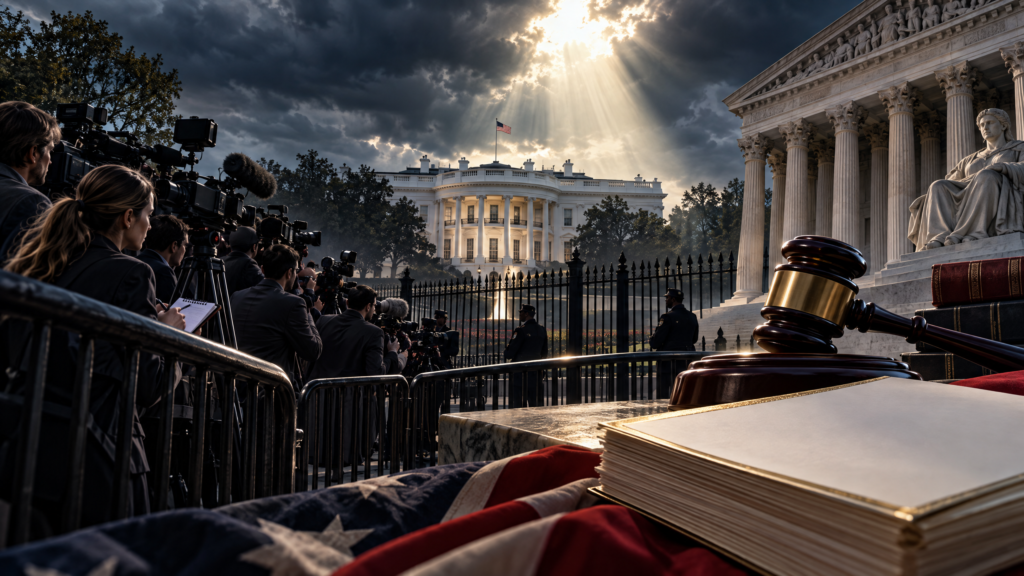
Washington (GNP): White House Media Ban has entered a new legal phase after a federal judge temporarily blocked President Donald Trump’s administration from enforcing its ban on CNN, MS NOW and Politico, ordering their White House access to be restored.
The White House Media Ban has therefore become a significant legal dispute over press access and government authority.
Trump’s announcement on September 18 establishing the White House Media Ban led to the controversy. The administration has claimed that it can limit the access of the three media organizations while the latter have challenged the administration’s decision in the federal court.
The White House Media Ban has attracted attention because the dispute involves both media access and constitutional protections.
The US District Judge Timothy Kelly issued a temporary restraining order which obliges the administration to return the press passes of the organizations affected and stops the enforcement of the ban for 14 days while the dispute is ongoing.
The temporary order places the White House Media Ban on hold while the court examines the arguments presented by both sides.
The White House Media Ban has generated a lot of questions regarding the role of presidential authority, the media access and protections guaranteed by the law. In their lawsuit CNN, MS NOW and Politico claimed that the restrictions on access are breaches of the First Amendment and due process.
However, according to the administration, it has a different view. The US lawyers stated that access to the White House is a privilege not a right and referred to the issues of national security and problems concerning professionalism and reporting styles as well.
As a result, the White House’s media ban faced its first major legal hurdle, only days after the three news organizations experienced loss of access to the White House. Reporters from the three companies had their press cards revoked and were barred from entering the premises of the White House.
The ruling made by Judge Kelly came after a hearing in which he asked questions directed at the manner in which the action was carried out by the administration. Previous precedents showed that media personnel may have entitled to some prior notice of a media credential revocation.
The White House media ban has been the subject matter of disputes involving the Trump administration and the media. Also, Judge Kelly had ordered to restore press credentials.
However, the most recent ruling does not settle the matter and is a temporary order that seeks to maintain the access while the court considers other legal arguments presented by both parties.
The White House media ban has impacted the overall White House press operation. Some media outlets voiced support for the affected media companies, whereas the TV press pool altered or canceled its plans in connection with the restrictions.
Also Read: China and US Deepen Cooperation Against Transnational Crime
The bottom line of the dispute is whether the government is entitled to deny access for journalists because of the content of their reports and whether proper procedures were taken before the revocation of the accreditations. The media companies have claimed that the restrictions were related to the coverage they presented. The government, nevertheless, disagrees with this view and referred to different reasons for its conclusion.
The White House media ban may turn out to be a significant court case related to the access of journalists and their rights stipulated by the Constitution. The final outcome will follow from the further processes and decisions made in the federal courts.
The coverage of the White House Media Ban will likely remain a focal point as the court weighs the issues of press credentials, due process, national security, and First Amendment protections. The upcoming phases of this case will determine how the restrictions imposed by the administration will be viewed based on the existing legal precedents.