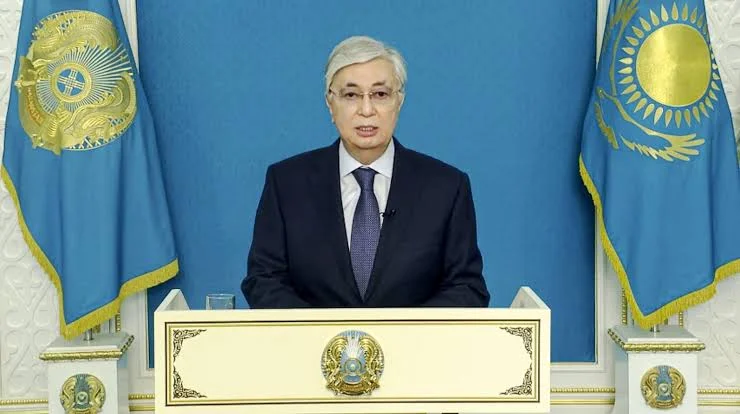
Astana (GNP): President Kassym-Jomart Tokayev opened the first session of Kazakhstan’s first Kurultai on 28 August, describing the moment as the start of a new phase in the country’s political development. Under the new Constitution approved through a nationwide referendum, the Kurultai now functions as Kazakhstan’s unicameral legislature, taking on expanded responsibilities in law-making, institutional appointments and government oversight.
The President framed the new chamber as a modern institution grounded in Kazakhstan’s historical practice of convening kurultais at pivotal moments, while making clear that its purpose is state modernisation rather than a revival of the past. In line with Article 57 of the Constitution, Tokayev nominated Aibek Dadebay to chair the Kurultai and asked deputies to support the nomination.
He confirmed that the outgoing Government has relinquished its mandate, and that once the legislature’s structure is finalised, he will submit nominees for Vice-President and Prime Minister before forming a new Cabinet in consultation with deputies. A full Address to the People of Kazakhstan is expected once both branches are constituted, with the President calling for its initiatives to be implemented jointly and without delay.
Beyond forming the government, the Kurultai has been granted significant new oversight powers. Appointments to the Constitutional Court, Central Election Commission and Supreme Audit Chamber will now require the legislature’s agreement, and deputies will appoint Supreme Court judges on the President’s proposal.
The chamber may also express no confidence in the Government and review the national budget’s execution, giving it a stronger check on the executive branch. A related priority for this first convocation, Tokayev said, is aligning existing sectoral legislation with the new Constitution, with an emphasis on laws that are clear, fair and responsive to present-day conditions.
Technology featured prominently in the President’s agenda for the new legislature. He called for swift adoption of an E-Parliament digital platform to support legal analysis and flag risks earlier in the lawmaking process, alongside the responsible use of artificial intelligence to improve legislaive quality and curb corruption, while cautioning that AI cannot substitute for professional legal judgement.
This digital push extends to a wider policy package covering AI in secondary education, the digital-assets industry and the Digital Qazaqstan strategy, alongside new regulation of online platforms and media to protect citizens in the information space.
Economic modernisation formed another central pillar of the address. Tokayev pointed to industrialisation, new production facilities backed by public and foreign investment, and the renewal of transport, energy and water infrastructure across Kazakhstan’s regions as priorities for improving citizens’ welfare.
He defended continued use of National Fund resources for projects with long-term returns, arguing the Fund should be judged by tangible outcomes for future generations. The President also called for migration-policy reform tied to the Golden Visa initiative aimed at attracting skilled specialists and foreign capital, along with legislation to strengthen the energy sector’s resilience and expand alternative energy sources.
On foreign policy, Tokayev described a global environment marked by declining trust among major powers and a weakened United Nations system, positioning Kazakhstan as a middle power that can help fill that gap through practical capacity in economy, science, defence and diplomacy. He said the country would continue pursuing peace and mutually beneficial partnerships while defending its national interests, linking this international standing directly to domestic stability and sustained reform.
Also Read: PM calls for deeper economic, agriculture ties with KSA
Social policy commitments ran alongside these institutional and economic priorities. The President prioritised legislation for comprehensive support for children with disabilities, including dedicated centres in every regional capital, and backed a proposal to bar children under 16 from registering on social media platforms. A new law on libraries and publishing is also planned for this year as part of the country’s broader intellectual development.
Tokayev closed by pointing to record engagement in the Kurultai election, in which more than 74 percent of citizens voted and around 800 international observers monitored the process, the highest such figure in Kazakhstan’s parliamentary history.
He noted that the Adilet party secured a constitutional majority and urged it to act as a unifying force for reform, while calling on all parties to sustain engagement with voters between elections. The address concluded with a call for renewed political leadership, including greater representation of women and young people, and a national identity grounded in knowledge, work and unity rather than nostalgia or grievance.

Managing Editor at Global News Pakistan (GNP), with a Bachelor's degree in International Relations from Riphah International University, graduated with a Gold Medal. Reach out at sabahtareengnp@gmail.com