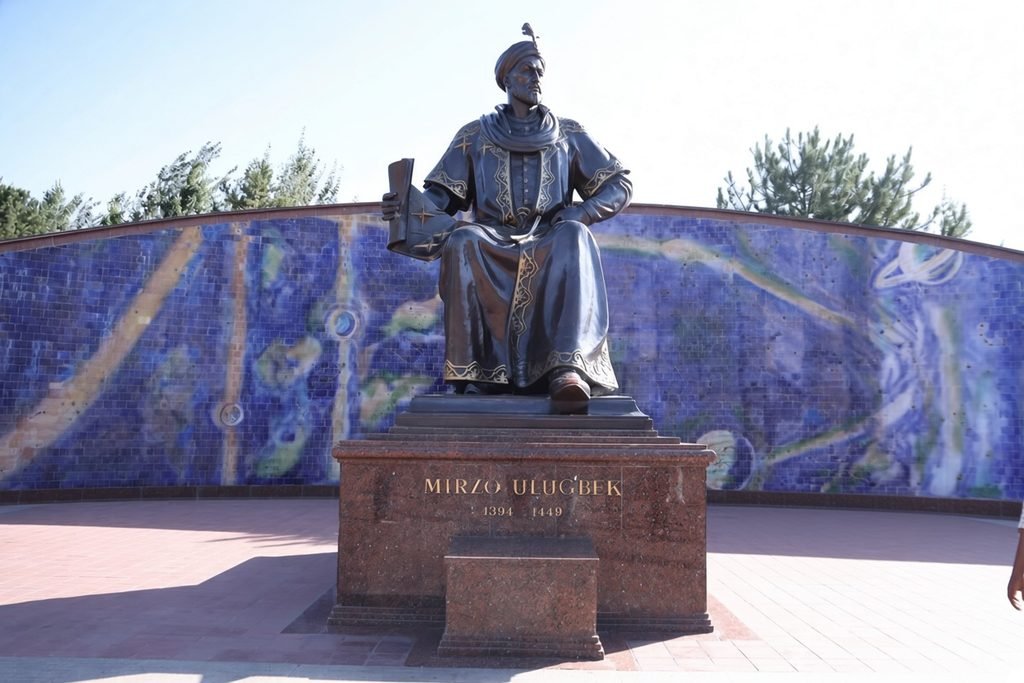
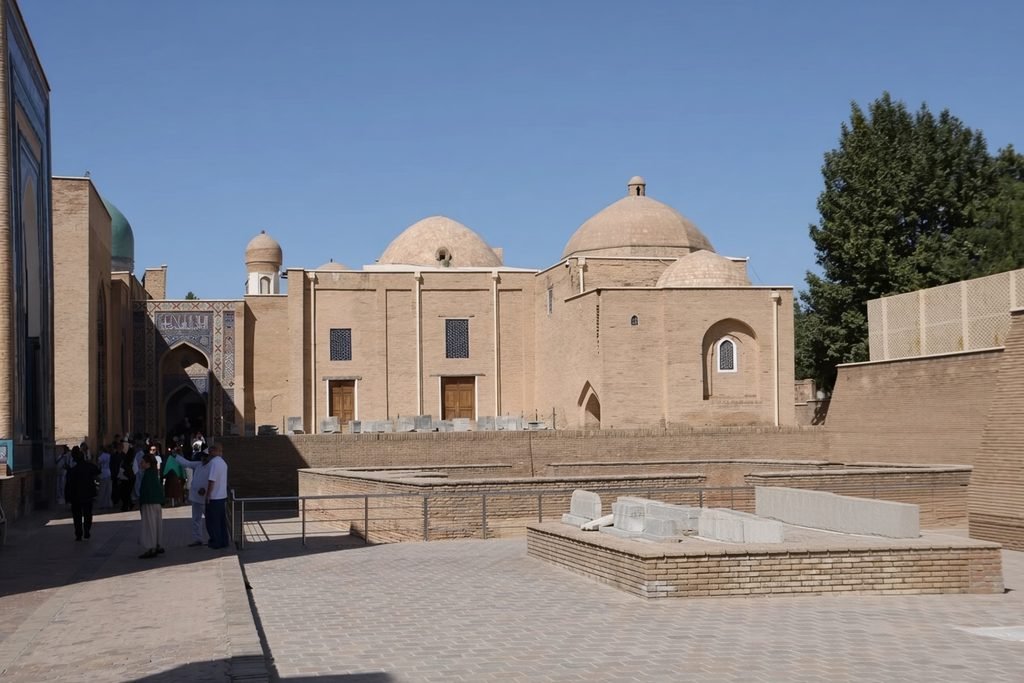
Samarkand (GNP): Participants of an international media forum have visited the Shah-i-Zinda archaeological and architectural memorial complex-necropolis, as well as the Mirza Ulugh Beg museum-complex in Samarkand, learning about one of the city’s oldest architectural ensembles alongside the scientific heritage of the astronomer Mirza Ulugh Beg.
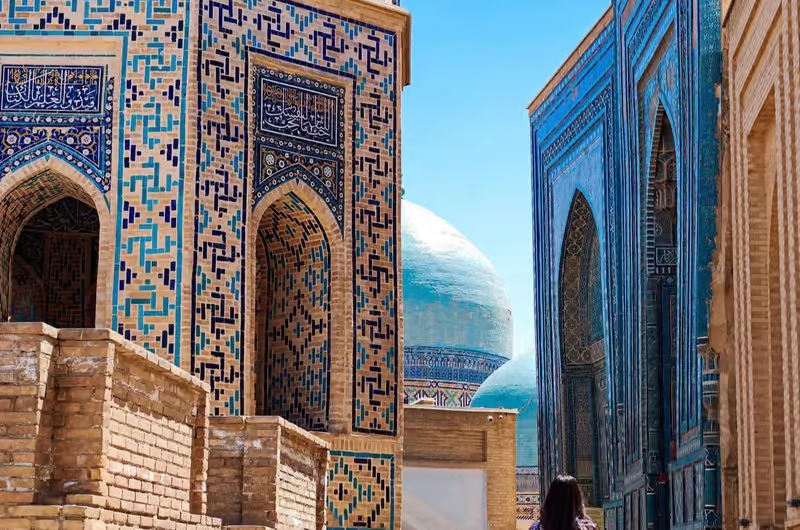
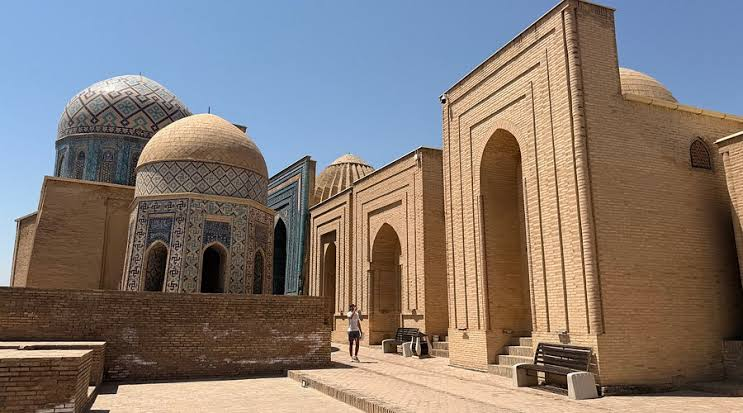
The Shah-i-Zinda complex, known locally as a “cemetery street,” reflects the history of the 25-century-old city and comprises 11 mausoleums, mosques, and other structures, distinguished by blue domes, high portals, majolica, carved terracotta, and intricate ornaments.
During the tour, participants learned that archaeological excavations date the complex’s earliest structures to the 11th and 12th centuries.
A central feature of the site is the tomb of Qutham ibn Abbas, a cousin of the Prophet Muhammad, whose name is tied to the complex’s title, Shah-i-Zinda, translating to “The Living King.” According to tradition, Qutham arrived in Samarkand in 676 to introduce the local population to Islam.
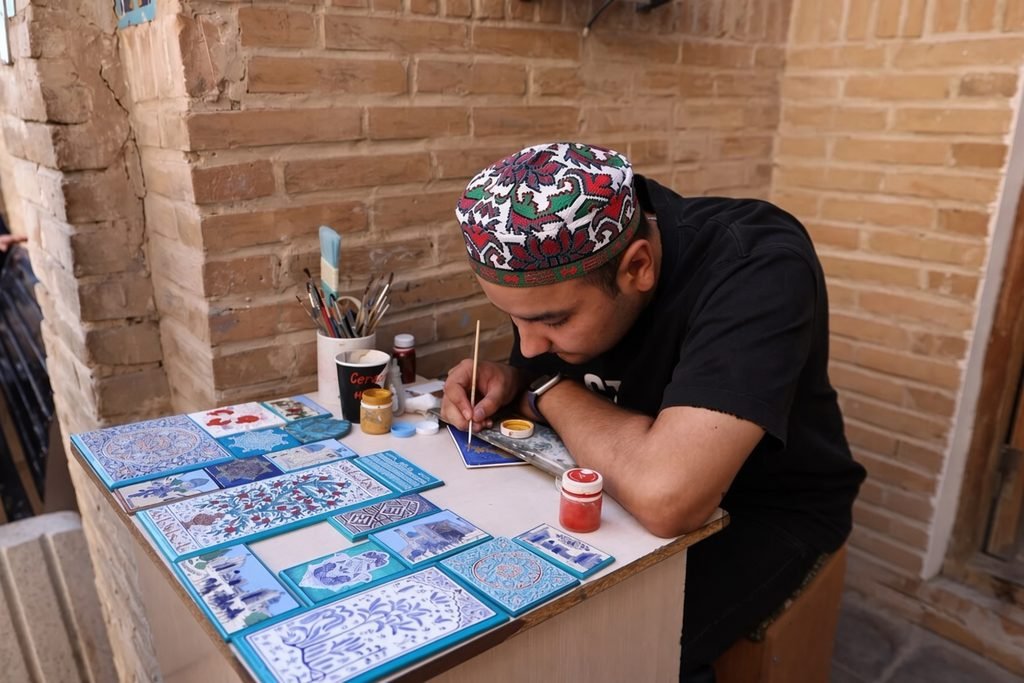
Participants also noted the complex’s rich decorative design, including the use of red dye, historically difficult to manufacture and associated with blood, alongside star-shaped compositions containing Arabic and Persian calligraphy and inscriptions referencing Shiite imams, reflecting the complex religious and cultural character of the Timurid era.
Two unnamed mausoleums within the complex remain unresolved, with one theory linking them to the remnants of an ancient madrassah in Samarkand.
Among the complex’s notable monuments, the mausoleum of Tuman Aka, the youngest wife of Amir Timur, stands out for its violet hue and preserved landscape panels, in contrast to the blue tones dominating most other structures.
The ensemble also houses the mausoleum of Qazi Zadeh al-Rumi, an astronomer and associate of Ulugh Beg, built higher than surrounding tombs as a mark of respect despite al-Rumi not belonging to a noble family.
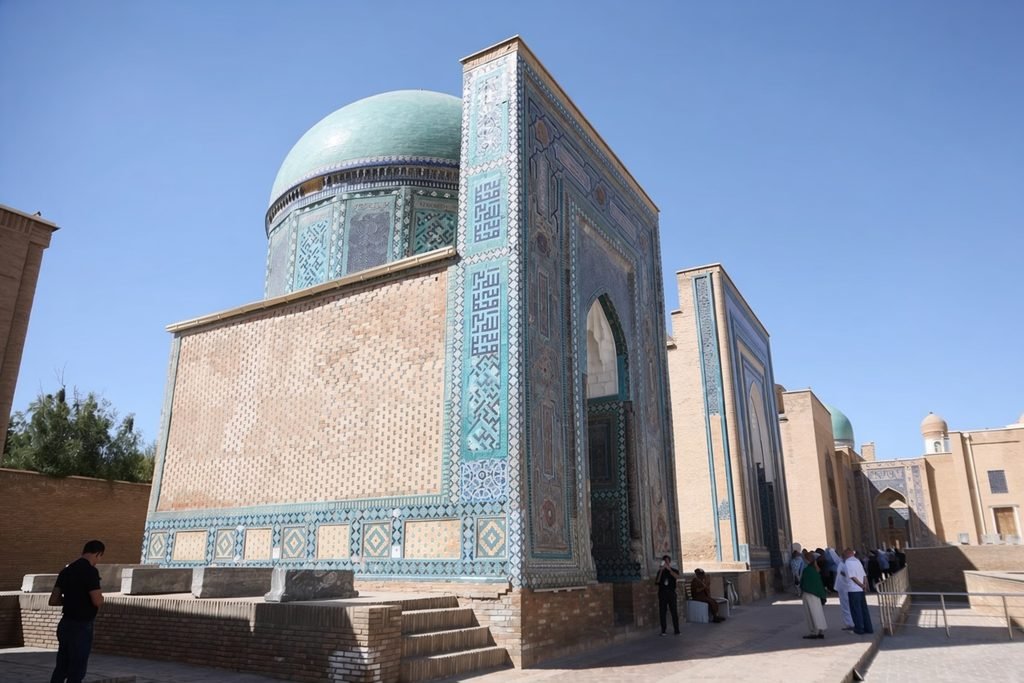
Also featured is the mausoleum of Shadi Mulk Aka, referred to by art historians as the “Jewel of Shah-i-Zinda,” erected in 1327 for Timur’s niece and adorned with ceramic elements and a grapevine motif above its arch, alongside the mausoleum of Shirin Bika Aka, sister of Amir Timur, known for its carved multi-coloured mosaic patterns and landscape panels.
Also Read: Media Forum Delegates Visit Imam al-Bukhari Complex
Following their tour of Shah-i-Zinda, the delegation visited the Mirza Ulugh Beg museum-complex, where they explored the scholar’s scientific legacy and viewed surviving fragments of his 15th-century observatory.
The museum’s exhibits cover the development of astronomy and science during Ulugh Beg’s era, featuring artifacts from the Timurid period, historical astronomical and mathematical instruments, manuscripts, and archaeological finds.
Participants were particularly struck by the preserved section of the observatory, built between 1424 and 1428 on Kuhak Hill and rediscovered by archaeologist V. L. Vyatkin in 1908, whose central component, a massive sextant used to observe the Sun, Moon, and other celestial bodies, survives underground at the site today.

Managing Editor at Global News Pakistan (GNP), with a Bachelor's degree in International Relations from Riphah International University, graduated with a Gold Medal. Reach out at sabahtareengnp@gmail.com