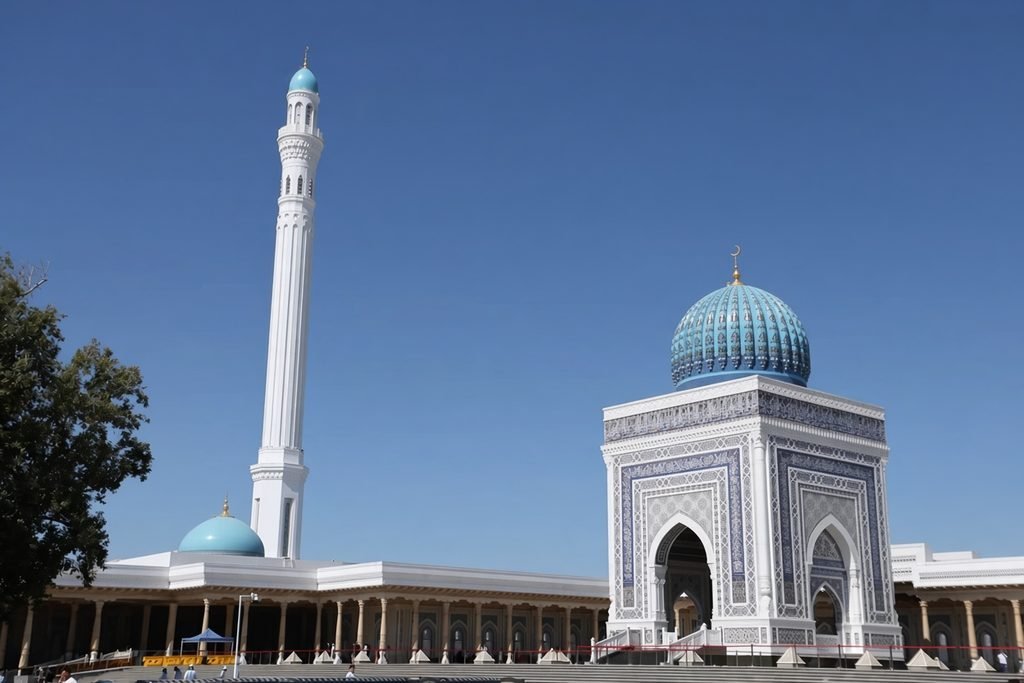
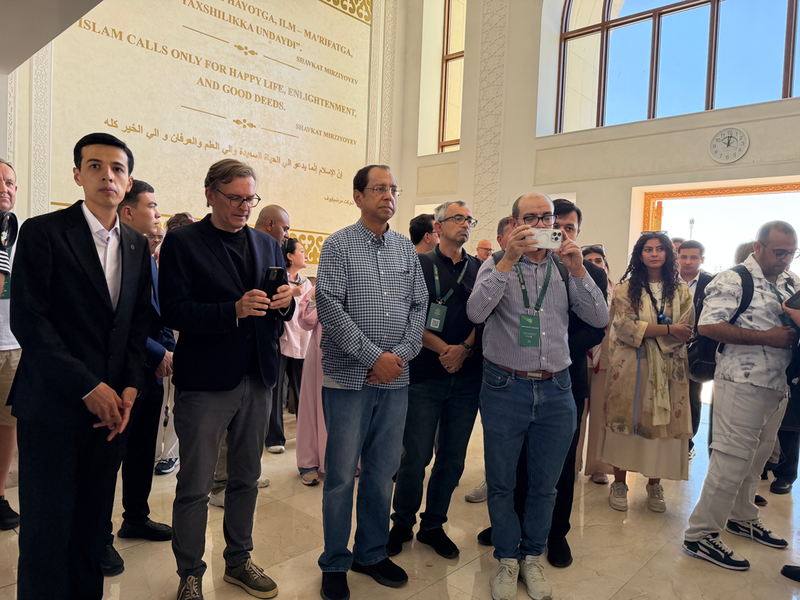
Samarkand (GNP): Participants of the international media forum “Islamic Civilization” visited the Imam al-Bukhari Memorial Complex in Uzbekistan’s Samarkand region, a site located roughly 25 kilometres from the city in the village of Hartang.
The complex is home to the tomb of the prominent Islamic scholar and hadith collector Muhammad ibn Ismail al-Bukhari, known as Imam al-Bukhari, who lived from 810 to 870.
Following extensive reconstruction, the complex now spans approximately 44 to 45 hectares and includes Imam al-Bukhari’s mausoleum, a congregational mosque, a museum, a library, landscaped walkways, water features, and visitor recreation areas.
At its centre stands the mausoleum housing the scholar’s tomb, a site tied to local tradition holding that after his death during a severe drought, residents of Samarkand came to pray at his grave, after which rain began and continued for several days.
The complex’s main mosque can accommodate approximately 10,000 worshippers and is complemented by four minarets, each standing up to 75 metres high.
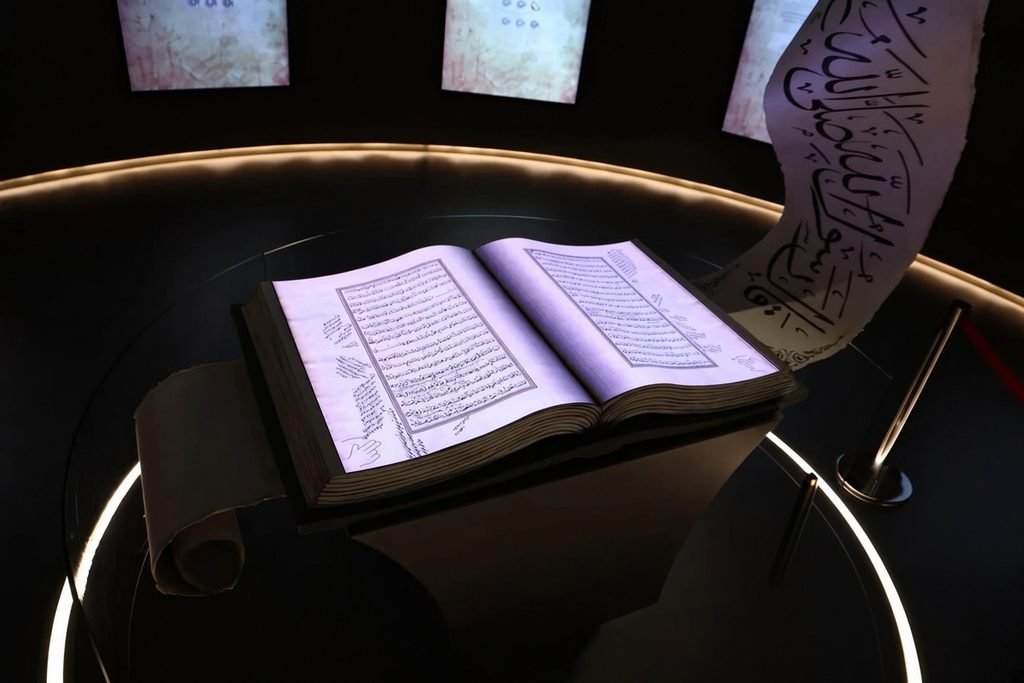
A special section within the complex is dedicated to al-Bukhari’s most significant work, Al-Jami’ as-Sahih, also known as Sahih al-Bukhari, compiled through the scholar’s extensive travels to gather and verify hadiths, or accounts of the words and deeds of the Prophet Muhammad.
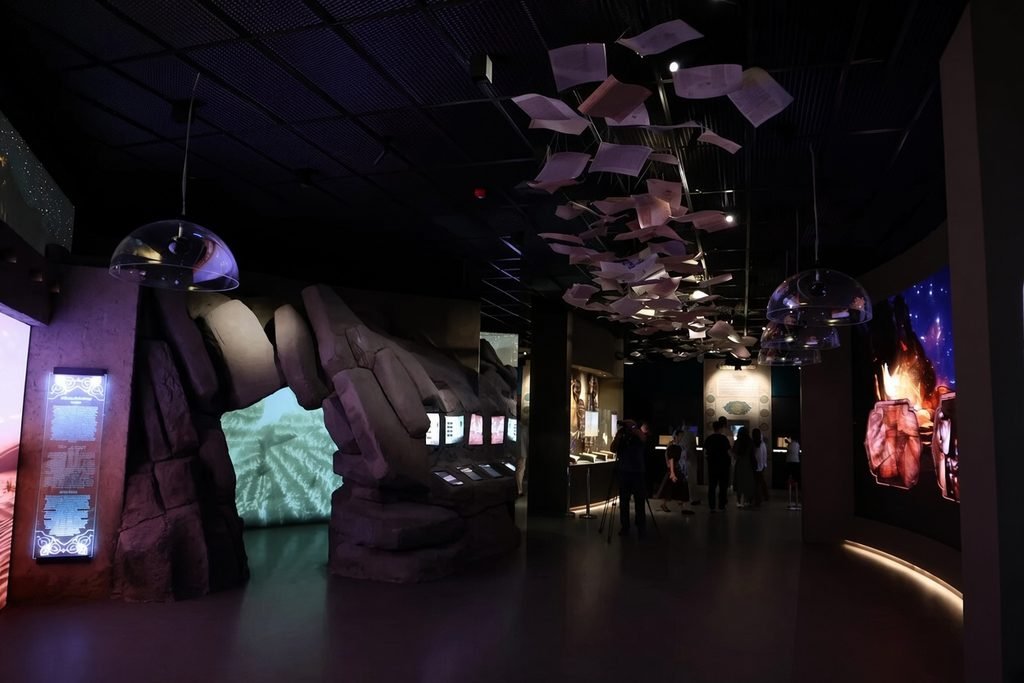
Complementing this focus, separate exhibitions explore the life of the Prophet Muhammad, the early history of Islam, and the development of Islamic scholarship in Central Asia, with the complex’s design also incorporating the names of prophets.
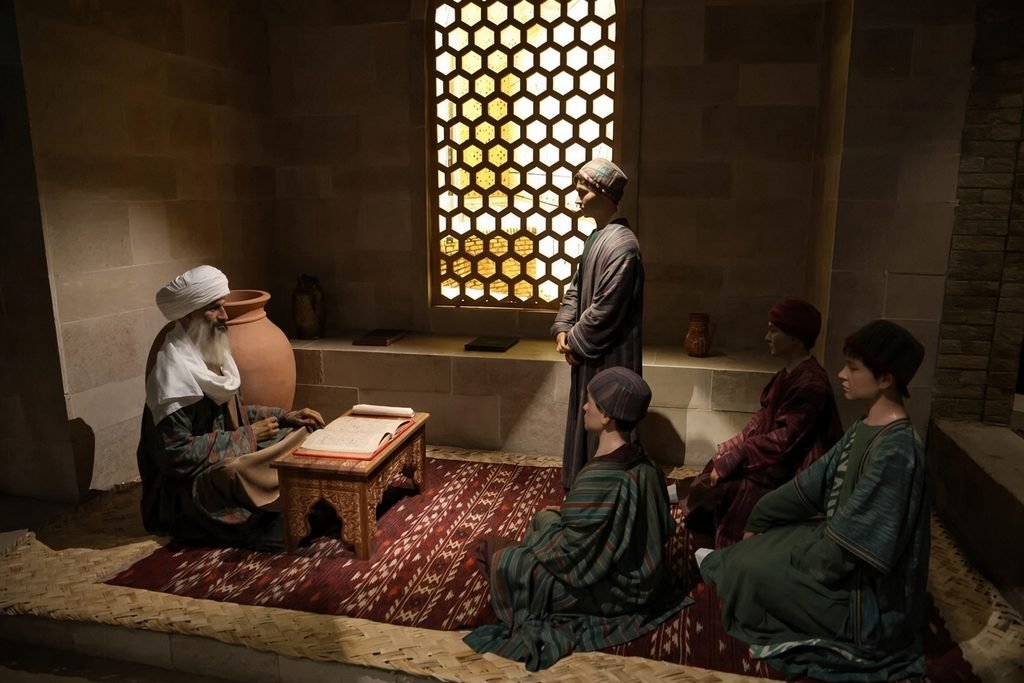
Delegates also toured the complex’s museum, where nine pavilions are integrated into a unified modern space to narrate Imam al-Bukhari’s life, his scholarly legacy, and the era in which he lived. Alongside the museum, the site hosts the Imam al-Bukhari Islamic University for Hadith Studies, an institution specialising in the study of hadiths and Islamic heritage.
The complex’s development spans nearly three decades. Reconstruction first began in 1997-1998 at the initiative of Uzbekistan’s first president, Islam Karimov, expanding the site to 10 hectares and adding a mosque with a capacity of about 1,500 worshippers.
A larger-scale reconstruction followed in 2021 under President Shavkat Mirziyoyev, with the renovated complex opening in March 2026 and expanding to its current 44-45 hectares, making it one of the largest cultural and religious projects in Central Asia.
Also Read: AI Avatars and Virtual Reality Revive Islamic Legacy in Uzbekistan
The complex can now accommodate up to 65,000 visitors per day and has become a major spiritual, cultural, and educational centre in the region.

Managing Editor at Global News Pakistan (GNP), with a Bachelor's degree in International Relations from Riphah International University, graduated with a Gold Medal. Reach out at sabahtareengnp@gmail.com