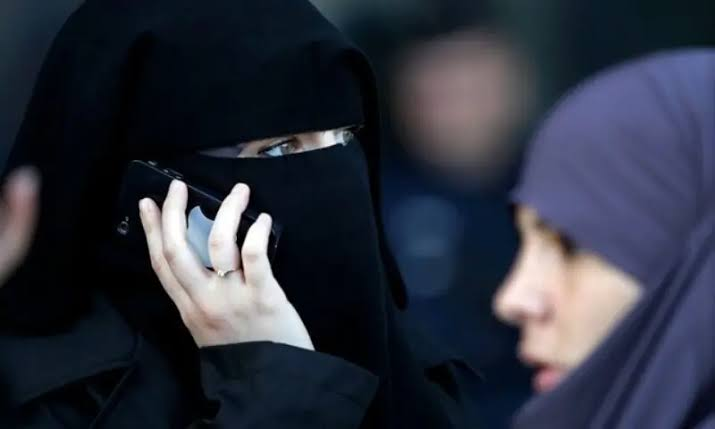
Lisbon (GNP): Portugal’s president has signed into law a nationwide ban on covering the face in public, a measure widely regarded as targeting Muslim women who wear the full-face veil. The law, pushed by the far right and dubbed the “burqa law” by local media, was adopted by parliament in July with support from the right-wing governing coalition and the far right, while left-wing parties voted against it.
Also Read: Iran Warns Gulf States Over US Military Support
President Antonio Jose Seguro defended the measure in a statement announcing its enactment, framing it as a matter of identity and public communication. Says Seguro, “The face must be considered a central element of human identity and communication.” He acknowledged, however, that the legislation touches on an issue of considerable social and cultural sensitivity, reflecting the divided political response the ban has generated since it was first introduced.
The law prohibits garments designed to conceal the face or prevent identification in public spaces, and it also bars any coercion that forces a person to cover their face for reasons tied to gender, religion, age or origin. Rights campaigners have long argued that bans of this kind, while framed as protective, can equally restrict women’s autonomy by dictating what they may or may not wear, a tension that has shaped debate over similar legislation in other European countries.
Under the new rules, violators in Portugal face fines ranging from 150 to 3,000 euros, equivalent to roughly $170 to $3,500. The law includes exemptions for health, professional, artistic and weather-related needs, along with allowances for places of worship, diplomatic missions and air travel, provisions intended to distinguish the ban from a blanket prohibition on face coverings in all circumstances.