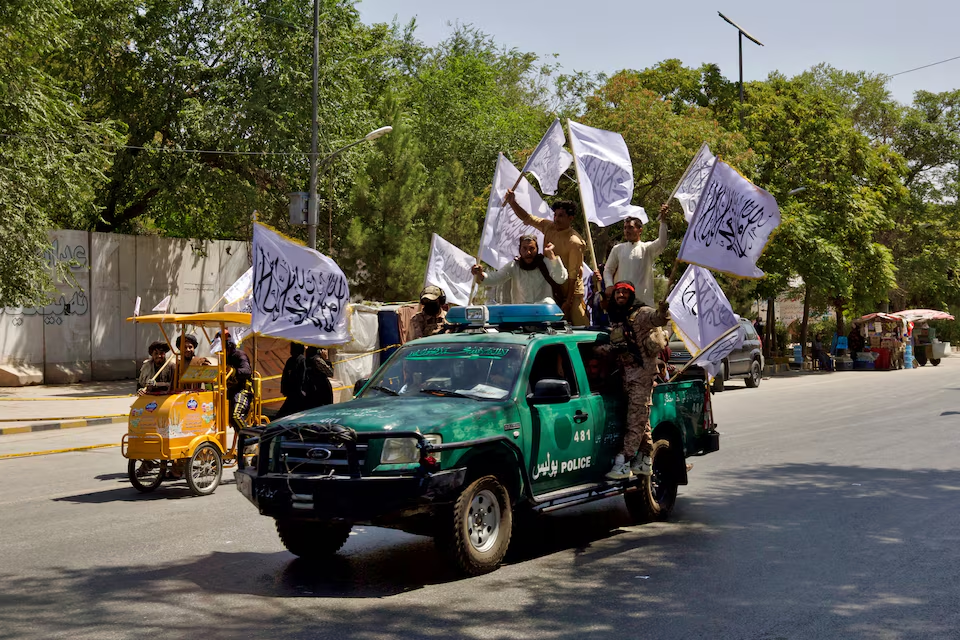
Kabul (GNP): Aid and rights organisations have warned of escalating humanitarian and human rights crises in Afghanistan, even as the Taliban government marked five years in power on Saturday with ceremonies intended to project stability and control.
The International Rescue Committee said Afghanistan’s humanitarian needs had reached a record level, driven by droughts, the fallout from deadly earthquakes, and the deportation of Afghans from neighbouring Iran and Pakistan. The organisation said the number of Afghans requiring humanitarian assistance has risen by 3.5 million since 2021, even as foreign aid budgets have shrunk.
Georgette Gagnon, a senior U.N. representative on Afghanistan, said sustainable peace and prosperity require more than the absence of conflict, adding that the country’s future depends on building a society in which the rights and potential of all Afghans are realised.
Her comments reflect wider concern among international organisations and the United Nations, which say the Taliban have struggled to address the natural and humanitarian crises Afghanistan has faced over the past five years, in part because Afghan women remain under severe restrictions.
Those restrictions have defined much of the past five years for Afghan women and girls. According to UNESCO, 2.5 million women and girls have been barred from secondary schools and universities since the Taliban’s return to power in 2021, while data released by U.N. Women on Wednesday found that half of Afghan women now leave their homes only once or twice a month.
The Taliban say they respect women’s rights in accordance with Islamic sharia law. One Afghan woman’s experience illustrates the toll of these conditions: Fatima, 28, fled to Iran after the Taliban’s return to power, where she continued working as a make-up artist, a profession banned for women in Afghanistan.
She was expelled from Iran and deported back to Afghanistan last year, and said she now wakes each morning uncertain how she will cover her basic living expenses, with worries about her child’s future weighing on her each night.
Security concerns have also persisted alongside the humanitarian strain. The Taliban have faced a string of assassinations of key regional officials in the country’s northeast in recent weeks. In late July, the Taliban’s information director in Badakhshan province was killed in an attack later claimed by the Islamic State group, and local media reported that the mayor of the province’s capital died in a separate attack on Thursday. Taliban officials did not immediately confirm the reports.
Despite these pressures, the Taliban used Saturday’s anniversary to emphasise continuity and resolve. Outside the former U.S. embassy in Kabul, armoured Taliban vehicles took part in a parade displaying flags and banners to mark what the government described as “victory day” from Western domination.
Also Read: Xi Jinping Urges Stronger Disaster Prevention as Floods Batter China
Sirajuddin Haqqani, the Taliban’s interior minister, said in a video address that the group’s return to power was the result of morale, courage and divine assistance, while also making a rare acknowledgement that issues and problems may still exist. Najibullah Ghorzang, a 28-year-old shop owner who attended the Kabul ceremonies, said his hope for Afghanistan’s future was that the country would move toward development.
Five years on, the Taliban government remains internationally unrecognised, with Russia the only country to have formally recognised it. Relations with Pakistan, once the Taliban’s most important partner, have grown tense, with Islamabad accusing Kabul of supporting Pakistani insurgents.
Even so, analysts say the Taliban have made quiet diplomatic inroads as some countries weigh the limits of their influence in Afghanistan against the need to engage with the government.
Zia Ahmad Takal, a deputy spokesman for the Taliban’s foreign ministry, said ceremonies marking the government’s fifth anniversary were expected to be held in the capitals of Pakistan, China, Uzbekistan, Iran, Turkey and Malaysia, underscoring the government’s continued push for wider international engagement despite its unresolved isolation.

Managing Editor at Global News Pakistan (GNP), with a Bachelor's degree in International Relations from Riphah International University, graduated with a Gold Medal. Reach out at sabahtareengnp@gmail.com