
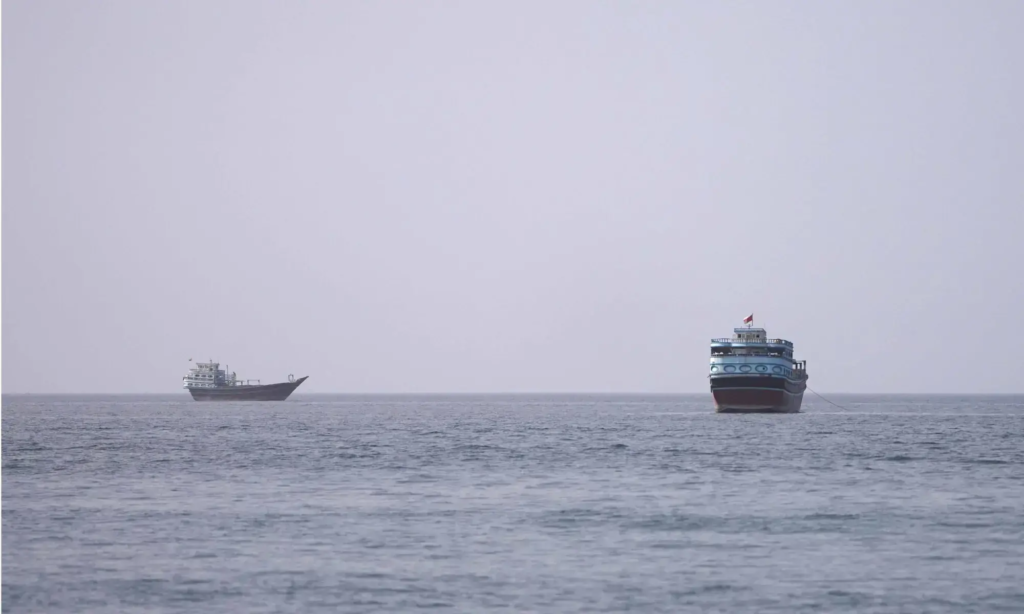
TEHRAN (GNP): Iran and Oman have agreed on the geographical coordinates of a new shipping route through the Strait of Hormuz, with a joint statement between the two countries now in its final drafting stage, Iran’s foreign ministry said this week.
Foreign ministry spokesman Esmaeil Baqaei told reporters that talks with Muscat were progressing, though he cautioned that any understanding reached would not automatically make the strait safe for all vessels passing through it. He said the naval blockade Washington maintains around Iranian ports remains the central obstacle preventing a full reopening of the waterway, and that Tehran continues to view the blockade as a threatening posture that has yet to be withdrawn.
Under the arrangement described by Iranian officials, commercial ships would pass through Iranian territorial waters on both the inbound and outbound legs of their journey, with only a portion of the route running through Omani waters. Deputy Foreign Minister Kazem Gharibabadi said the talks with Oman had reached fundamental understandings on the mapping of entry and exit routes for maritime traffic, adding that the process was nearing finalization.
Sources briefed on the negotiations told Reuters that the proposal on the table would give Tehran control over ships entering the Gulf through the strait, a concession regional officials described as among the most significant offered to Iran since the conflict with the United States began five months ago. Washington has consistently maintained it would not accept any arrangement granting Iran authority over access to a waterway that carries a large share of the world’s energy shipments, and there has been no formal American response to the proposal so far. Regional negotiators are still working through unresolved details, including how ship inspections would be supervised and whether any transit fees would be mandatory or voluntary, with one sticking point centering on what role, if any, Iran would have over vessels travelling in the opposite direction.
President Trump described the negotiations as a full day of talks and said he expected the strait to reopen soon, while warning that Iran would face heavy retaliation if it reneged on any agreement. Saudi Crown Prince Mohammed bin Salman has since spoken with Trump, urging him to hold off on further military action and instead pursue a ceasefire and a negotiated settlement.
Also Read: Russian Missile Strike Kills At Least 14 In Kyiv
Iran has separately warned several Gulf States that any renewed American strikes on its territory would trigger retaliation against energy infrastructure across the region. The warning followed a round of high-level diplomatic contacts after Trump threatened on July 28 to target Iran’s energy network. Foreign Minister Abbas Araghchi raised the issue in calls with his Saudi, Turkish and Qatari counterparts as well as a senior Pakistani official, urging Gulf States to use their influence with Washington to head off further strikes.
The diplomatic push has unfolded against a backdrop of continued attacks on Gulf shipping. Yemen’s Houthi movement said it struck two Saudi-flagged oil tankers this week, the Wafa off the coast of Yanbu in the northern Red Sea and the Daisy in the Gulf of Aden, bringing to nine the number of Saudi vessels targeted since the group’s campaign began. Saudi authorities did not immediately comment on the claims. Oil prices, which had risen briefly following the attacks, eased again as markets weighed the prospect of a negotiated reopening of the strait against the ongoing risk to regional shipping.

Managing Editor at Global News Pakistan (GNP), with a Bachelor's degree in International Relations from Riphah International University, graduated with a Gold Medal. Reach out at sabahtareengnp@gmail.com