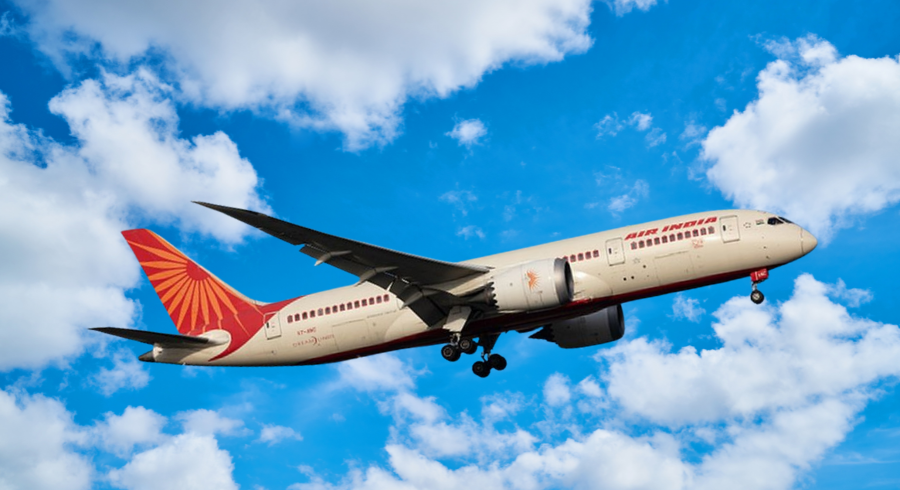
ISLAMABAD (GNP): Air India has posted its steepest annual loss since returning to private hands, with the carrier’s financial troubles deepening as Pakistan’s continued airspace closure and a spike in global fuel prices combined to derail its long-planned recovery.
The airline recorded a net loss of $2.3 billion for the financial year ended March 31, more than double the roughly $1.1 billion loss it reported the previous year, while revenue slipped 9 percent to approximately $7.2 billion, according to figures disclosed in Tata Group’s annual report.
The scale of the setback is significant given the ambitions Tata Group laid out when it reacquired Air India from the Indian government in January 2022. At the time, the conglomerate took charge of a carrier weighed down by mounting debt, an ageing fleet and years of declining service standards, and pledged to rebuild it into a globally competitive airline.
That commitment has since collided with a run of external shocks that Tata Group chairman N. Chandrasekaran described as making this the airline’s most difficult year yet, noting that few industries are as exposed to the combined pressures of conflict and fuel costs as aviation.
Central to that disruption has been the continued closure of Pakistani airspace to Indian carriers, a restriction that has remained in place since the 2025 conflict between the two countries. With westbound routes to Europe, North America and the Middle East forced onto longer detours, Air India and other Indian carriers have absorbed higher fuel consumption, added crew costs and longer flight times as a direct consequence.
That pressure has been compounded by a sharp rise in global oil prices tied to renewed tensions in the Middle East earlier this year, a development that hit aviation particularly hard given that fuel remains the single largest cost item for airlines worldwide. Currency volatility added a third layer of strain, since fluctuations in exchange rates raised the cost of the airline’s dollar-denominated obligations, including aircraft leases, maintenance agreements and fuel purchases.
These financial headwinds arrived alongside continued fallout from the fatal crash of a Boeing 787-8 in Ahmedabad in June 2025, an incident that brought heightened regulatory scrutiny and added reputational strain at a sensitive point in the airline’s transformation.
Chandrasekaran has since acknowledged that the recovery will take considerably longer than first envisioned, describing the turnaround not as a short-term corporate fix but as a journey spanning five to ten years.
That timeline marks a shift from the outlook Tata Group presented in 2022, when it introduced the Vihaan.AI strategy, a five-year plan built around fleet modernisation, network growth, improved service standards, digital upgrades and organisational restructuring.
Tata Group now attributes the slower-than-expected progress to persistent global supply chain constraints, a shortage of skilled aviation professionals and the sheer scale involved in overhauling legacy systems built up over decades. Chandrasekaran framed the delay as consistent with how major airlines have historically been built, noting that transformation of this kind unfolds over years rather than quarters.
Also Read: Japan, UNICEF strengthen partnership for Pakistan’s children
Even as losses mounted, Air India has continued investing in its long-term expansion, placing one of the largest aircraft orders in aviation history with both Boeing and Airbus and completing the integration of Vistara, its former joint venture with Singapore Airlines, into its wider operations. That integration has had ripple effects beyond Air India itself, with Singapore Airlines recently reporting its first quarterly net loss since the COVID-19 pandemic, a result partly linked to its investment in the Indian carrier.
Despite remaining India’s second-largest airline by market share and a central pillar of Tata Group’s aviation strategy, Air India’s latest results make clear how far the carrier still has to travel to reclaim its former standing in the industry.