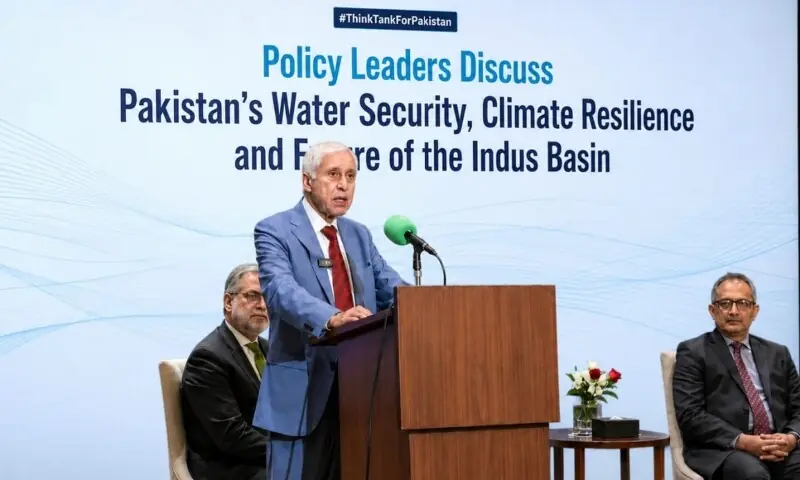
Islamabad (GNP): Pakistan must move away from relying on short-term emergency measures and instead build a full national water security strategy to cope with rising flood risks and a deepening water crisis, according to a new research report launched at a seminar in Islamabad.
The report, titled Water, Climate and Diplomacy: Securing Pakistan’s Indus Basin Future, was released by EMPAK Strategies and lays out the case for long-term structural reforms to strengthen the country’s ability to withstand climate-driven pressures.
The study points to the recent rise in water flows along the Chenab River during this year’s monsoon season as fresh evidence of long-standing gaps in how Pakistan manages its water resources. It identifies a combination of factors behind the country’s growing exposure to disaster, including extreme rainfall, increased upstream river flows, limited water storage capacity, ageing irrigation networks, weak oversight of groundwater use and inadequate flood preparedness.
Taken together, the report argues that climate change, faster glacier melt, rapid population growth, deteriorating irrigation infrastructure, unregulated groundwater extraction, and rising demand on the Indus Basin have combined to push Pakistan into an increasingly serious water security crisis.
To respond to these pressures, the report lays out five core policy recommendations. It calls for full implementation of the 1991 Water Apportionment Accord, expanded investment in strategic water storage and flood protection infrastructure, deeper hydrological cooperation with China alongside technical engagement with Afghanistan, wider adoption of climate-smart agriculture together with digital water accounting and stronger groundwater regulation, and increased mobilization of international climate financing by positioning water security as a central pillar of Pakistan’s climate, economic and national security planning.
Also Read: India-France Rafale Deal Stalls Over Software Access
Speaking at the seminar, Federal Minister for Investment Qaiser Sheikh reaffirmed that the Indus Waters Treaty cannot be suspended or terminated by either side acting alone, describing any unilateral move by India to do so as unlawful and inconsistent with international law.
He warned that unresolved disputes over shared water resources carry risks that extend well beyond the immediate region, with the potential to affect peace and stability across South Asia as well as broader global economic and security interests.
EMPAK Strategies Chief Executive Officer Ahmad Younis said the recent increase in Chenab River flows makes clear that water security needs to be treated as a long-term strategic priority rather than a challenge confined to seasonal flood response.
He added that meeting Pakistan’s water needs over the long run will require an integrated approach that brings together stronger governance, climate resilience planning, sustained infrastructure investment and closer regional cooperation to protect the country’s water resources and limit future flood damage.

Managing Editor at Global News Pakistan (GNP), with a Bachelor's degree in International Relations from Riphah International University, graduated with a Gold Medal. Reach out at sabahtareengnp@gmail.com