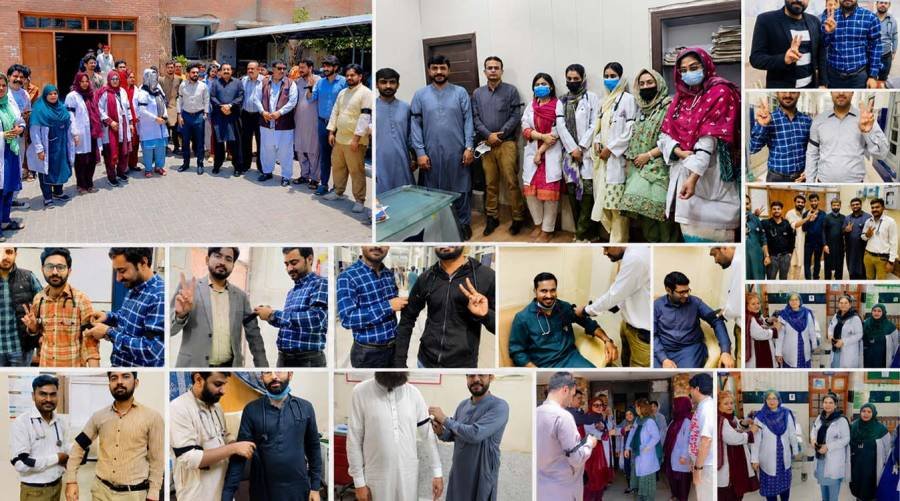
Karachi (GNP): Sindh Doctors Protest 2026 has formally commenced across the province’s public healthcare facilities, as doctors, nurses, and paramedical staff launched a black armband campaign to press the Sindh government for long-overdue salary revisions, restoration of allowances, and career progression reforms. The Young Doctors Association Sindh announced the first phase of the province-wide protest movement, warning that escalation, including the shutdown of outpatient departments, remains a serious possibility if demands are not addressed promptly.
Sindh Doctors Protest 2026 first phase began with healthcare professionals across government hospitals in the province wearing black armbands as a symbolic warning to authorities that frustration within the public health workforce has reached a critical and unsustainable level. The Young Doctors Association Sindh, which announced the campaign, said healthcare workers have been struggling under mounting economic pressures while their salaries and service benefits have remained largely unchanged for years despite significant inflation and rising costs of living.
According to a statement issued by the association, the black armband campaign represents an initial and peaceful phase of protest while giving provincial authorities an opportunity to address long-standing grievances before the movement escalates to more disruptive forms of action.
The Sindh Doctors Protest 2026 has been driven primarily by the growing gap between healthcare workers’ stagnant salaries and the rapidly rising cost of living across Pakistan. Healthcare workers argue that inflation has significantly increased financial pressure on frontline health professionals, while salaries, allowances, and promotion structures have comprehensively failed to keep pace with economic realities.
Protesting employees maintain that doctors, nurses, and paramedics continue to shoulder heavy and increasing workloads in public hospitals, emergency departments, and wards across Sindh, despite receiving what they describe as inadequate financial recognition and experiencing repeated delays in long-promised service reforms. Several long-pending issues, including health risk allowances, professional allowances, and time-scale promotions, remain entirely unresolved despite repeated demands and formal representations made to government authorities over an extended period.
Four Key Demands Placed Before Sindh Government
The Sindh Doctors Protest 2026 movement centres around four major demands that healthcare representatives have placed before the provincial government. The first demand is an immediate salary increase for all healthcare workers in line with current inflationary pressures. The second demand is the restoration and full implementation of health risk and professional allowances that have been withheld or suspended.
The third demand is the enforcement of time-scale promotion policies for all healthcare employees who have been waiting years for career advancement. The fourth and final demand is the upgradation of service grades for nursing and paramedical staff, whose grading structures have fallen significantly behind those of comparable professional categories.
Healthcare representatives argue that these measures are necessary not only for the welfare of individual employees but also for maintaining morale, retaining skilled professionals, and ensuring workforce stability within Sindh’s public health sector.
Also Read: NIH Mitragynine Opioid Treatment 2026 Trial Clears FDA
YDA Sindh Warns of OPD Shutdown and Broader Strike
YDA Sindh President Dr. Roshan Channa issued a clear warning that the black armband campaign is only the beginning of a potentially escalating protest movement. He stated that healthcare workers are using the current peaceful phase to give authorities an opportunity to engage constructively with their demands, but made clear that the association is prepared to move to more disruptive forms of action if the situation remains unresolved.
According to the Young Doctors Association, if demands remain unaddressed, the movement could enter a more disruptive stage that would include the closure of outpatient departments across public hospitals and the launch of a broader strike campaign affecting healthcare services throughout Sindh. The organisation stressed that healthcare professionals do not wish to disrupt patient care but believe the current situation has become genuinely unsustainable for those working within the public healthcare system.
Growing Pressure on Pakistan’s Healthcare Workforce
The Sindh Doctors Protest 2026 comes at a time when Pakistan’s healthcare sector continues to face multiple overlapping challenges, including critical workforce shortages, rapidly rising patient loads, and severe economic pressures affecting both healthcare institutions and their employees. Healthcare analysts have long noted that retaining skilled doctors, nurses, and paramedics within the public sector remains one of the most significant structural challenges facing Pakistan’s health system, particularly as inflation continues to increase financial strain on frontline healthcare workers who could earn significantly more in the private sector.
For now, services in government hospitals across Sindh remain operational, but the association’s warning of potential escalation is likely to increase pressure on provincial authorities to engage urgently with healthcare representatives and seek a negotiated resolution before the dispute expands into a broader healthcare sector confrontation.
Pakistan’s public healthcare sector has long faced structural challenges related to workforce retention, inadequate salaries, and delayed implementation of service benefits. Sindh, as the country’s second most populous province, operates one of the largest public hospital networks in Pakistan, making any disruption to healthcare services in the province a matter of serious public concern. The outcome of the Sindh Doctors Protest 2026 is likely to have significant implications for healthcare delivery across the province in the weeks and months ahead.