New assessment highlights need for targeted livelihood recovery measures in flood-affected areas
Islamabad (GNP) :- Around 3.3 million jobs may have been affected by the 2025 floods in Pakistan, based on assessment, carried out by the International Labour Organisation, in support of the review and validation of the Preliminary Assessment of 2025 Floods Damages. This is part of a collective exercise supported by the United Nations (UN), Asian Development Bank (ADB), European Union (EU), and the World Bank (WB), with the United Nations Development Programme (UNDP) as overall technical coordination lead.
The employment and livelihoods loss assessment was undertaken for 14 of the worst-affected districts in the provinces of Punjab and Khyber Pakhtunkhwa. The assessment shows that the majority of employment losses and disruptions were borne by the nine flood-affected districts in Punjab. It further indicates that rural areas account for nearly 78 per cent of the total estimated employment losses, with agriculture emerging as the most affected sector, followed by services and industry.
The assessment notes that while provincial compensation measures helped address immediate relief and resettlement needs, there remains a strong need for more comprehensive support to restore livelihoods and income-generating activities in flood-affected areas. It recommends a package of recovery measures, including cash-for-work programmes, skills training, and subsidized credit, to help affected households restart small-scale farm and non-farm economic activities.
Chaudhry Salik Hussain, Minister for Overseas Pakistanis and Human Resource Development, said that the floods have caused serious damage to livelihoods, particularly for self-employed workers, daily wage earners, small farmers, and vulnerable households in rural areas. He added that targeted employment recovery and livelihood restoration measures are needed to help affected communities rebuild their lives and income sources.
The Minister said that the Ministry, in collaboration with provincial governments, social partners, and development partners, will support efforts aimed at restoring livelihoods through targeted and employment-intensive recovery programmes.
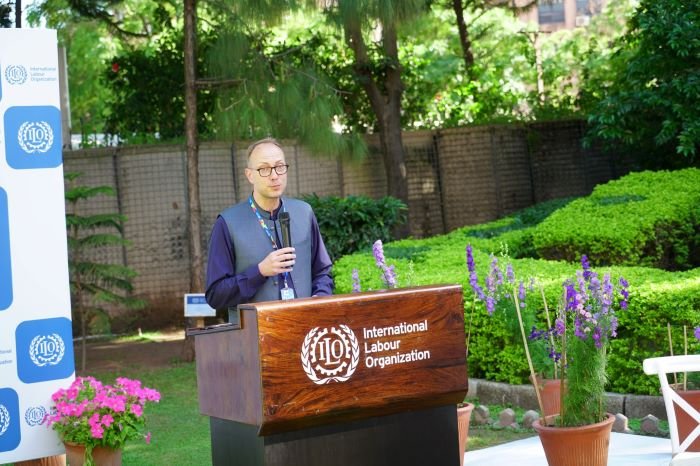
Geir Tonstol, Country Director, ILO Pakistan, emphasized that restoring employment and livelihoods must remain central to the recovery response. “The floods have deepened economic vulnerability for already at-risk communities and emphasized the need for timely measures that support decent work, income recovery, and promote long-term resilience to climate-induced disasters” he said.
He also highlighted the need to revive the World of Work Crisis Response Strategy developed in the aftermath of the 2022 floods, so that future disaster responses can be more coordinated, timely, and centred on the protection and recovery of employment and livelihoods.
The Ministry and the ILO reaffirmed their commitment to working together with employers’ and workers’ organizations and other stakeholders to support flood-affected communities and promote recovery through sustainable employment and livelihood interventions.

Sohail Majeed is a Special Correspondent at The Diplomatic Insight. He has twelve plus years of experience in journalism & reporting. He covers International Affairs, Diplomacy, UN, Sports, Climate Change, Economy, Technology, and Health.