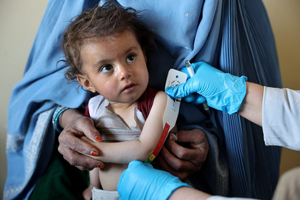
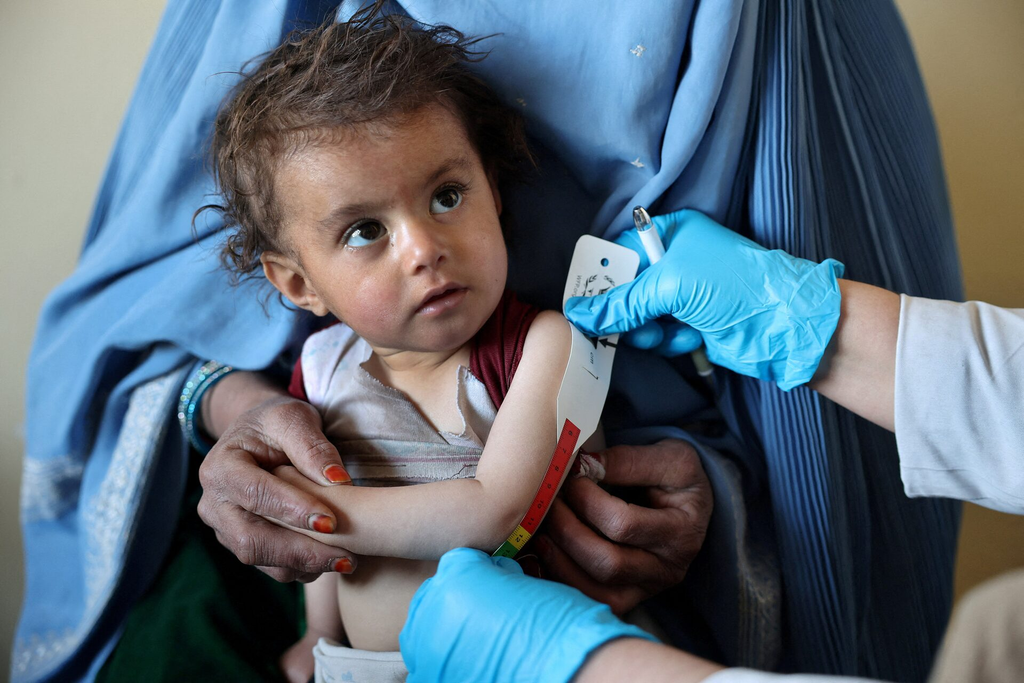
Kabul (GNP): Nearly 15.9 million people in Afghanistan are facing crisis-level food insecurity, the United Nations Children’s Fund (UNICEF) said on Sunday. The agency added that malnutrition reached its highest recorded level between August and October.
The figure equals 32 percent of the population. Of those affected, 3.4 million people are experiencing emergency levels of hunger. UNICEF said economic pressures and cuts in humanitarian assistance have limited families’ access to food.
The outlook for the coming months is worse. UNICEF forecast that the number of people facing severe food insecurity will rise to 19.2 million during the winter season, from November 2026 to April 2027. Five million of them are expected to face emergency levels of hunger.
Children are among the most exposed. UNICEF said more than four million children aged between six and 59 months will need treatment for severe acute malnutrition in 2027. Disease outbreaks, poor water and sanitation conditions, and reduced access to nutrition services are also worsening malnutrition across the country.
Also Read: Saudi Health Drive Sets New Guinness World Record in Fight Against Diabetes
Other pressures add to the strain. The agency said climate-related disasters and growing health threats, including polio, have further compounded people’s difficulties. It noted that food insecurity and malnutrition had already worsened the humanitarian situation in September.
Rising needs are now making aid delivery harder. UNICEF said the growing scale of humanitarian needs has made it increasingly difficult to assist vulnerable people in Afghanistan.
Funding remains the central gap. UNICEF said about $1.71 billion is needed to meet Afghanistan’s humanitarian needs in 2026. By the end of September, 67 percent of the required funding had yet to be secured.

Managing Editor at Global News Pakistan (GNP), with a Bachelor's degree in International Relations from Riphah International University, graduated with a Gold Medal. Reach out at sabahtareengnp@gmail.com