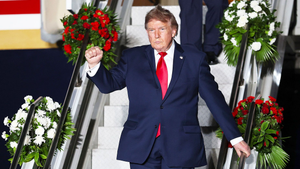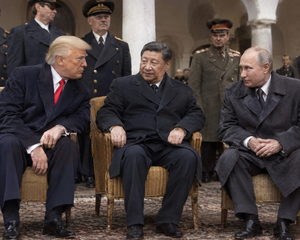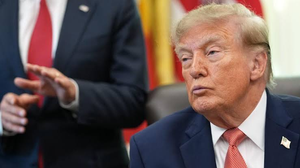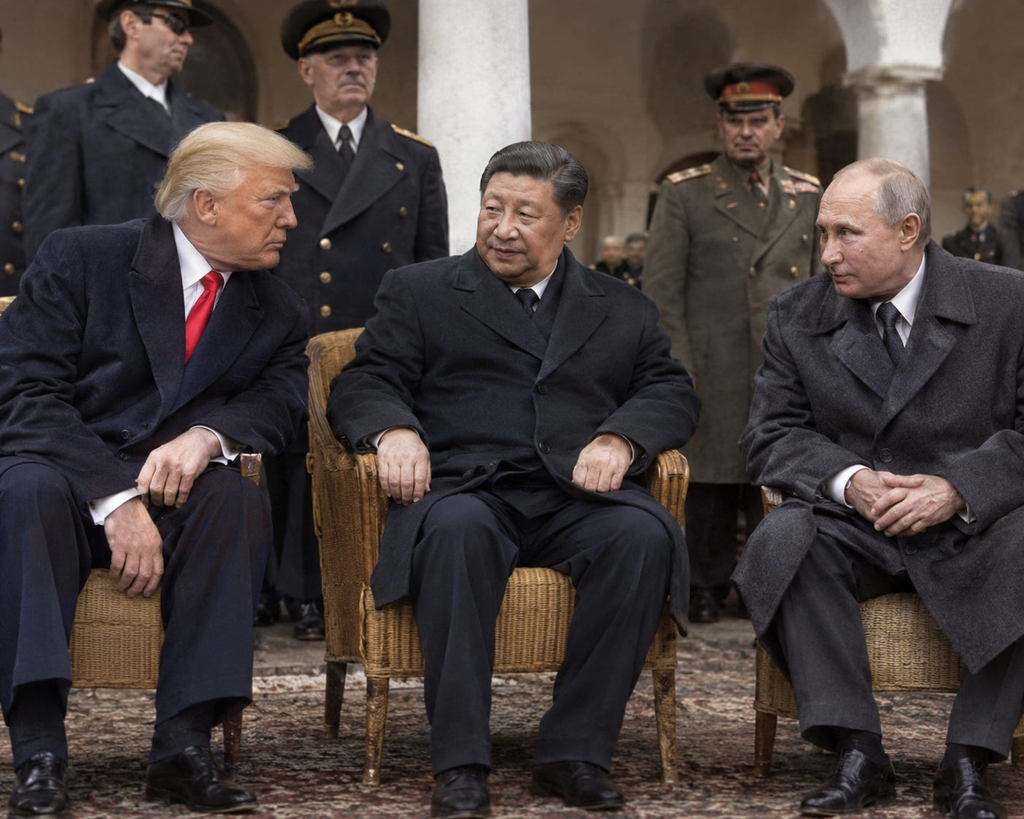
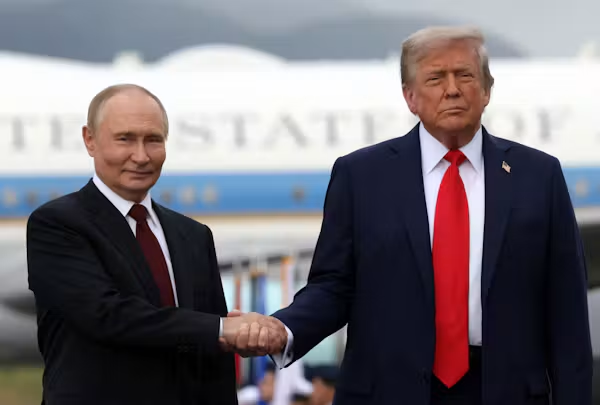
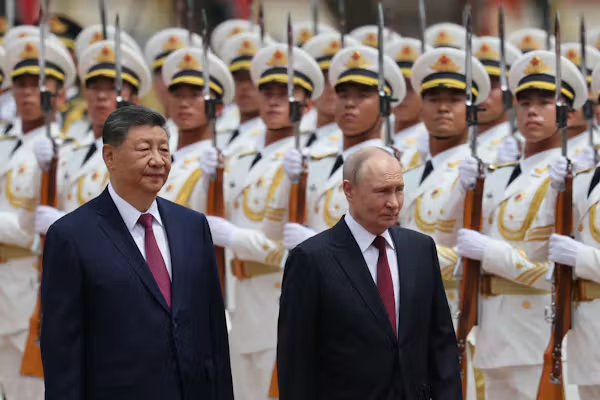
Shenzhen (GNP): US President Donald Trump, Chinese President Xi Jinping and Russian President Vladimir Putin are meeting on Thursday on the sidelines of the Asia-Pacific Economic Cooperation (APEC) summit in Shenzhen, China.
The meeting gives the leaders of the world’s three major powers a rare opportunity to exchange views directly on global issues. China’s Foreign Ministry described the summit as having “groundbreaking significance.”
The ministry said the three leaders would exchange views in depth on safeguarding world peace and promoting strategic stability in major-power relations.
The Shenzhen meeting follows a series of high-level contacts. In May, Xi hosted back-to-back visits by Trump and Putin in Beijing. Trump hosted Xi in Washington in September and met Putin in Alaska last year.
Analysts say these meetings point to a shift away from the post-Cold War focus on global institutions and multilateral consultations. They describe a more personalized form of great-power management, with China, Russia and the US acting as an informal steering committee for global affairs.
The summit has drawn comparisons to the 1945 Yalta conference, when US, British and Soviet leaders met to divide the world into spheres of influence after the Second World War. Analysts caution that the comparison is imperfect, noting that the three countries are not formal allies and remain strategic competitors.
Europe is the region most affected by the trend. Russia and the US recently concluded a third round of peace talks this year in Abu Dhabi aimed at ending the Ukraine war. Ukraine took part in the discussions, but European negotiators did not.
During last week’s talks, the Russian delegation made clear it wanted a new security framework for Europe modeled on the Cold War spheres of influence. Trump has also flagged this as a possibility. He said Washington was working on a big deal to end the war that would include “all of Europe.”
US special envoy Jared Kushner said after the talks that Washington wanted Europe to be part of the process. He added that finding someone who could credibly speak for Europe might be harder than persuading Russia to include them.
The remarks set off alarm bells in European capitals and reinforced a perception that the continent is fragmented and increasingly marginalized in global politics.
Xi’s participation in the Shenzhen meeting is drawing particular attention. Analysts note that his decision to meet Trump and Putin, after Europe was left out of the Abu Dhabi talks, risks legitimizing that exclusion, even though Ukraine is not on the agenda.
Also Read: Nvidia Spy Scandal Casts Shadow Over Trump-Xi Summit
Beijing has previously stressed that Europe should be “at the table” for Ukraine discussions. Xi has also repeatedly emphasized multipolarity and criticized Cold War-style politics dominated by a few major powers.
Europe remains one of the world’s largest economic and technological centers. Analysts say it has struggled to turn that weight into a unified strategic voice on the global stage.
Middle powers hold a different set of tools. European nations, Canada, Australia, Japan, South Korea and key Southeast Asian countries lack the military strength to alter the global balance of power. They do have institutions, networks and coalitions that can help shape international rules and build partnerships capable of constraining larger states.
Analysts say the concentration of power among a few leaders increases the incentive for middle powers to work together. They are unlikely to set the overall direction of the world order, but they can still influence the rules and norms through which it operates.
Canadian Prime Minister Mark Carney has called for closer middle-power cooperation. He said the time had come “to stop pretending, to name the reality.”

Managing Editor at Global News Pakistan (GNP), with a Bachelor's degree in International Relations from Riphah International University, graduated with a Gold Medal. Reach out at sabahtareengnp@gmail.com