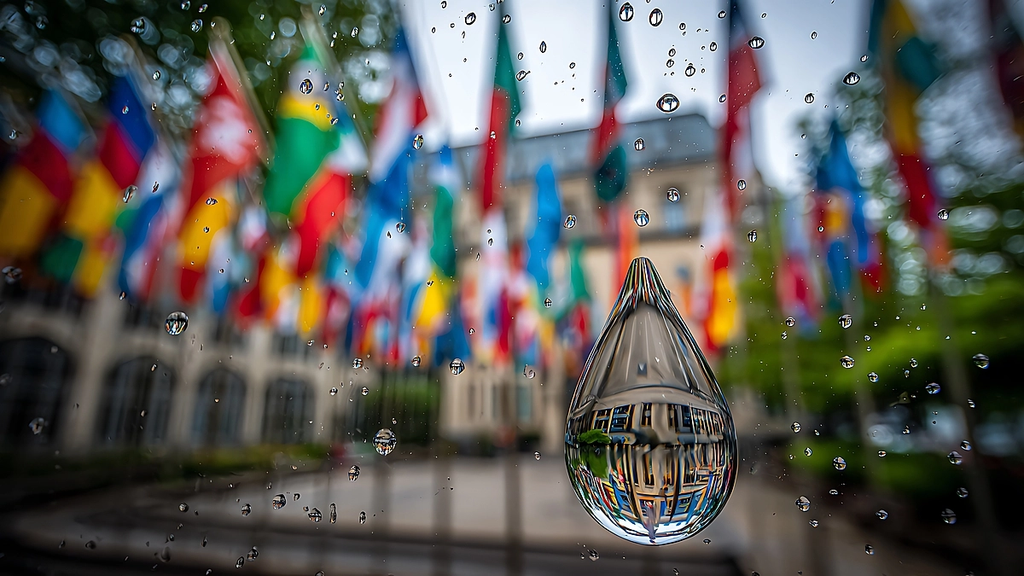
Over the 35 years of independence, Tajikistan has strengthened its position on the international stage by consistently pursuing a foreign policy based, in particular, on the effective use of soft power tools. One of the priority areas chosen by the Tajik government is water diplomacy. Through this tool, Tajikistan seeks to encourage both small and large states to seek diplomatic solutions to problems related to drinking water, the rational use of water resources, seawater, and other water issues.
Water diplomacy is central to Tajikistan’s foreign policy strategy, emphasizing its role as an active initiator of international cooperation in water resources management. This activity aims to leverage the country’s natural resources to enhance its authority on the international stage and implement the concept of “soft power.” Tajikistan possesses some of the largest freshwater reserves in the region, formed by glaciers and snowpack. This makes the country a key player in water resource management in Central Asia.
The transboundary nature of major rivers, such as the Amu Darya and Syr Darya, requires coordinated actions with neighboring countries. Effective water resource management contributes to conflict prevention and the development of good-neighborly relations. Accelerated glacier melting and increasing water scarcity require active measures at the international level. Tajikistan plays a leading role in promoting initiatives aimed at addressing these issues.
Tajikistan’s key initiatives and achievements in water diplomacy:
- In 2003, at Tajikistan’s initiative, the UN declared the “International Year of Freshwater.” This initiative marked the first step in the country’s active water diplomacy.
- From 2005 to 2015, the International Decade for Action, “Water for Life,” was held to raise awareness of water resource issues.
- In 2018, a new Decade for Action, “Water for Sustainable Development” (2018–2028), proposed by Tajikistan, began. This initiative aims to address water resource issues and promote sustainable development.
High-level international conferences on sustainable water management are held annually in Dushanbe. One of the key conferences was the 2022 conference, which resulted in the adoption of a final declaration focusing on universal access to clean water. Together with the Netherlands, Tajikistan organized the UN Water Conference (2023) in New York, a large-scale event dedicated to global water issues, drawing the world’s attention to this cause.
Also Read: U.S.-Iran Conflict Escalates, Fears of Wider War Grow
In 2024, Tajikistan continued to develop water diplomacy. In June 2024, the Third International Conference on the International Decade for Action, “Water for Sustainable Development,” was held. The event brought together representatives from various countries to discuss practical solutions in water resources management.
President Emomali Rahmon addressed the conference, emphasizing the key role of water for sustainable development and the need for international cooperation in the face of climate change. A collection, “Emomali Rahmon’s Water Diplomacy,” was published, systematizing Tajikistan’s key achievements in this area, including key UN resolutions and initiatives related to the water agenda.
Water diplomacy remains not only an instrument of Tajikistan’s foreign policy but also an important mechanism for advancing its interests internationally. Tajikistan demonstrates how natural resources can be used to strengthen peace, sustainable development, and global partnership.
Water diplomacy ranks high among the country’s foreign policy priorities, as Tajikistan possesses significant water resources, which play a vital role in Central Asia. Promoting the rational use of water resources and participating in regional initiatives for their joint management allow Tajikistan to strengthen relations with neighboring states and demonstrate leadership in sustainable development. This combination of cultural, tourism, and diplomatic potential provides the country with powerful tools for achieving strategic goals, contributing to stronger international cooperation and stability.
Sanavbarbonu Vokhidova
Sanavbarbonu Vokhidova, Doctor of Historical Sciences, Professor, Head of the Department of Europe, Institute for the Study of Asian and European Countries, National Academy of Sciences of Tajikistan