
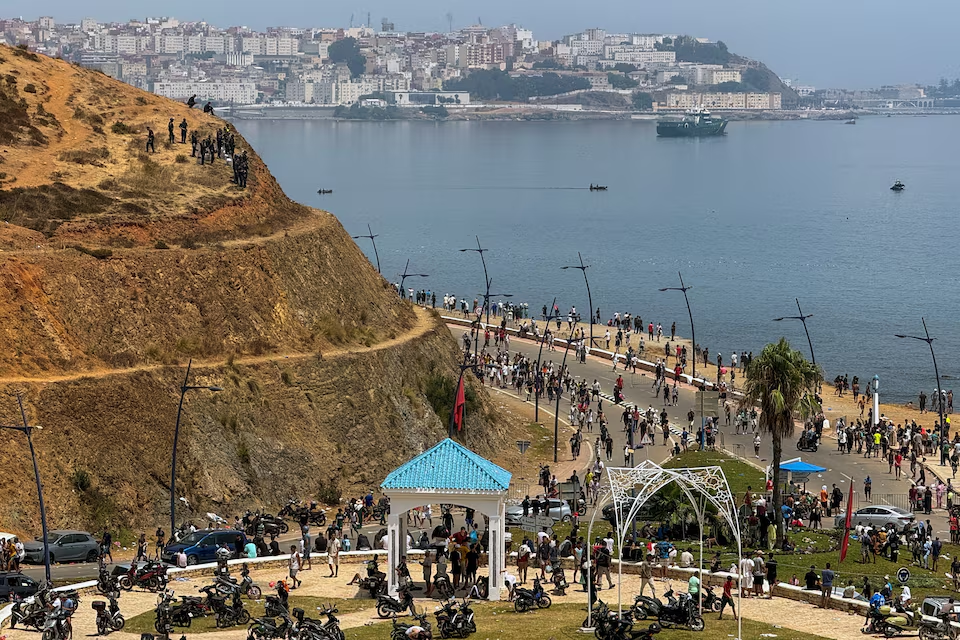
Spain (GNP): Spanish authorities said Friday that the majority of migrants who crossed en masse into the North African enclave of Ceuta earlier this week are now returning to Morocco, after a surge that Spain’s Interior Ministry estimated brought roughly 50,000 people across the border since Thursday morning, with local officials in Ceuta putting the figure as high as 60,000.
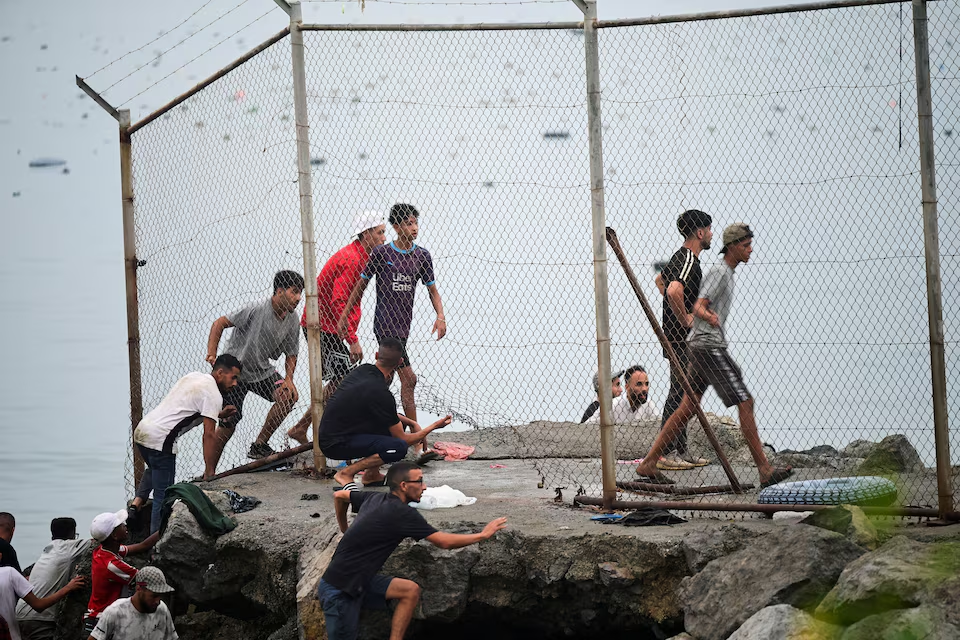
The Spanish government’s representative in the enclave confirmed that 57 bodies had been recovered on the Spanish side of the border, with authorities cautioning that additional casualties may have occurred on the Moroccan side, attributing the deaths to drowning and crush injuries suffered as crowds attempted to climb the breakwater supporting the border fence.
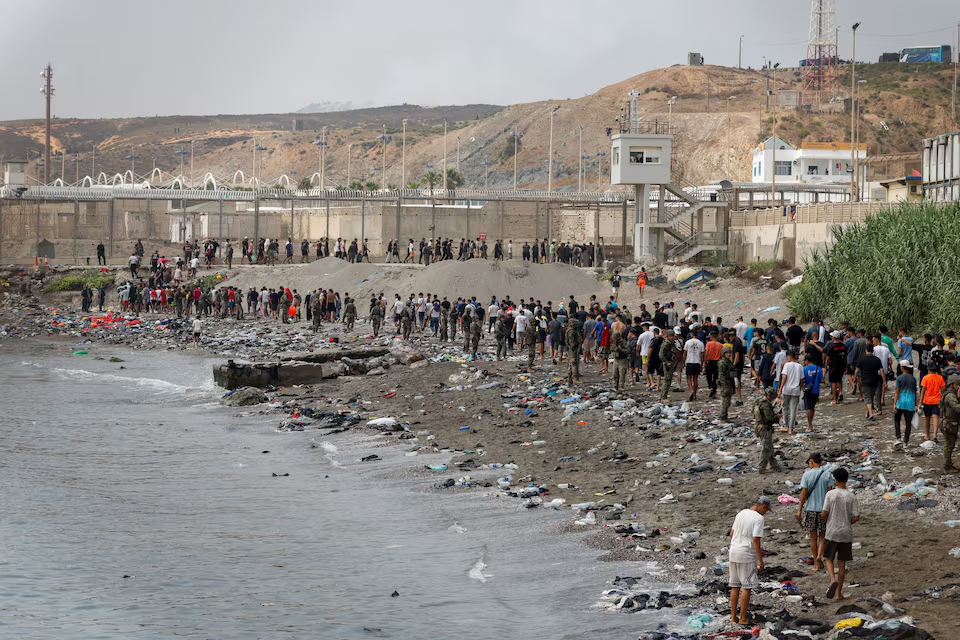
By Friday evening, Spain’s Interior Ministry said roughly 48,300 of those who had entered had already gone back voluntarily, describing conditions inside Ceuta, including shortages of food and shelter, as a factor driving the return.
Several migrants told reporters they had left Morocco without fully weighing the difficulty of the crossing or what awaited them, with one young man from Tangier saying he had gone without food since the previous day and had decided to head back. Ceuta’s local government head, Juan Jesus Vivas, noted that the number of arrivals amounted to a substantial share of the city’s roughly 83,600 residents, and officials estimated that at least 7,000 of those who entered over the preceding 24 hours were minors.
Spanish Prime Minister Pedro Sanchez travelled to Ceuta on Friday, where he described the crossing as a violation of Spain’s territorial sovereignty and said his government was accelerating the removal of those who had entered unlawfully, with cooperation from Moroccan authorities.
Sanchez attributed the surge to trafficking networks that he said had deliberately misread a recent ruling by Spain’s Supreme Court, which found that migrants intercepted at sea while attempting to reach Ceuta or Melilla cannot be automatically turned back at the border, a decision Spanish officials say does not prevent their eventual expulsion. He said his government would examine whether to reinforce the border with Morocco going forward.
The scale of the crossing exposed gaps in border security on both sides. Spain’s Guardia Civil police association said too few officers had been stationed along the fence to contain Thursday’s surge, while on the Moroccan side, security forces used tear gas, batons and water cannon in an attempt to disperse crowds still gathering at the border gates in the town of Fnideq, where vehicles were set alight during the clashes. Spain has since deployed military vehicles and personnel to reinforce the border at Ceuta and at its sister enclave, Melilla, which separately recorded several hundred crossings overnight.
The incident quickly became a matter of wider European diplomatic tension. Italy announced it was suspending the Schengen zone’s border-free arrangement with Spain, a measure that will primarily affect air travel between the two countries given the absence of a shared land border, prompting Spain’s foreign ministry to summon Italy’s ambassador and reject the criticism as inappropriate between partner nations.
Responding further to criticism from fellow EU leaders, Sanchez cited Frontex data on irregular entries into the bloc between 2021 and 2026, noting that Italy recorded the highest number of crossings during that period at 478,600, ahead of the Western Balkans route at 340,600, Greece at 259,800, Spain at 234,760, and the eastern border at 48,000. He argued that while solidarity and empathy among member states remain optional, respect for European treaties and data is not, and called for the bloc to focus on unity rather than division at a moment of heightened tension.
Italian Prime Minister Giorgia Meloni described the images from Ceuta as alarming and called uncontrolled migration a security threat to Europe, a position echoed by Finland’s interior minister, while the Czech Republic’s leadership called for Spain’s Schengen membership to be temporarily suspended and Germany’s chancellor urged Morocco to take back migrants who had entered illegally. European Commission President Ursula von der Leyen said the situation needed to be resolved immediately, and Sanchez responded on social media that respect for European treaties was not optional.
The crossing also drew reaction from Washington, where US President Donald Trump characterized the events in Ceuta as alarming and linked them to broader concerns about border enforcement, while the State Department placed responsibility on Spain’s migration policies.
Also Read: FIFA scraps controversial World Cup Investment Plan
Spain had earlier summoned Italy’s ambassador over separate comments from Italy’s foreign minister linking an amnesty granted to unauthorised migrants earlier this year to increased trafficking, a claim Madrid disputed. France’s interior minister said police presence along the Spanish border would be increased significantly by Saturday, with additional aerial surveillance and train patrols.
Ceuta and Melilla, Spain’s only land borders with Africa, have periodically experienced crossing surges, but officials and residents described this week’s scale as without precedent. Data reviewed separately found that crossings into the two territories this year were already well above recent totals before this week’s events, following a marked rise from previous years. Authorities in both Madrid and Rabat continue to process returns as remaining groups on the Moroccan side attempt alternative routes along the coastline.

Managing Editor at Global News Pakistan (GNP), with a Bachelor's degree in International Relations from Riphah International University, graduated with a Gold Medal. Reach out at sabahtareengnp@gmail.com