Islamabad (GNP): Pakistan joins the international community today in expressing solidarity with victims of earthquakes and other natural disasters around the world. Prime Minister Muhammad Shehbaz Sharif’s Message on International Day in Memory of the Victims of Earthquakes, April 29, 2026.
Designated by the United Nations, this day serves not only as a reminder to honor those who lost their lives in earthquakes but also to express compassion for survivors and to strengthen global resolve in disaster preparedness and resilience.
It reminds us that mitigating the devastating impacts of natural disasters requires improved infrastructure, comprehensive planning, and widespread public awareness.
At the global level, this day underscores the importance of international cooperation. Collaborative efforts are essential for advancing early warning technologies and strengthening structural resilience.
Integrating safety standards into construction practices can significantly reduce the destruction caused by earthquakes.
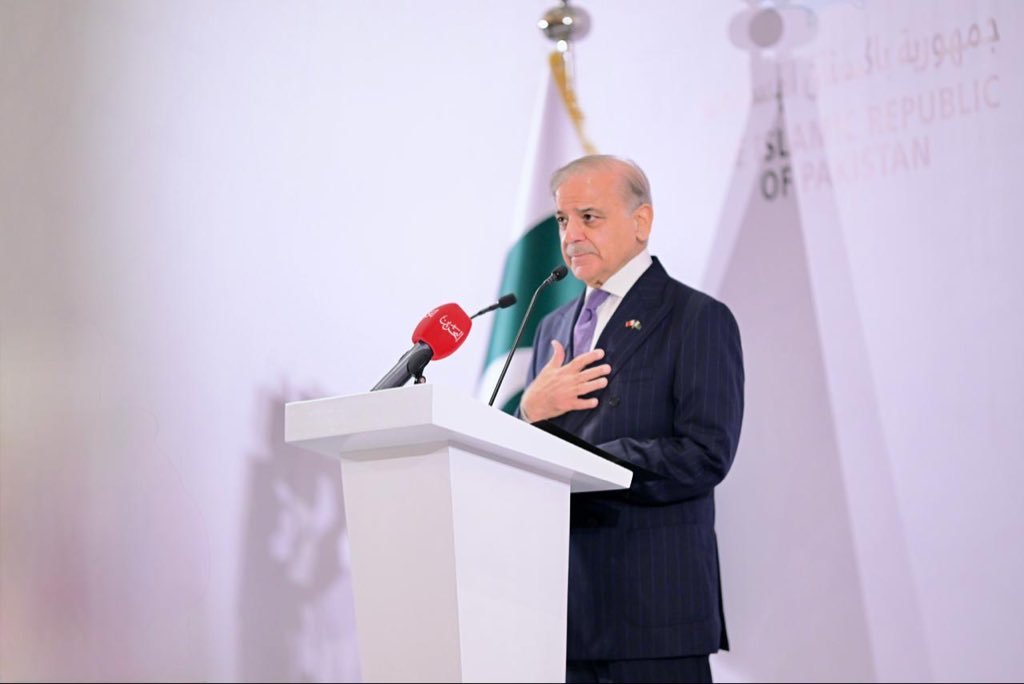
Moreover, Pakistan’s Prime Minister Muhammad Shehbaz Sharif said that the devastating earthquake of October 2005 remains deeply etched in our national memory. Over 80,000 lives were lost, and nearly 3 million people were displaced across Azad Jammu & Kashmir and Khyber Pakhtunkhwa. In a few moments, the tragedy of the 2005 earthquake left profound human, social, and economic impacts on our national memory. Yet equally memorable was the resilience, collective resolve, and courage of the countrymen, which no doubt stand as a powerful testament to the strength of the human spirit.
The National Disaster Management Authority (NDMA) report details the “catastrophic impact of the 2005 earthquake, which decimated an area of 30,000 square kilometres at the foot of the Himalayas. Hundreds of towns and villages, including Muzaffarabad and Balakot, were severely destroyed due to the widespread use of unreinforced masonry. The disaster affected up to 3.5 million people, including 800,000 women and 955,000 school children, while leaving 2.3 million survivors food insecure.”
In addition to this, NDMA added, “Assessments reveal that 84 percent of the total housing stock in Azad Jammu and Kashmir was damaged or destroyed. Beyond the official death toll of 73,000, the report highlights a critical humanitarian crisis with 79,000 injured and a staggering need for 160,000 latrines to prevent further health complications. This unprecedented destruction of over 400,000 houses and essential infrastructure underscores the massive scale of the relief and rehabilitation efforts required to stabilize the region’s vulnerable populations.”
PM Shehbaz Sharif further said in his message, In the aftermath of this catastrophe, Pakistan introduced comprehensive institutional reforms to enhance its disaster management capacity. The establishment of the National Disaster Management Authority (NDMA) marked a significant milestone in the creation of a coordinated national framework.
While earthquakes cannot be predicted, the National Disaster Management Authority (NDMA) uses historical trends, fault-line data, and geospatial technologies to identify high-risk areas. These efforts support early warning systems, infrastructure, strengthening, preparedness, and damage reduction.
Also Read: Sweden contributes US$4.17M to support UNICEF’s lifesaving work
In alignment with global initiatives, Pakistan reaffirms its commitment to the United Nations Office for Disaster Risk Reduction (UNDRR) and the Sendai Framework for Disaster Risk Reduction 2015–2030.
And Pakistan emphasizes the need for equitable access to early warning systems and the development of earthquake-resilient infrastructure.
At the national level, capacity building and public awareness remain key priorities. These include training of community first responders, integrating disaster education into the curriculum under the Pakistan School Safety Framework (PSSF), and investing in Geographic Information Systems (GIS) and satellite-based modeling.
Also Read: Reducing risk depends on early identification, President
The Government of Pakistan reiterates its commitment to building a safer and more resilient future and calls upon the international community to strengthen collective efforts through shared responsibility and cooperation.

Sohail Majeed is a Special Correspondent at The Diplomatic Insight. He has twelve plus years of experience in journalism & reporting. He covers International Affairs, Diplomacy, UN, Sports, Climate Change, Economy, Technology, and Health.