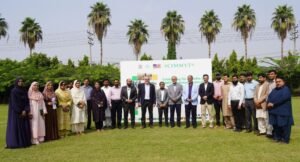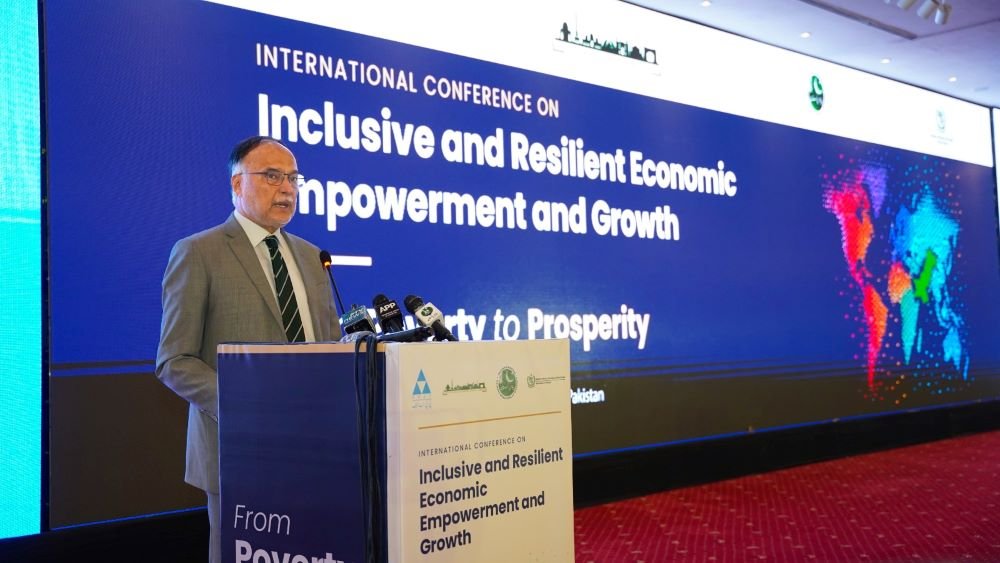
Islamabad (GNP): Federal Minister for Planning, Development and Special Initiatives, Ahsan Iqbal, has said that poverty reduction, human capital development and improvements in social indicators must remain at the forefront of Pakistan’s national priorities to build a sustainable and competitive economy. Ensuring that the benefits of development reach every citizen and region, while providing equitable access to economic opportunities, is essential for the country’s long-term prosperity.
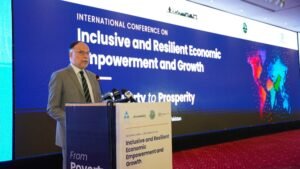
Representing Prime Minister Muhammad Shehbaz Sharif at an international conference on inclusive and resilient economic empowerment and growth, themed “From Poverty to Prosperity,” the Federal Minister said poverty was not merely a lack of income but also reflected limited access to education, healthcare, nutrition and decent employment. Expressing concern over the rising poverty rate and weak social indicators in Pakistan, he stressed that addressing these fundamental challenges was essential for sustainable national development.
Ahsan Iqbal noted that approximately 25 million children in Pakistan were out of school, while the rate of child stunting stood at around 40 percent. He emphasized that Pakistan could not compete effectively in the global economy without significant improvements in education, healthcare and nutrition.
Investment in early childhood development, quality education and human capital, he said, was fundamental to the country’s future economic growth.
The Federal Minister stressed that the government’s focus must go beyond measuring poverty levels to enabling people to graduate out of poverty and achieve economic self-sufficiency. He said efforts were being intensified to advance this objective through greater engagement and coordinated action among all relevant stakeholders.
He observed that sustainable poverty reduction required more than financial assistance or the provision of productive assets to vulnerable families. It also demanded access to skills development, business capital, markets and reliable livelihood opportunities.
He underscored the importance of women’s economic empowerment, employment opportunities for young people and the role of universities in supporting the development of local communities.
Prof. Ahsan Iqbal said the government sought to link poverty alleviation initiatives with evidence-based policymaking, measurable outcomes and effective monitoring. The ultimate objective, he added, was to ensure stable incomes, increased savings, improved nutrition and a better quality of life for vulnerable households.
Highlighting regional disparities, the Federal Minister called for prosperous districts to become partners in the development of underdeveloped areas, promoting a transition from self-sufficiency towards greater self-reliance.
He pointed out that 11 of Pakistan’s 20 poorest districts were located in Balochistan, underscoring the need for collective efforts to mobilize resources and strengthen local capacities to reduce regional inequalities and ensure that development benefits reached all parts of the country.
Also read: President Receives Credentials from Norwegian, Azerbaijani and Swiss Ambassadors
The Federal Minister urged conference participants to develop practical recommendations and a comprehensive roadmap for achieving sustainable poverty reduction, scaling up effective development interventions and delivering tangible improvements in the living conditions of vulnerable families.

Sohail Majeed is a Special Correspondent at The Diplomatic Insight. He has twelve plus years of experience in journalism & reporting. He covers International Affairs, Diplomacy, UN, Sports, Climate Change, Economy, Technology, and Health.