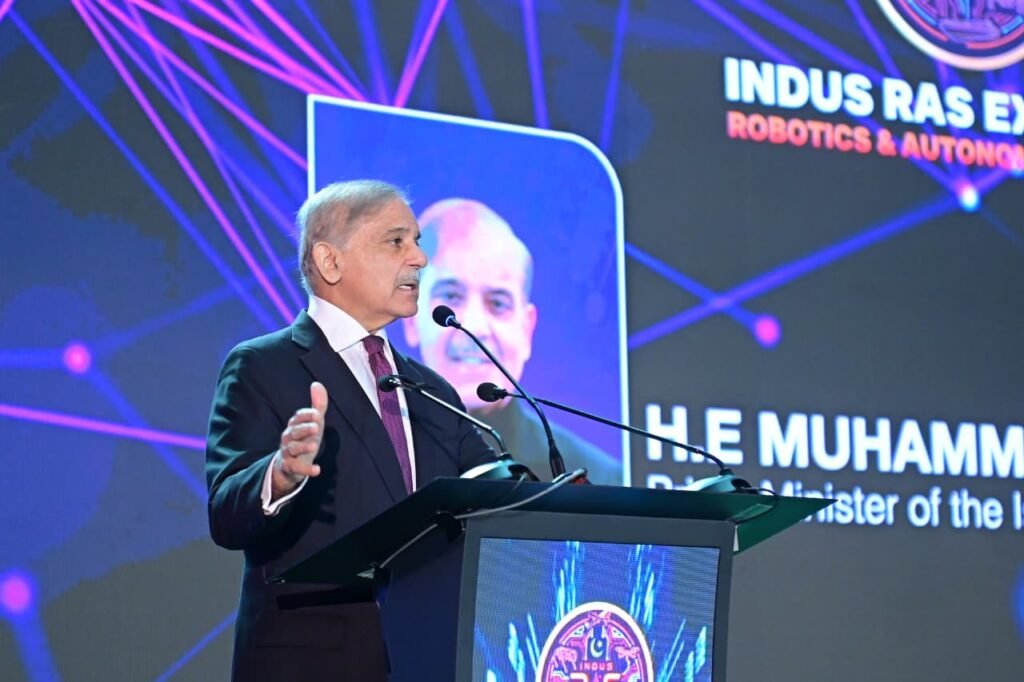
Islamabad (GNP): Prime Minister Shehbaz Sharif officially opened the Indus Robotics and Autonomous Systems (RAS) Expo 2026 at the Pak-China Centre, using the occasion to call on Pakistan to embrace technological progress in a way that benefits all segments of society.
He called for closer integration between universities, research institutions, startups, industry, and the agriculture sector, urging that the knowledge driving new technologies be developed and owned domestically.
He said the robotics and automation revolution shouldn’t be limited to wealthy nations, large companies, or major urban centers, but should instead drive inclusive growth that reaches farmers, small businesses, women entrepreneurs, and underserved communities across Pakistan and the broader developing world.
Call for Responsible Innovation
Sharif noted that as emerging technologies grow more powerful, so too does the responsibility to manage them carefully, calling for clear regulatory and ethical guidelines to ensure autonomous systems remain safe, transparent, and beneficial to society. He reaffirmed the government’s commitment to fostering innovation while ensuring these technologies are deployed responsibly and inclusively.
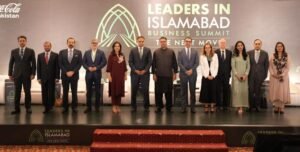
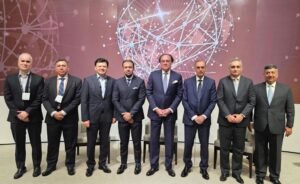
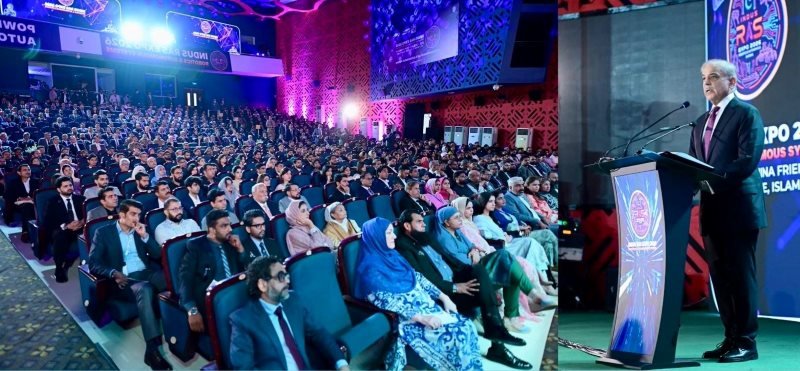
The event was attended by Chief of Defence Forces and Army Chief Field Marshal Syed Asim Munir, federal ministers, industry experts, entrepreneurs, foreign delegates, and students.
New Government Initiatives Announced
During his remarks, the prime minister unveiled two major initiatives: the “Spark and Elevate” programme, aimed at converting Pakistani research into globally competitive technology enterprises and high-value jobs, and the Pakistan Venture Fund, launched with an initial $20 million commitment to support investment in the country’s tech ecosystem.
Sharif described Pakistan’s push into robotics and automation as more than a technological story, framing it instead as a reflection of the ambition and resilience of the country’s roughly 250 million people — particularly its youth — whose creativity, he said, would help shape the nation’s future. He expressed confidence that Pakistan stood at a pivotal moment it could not afford to miss, emphasizing the country’s determination to chart its own path through innovation and self-reliance.
He called the RAS Expo a landmark event reflecting Pakistan’s ambition to become a serious player in defining technologies of the 21st century, building on momentum from the earlier Indus AI Summit held this year, which brought together government, industry, and research stakeholders to shape the country’s approach to artificial intelligence.
Applications Across Sectors
Sharif spoke about how emerging technologies have already transformed Pakistan’s agriculture sector, helping address longstanding challenges such as water scarcity and unpredictable climate conditions, while also aiding disaster response efforts in areas where infrastructure has been destroyed.
He also highlighted Pakistan’s progress in developing indigenous autonomous defense technologies, noting that the armed forces, under Field Marshal Munir’s leadership, have adopted advanced systems — including simulators fully manufactured in Pakistan and drones that have reached over 60% domestic production. He credited the country’s IT sector professionals and experts for contributing to these advances, and referenced last year’s Marka-e-Haq conflict as a demonstration of Pakistan’s growing capability in both physical and cyber defense through autonomous systems, crediting the leadership of Air Chief Marshal Zaheer Ahmed Babar Sidhu and Naval Chief Admiral Naveed Ashraf alongside Munir. He said these military advancements would continue to strengthen national security and resilience against future threats.
Also read: NDMA issues nationwide alert for widespread rainfall
IT Minister’s Remarks
Earlier in the event, IT Minister Shaza Fatima Khawaja said nations that lead in emerging technologies will shape the future global economy, stating that Pakistan aims to build full domestic value chains in robotics and AI as part of a broader push toward technological self-reliance.
She said the government’s Digital Nation Pakistan initiative treats technology not merely as an economic tool but as a core driver of productivity and competitiveness, and pointed to recent progress as evidence — including a nearly 21% increase in ICT exports this year, a 14-place improvement in the UN’s E-Governance Development Index, and a 27-place jump in the ITU’s ICT Development Index.

Sohail Majeed is a Special Correspondent at The Diplomatic Insight. He has twelve plus years of experience in journalism & reporting. He covers International Affairs, Diplomacy, UN, Sports, Climate Change, Economy, Technology, and Health.