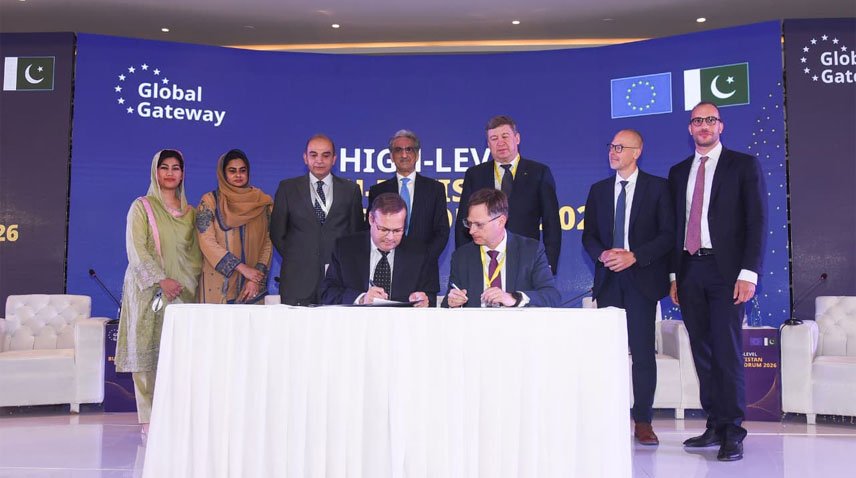
The EIB’s development arm returns to Pakistan after a decade with EUR 160 million for housing and water projects
EIB Global credit for the Sindh housing project totals €100 million, supporting the world’s largest ongoing reconstruction programme to rebuild 2.1 million flood-damaged homes in Sindh province
Loan of €60 million covers *construction of filtration plants to provide drinking water to Karachi
Islamabad (GNP) :- Pakistan and the European Investment Bank have entered into a €100 million agreement aimed at enhancing climate resilience. The deal marks an important step toward supporting sustainable recovery efforts, particularly in vulnerable regions.
Under this agreement, the Government of Pakistan will receive €100 million in financing for the Sindh Flood Emergency Housing Reconstruction Project. The initiative is designed to help rebuild homes and restore communities affected by recent floods, while also improving long-term resilience to climate-related disasters.
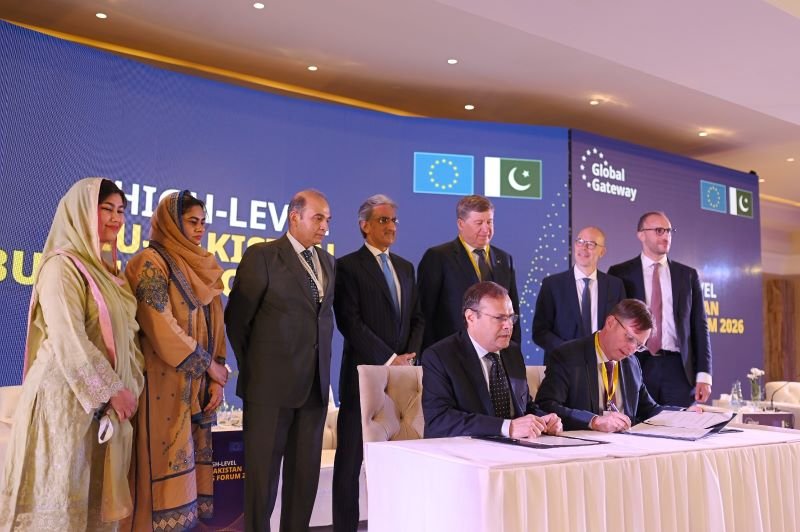
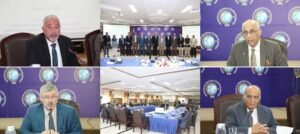
The agreement was formally signed by Federal Secretary for the Ministry of Economic Affairs Muhammad Humair Karim Kidwai and a senior representative of the European Investment Bank on the sidelines of the EU-Pakistan Business Forum held in Islamabad.
Projects form part of Global Gateway, the European Union’s external investment strategy for sustainable development.
The European Investment Bank’s international development arm, EIB Global, is committing a total of €160 million to help Pakistan rebuild homes in the southeastern province of Sindh and to improve water quality in Karachi – the country’s largest city. The pledges mark a return of EIB Global financing in Pakistan after a decade.
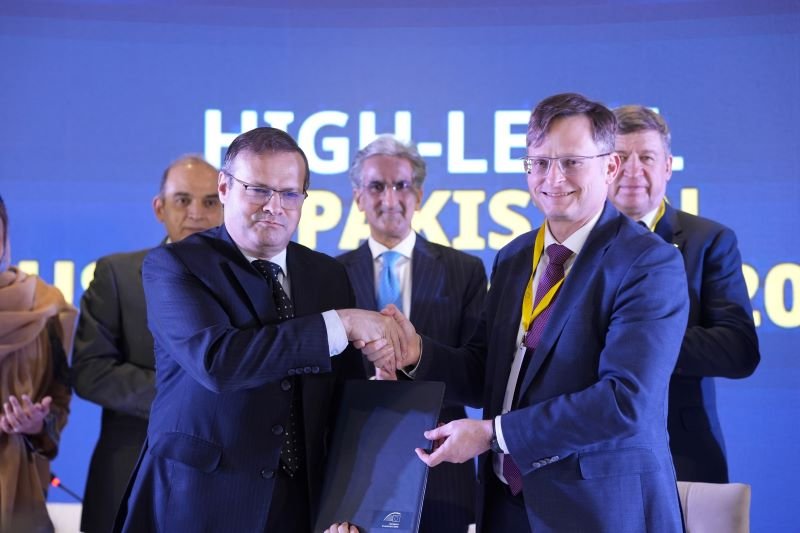
EIB Global is providing a €100 million loan to the Pakistani government for the Sindh housing initiative, which is the world’s largest ongoing reconstruction programme and aims to rebuild around 2.1 million rural homes damaged by devastating floods in 2022. The project has a total cost of almost $2 billion and covers 40% of rural households in Sindh.
EIB Global is also lending €60 million to the Pakistani government for the Karachi Water and Sewerage Corporation to build two energy-efficient filtration plants in the towns of Gharo and Pipri to the east of Karachi. As a result, Karachi – the capital of Sindh province with a population of more than 20 million – will be supplied with about 300 million litres of clean drinking water per day, enough to meet the needs of 2.2 million residents.
EIB Global and the Pakistani government announced the two loan agreements today during a European Union–Pakistan business forum in Islamabad. The EIB financing forms part of the EU’s “Global Gateway” strategy to mobilise €400 billion of investments in the 2021-2027 period.
“Through our support for the Sindh housing programme and the Karachi water initiative, we are helping Pakistan strengthen climate resilience, improve access to safe drinking water and support inclusive, sustainable development, particularly for the most vulnerable people,” said EIB Vice-President Nicola Beer. “This also marks an important step as the EIB resumes financing in Pakistan after a decade, reaffirming our commitment to support climate resilience and inclusive recovery.”
“The European Union and Pakistan are building a partnership that delivers real improvement in people’s lives – supporting safe homes and access to clean water for communities in Sindh and Karachi. Through Global Gateway, we are investing in quality infrastructure to boost long-term health, safety and prosperity,“ stated European Commissioner for International Partnerships Jozef Síkela.
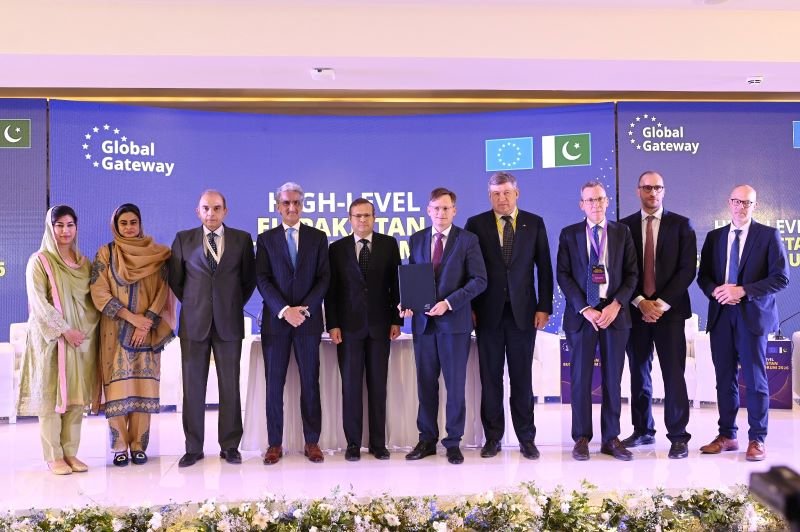
“The re-engagement of the EIB in Pakistan is critical for the country to benefit fully from the opportunities deriving from EU’s Global Gateway strategy,” said EU Ambassador to Pakistan Raimundas Karoblis.
“We are confident that, in the course of the next few years, much more de-risked investments will be agreed between the EIB and Pakistan.”
The housing-reconstruction programme in Sindh is also being supported by the World Bank, the Asian Development Bank, the Islamic Development Bank and the provincial government. Reconstruction will be based on a plan ensuring that households play a central role in rebuilding their homes in line with resilience standards that cover the risks of combined or consecutive disasters.

Sohail Majeed is a Special Correspondent at The Diplomatic Insight. He has twelve plus years of experience in journalism & reporting. He covers International Affairs, Diplomacy, UN, Sports, Climate Change, Economy, Technology, and Health.