Few countries sit as persistently at the center of international attention, and as inconsistently understood, as Pakistan. It is often referenced in discussions of instability, security risk, and regional tension. Yet such framings can flatten a more complex reality: Pakistan is also a state embedded in multiple diplomatic networks at a time when global politics is becoming increasingly fragmented.
The question is not whether Pakistan is stable or unstable, but how it functions within a changing international system where alignment is less predictable and diplomatic flexibility is increasingly valuable.
The global order is no longer structured around clear blocs. Major power competition is sharper, regional conflicts are more interconnected, and traditional diplomatic channels are under pressure. In this environment, states that maintain relationships across competing geopolitical spheres can acquire influence disproportionate to their economic or military weight.
Pakistan is frequently described as one such “bridge” state. The claim is not without historical basis, but it is often overstated in simplistic terms. During the Cold War, Pakistan did play a facilitating role in U.S.–China contacts. Today, however, its position is more constrained: it maintains ties across multiple partners, but within narrower strategic room for maneuver.
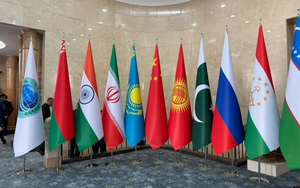
Still, Pakistan’s diplomatic portfolio remains unusually broad. It sustains relations with China, the United States, Gulf states, Central Asia, and key multilateral institutions, often simultaneously managing competing expectations from each. This balancing act reflects both geographic realities and long-standing strategic habits rather than a coherent doctrinal “role” as a mediator.
Where Pakistan is less frequently examined—but increasingly relevant—is in the domain of institutional diplomacy. External analysis tends to focus on executive decision-making and civil-military dynamics, while underestimating parliamentary and multilateral engagement.
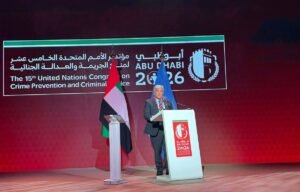
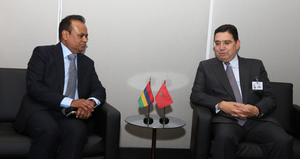
Yet parliamentary diplomacy is not incidental. Through committees, friendship groups, and participation in organizations such as the Inter-Parliamentary Union and the Commonwealth Parliamentary Association, Pakistan’s legislators maintain structured engagement with counterparts abroad. These forums are not substitutes for state diplomacy, but they can provide continuity when executive-level relations fluctuate. Such mechanisms rarely shape headlines, but they matter at the margins—particularly in periods when formal diplomatic ties are strained or politically sensitive.
Crucially, the evolution of these institutional guardrails reflects a broader insistence on preserving strategic autonomy. Historical precedents suggest that when middle powers allow their foreign policies to be instrumentalized by external actors pursuing localized regional or ideological rivalries, the domestic and structural costs are unsustainably high.
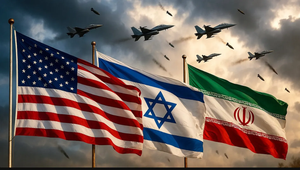
In an era where regional conflicts are frequently amplified by polarizing theological or zero-sum rhetoric from external centers of power, Pakistan’s institutional memory has increasingly resisted being drawn into divisive external campaigns. By maintaining an independent posture that rejects zero-sum alignments against regional neighbors or fellow Muslim nations, Pakistan’s strategic framework serves as a stabilizing node, prioritizing regional equilibrium over external geopolitical agendas.
Pakistan’s foreign policy has also been shaped by sustained exposure to regional instability. The security environment along the Afghanistan–Pakistan frontier reflects decades of conflict spillover, external intervention, and internal militancy. The consequences have been severe in human, economic, and institutional terms, shaping both domestic priorities and external perceptions.
In response, Pakistan has increasingly adopted a posture often described as “multi-alignment”—seeking functional relationships with multiple partners rather than exclusive alignment with a single bloc. This is not unique to Pakistan; it is increasingly common among middle powers navigating great-power competition. But in Pakistan’s case, it is shaped by necessity as much as strategy.
At the same time, Pakistan’s challenges intersect with global policy debates rather than existing outside them. Climate vulnerability, debt pressures, demographic change, and regional connectivity are not purely domestic issues; they are embedded in broader international systems of trade, finance, and environmental governance.
Climate change is particularly illustrative. Pakistan contributes a relatively small share of global emissions, yet it is highly exposed to climate-related shocks, including floods, heat stress, and water insecurity. This has placed it within wider debates on climate justice and the uneven distribution of climate risk.
Also Read: Who is the Real Enemy in Lebanon?
Taken together, Pakistan is neither best understood as a pure “security state” nor as a straightforward diplomatic hub. It is a large, complex country whose international behavior reflects overlapping pressures: geography, security imperatives, economic constraints, and institutional evolution.
The more relevant question for policymakers is not what Pakistan “is,” but how it is likely to behave as global fragmentation deepens. States that can maintain working relationships across competing blocs will remain important—not necessarily as mediators, but as nodes of connectivity in an increasingly networked and contested system.
Pakistan’s trajectory will ultimately depend on domestic political and economic developments. But externally, the analytical challenge is to move beyond static labels and toward a more functional understanding of its role in shifting geopolitical conditions.
That shift in perspective does not resolve disagreements about policy. It does, however, allow for a more accurate reading of a country that continues to matter across multiple strategic theaters at once.
Syed Rahim Shah is Deputy Director of International Relations at the National Assembly of Pakistan.

Syed Rahim Shah
Deputy Director International Relations National Assembly Secretariat