Santa Clara (GNP): Nvidia has suffered a major loss in market value after its stock dropped more than 6% in a single day, extending a two-day decline that wiped out nearly $430 billion to $470 billion in market value.
The sharp fall came after new reports alleged that CEO Jensen Huang’s relationship with a Chinese businesswoman, Alice Huang, helped facilitate at least $7.5 billion worth of Nvidia chip shipments to China.
The controversy has now turned from a personal matter into a serious issue of corporate governance, national security, and US export controls, raising questions for investors, regulators, and the US government.
Nvidia’s board has launched an internal investigation, while the FBI is separately examining whether Huang was targeted by a foreign intelligence operation.
Nvidia Stock Drops Sharply in Two-Day Wipeout
Nvidia shares fell more than 6% on Tuesday, November 10, after falling 4.3% on Monday.
The stock closed at $168.89 per share on Tuesday, bringing its total decline to around 9.5% to 10% since news of the affair broke.
The two-day selloff pushed Nvidia’s market valuation down to around $4.1 trillion and briefly allowed Microsoft to overtake Nvidia as the world’s second-most valuable company for the first time since June 2025.
Investors are worried not only about the allegations, but also about whether massive spending on artificial intelligence will deliver adequate returns.
The stock had been nearly flat this year before the reports emerged, making the sudden drop even more significant for shareholders.
Report Alleges $7.5 Billion in Chip Shipments to China
According to a report by The Information, Huang’s relationship with Alice Huang helped move about 240,000 Nvidia chips into China, including H100, H200, and some A100 chips.
The report said the shipments were worth at least $7.5 billion and went to Chinese firms, including Alibaba, Tencent, and smaller AI labs.
Alice Huang, also known as Huang Le, along with her husband and sister, reportedly built a network of companies across China and Singapore to acquire Nvidia chips despite US export restrictions.
When orders for Nvidia chips subject to US export restrictions stalled, Alice Huang allegedly used ties to Nvidia and its distributors to secure supplies.
At the centre of the network was Shanghai Century Litong, a China-based company that secured preferred cloud partner status with Nvidia in 2023, giving it priority access to the company’s chips.
The company reportedly rented computing capacity and operated data centres using Nvidia chips, including some barred from sale to China.
Who Is Alice Huang?
Alice Huang is a Chinese businesswoman who held an executive position at Megaspeed, a Singapore-registered company.
Megaspeed has been investigated by US authorities over Nvidia chip shipments from Southeast Asia to China and whether the company was helping China obtain sensitive AI chips.
The report said Alice Huang was linked to Century Litong and Megaspeed, both of which played a role in moving Nvidia chips into China.
US intelligence reportedly believes Alice Huang was recruited by China’s Ministry of State Security.
China’s foreign ministry has said the spy accusations are groundless and has denied coordinating a spy plot, calling it a smear campaign.
ALSO READ: Alzheimer’s Signs Reveals Disease May Begin Outside Brain
Alice Huang and Jensen Huang are not related, despite sharing the same last name.
Jensen Huang Admits Affair and Apologises
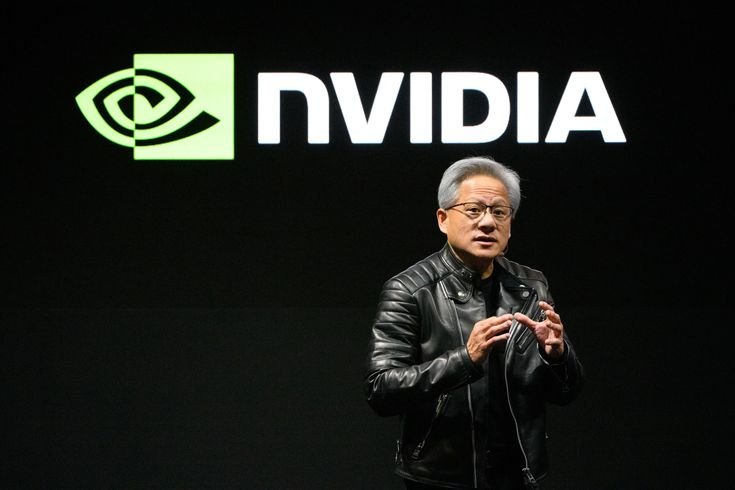
Jensen Huang, 63, has told employees he was unfaithful to his wife, but provided no details about the relationship.
In an email to Nvidia staffers on Sunday, Huang admitted to the affair and apologised to his family.
He apologised to top executives at a closed-door meeting on Monday before pivoting to business, and was back holding meetings at Nvidia’s headquarters on Tuesday.
Huang has led Nvidia for more than three decades and built it into the dominant supplier of AI chips.
He owns about 3.6% of the company, but does not have majority voting control, and runs an unusually flat organisation in which dozens of executives report directly to him.
The allegations have raised questions about the company’s dependence on its CEO and its governance structure.
Trump Was Briefed on the Affair Months Ago
The controversy escalated further after reports revealed that US President Donald Trump had been briefed about the affair months before it became public.
The New York Times reported that Secretary of State Marco Rubio had briefed Trump aboard Air Force One en route to China in May about US intelligence indicating Huang was involved with a woman believed to be a Chinese spy.
The briefing marked at least the second time in seven months that Trump had been told about the intelligence.
Trump said on Monday he had spoken with Huang and asked whether he knew the woman was a spy. Trump said Huang told him he had absolutely no idea, and that he believed the Nvidia CEO.
Axios also reported that Commerce Secretary Howard Lutnick was sent a highly classified memo warning about Nvidia CEO’s relationship with Alice Huang.
Senate Demands Answers and Tighter Chip Controls
Senate Democratic Leader Chuck Schumer demanded answers from the administration and tighter curbs on chip exports to China.
Lawmakers are concerned about how US export controls may have been bypassed and whether national security was compromised.
Nvidia CEO Jensen Huang had reportedly lobbied the US government to lift restrictions on exports to China during his relationship with Alice Huang.
In December 2025, Trump approved the sale of Nvidia’s H200 chips to China, with the federal government collecting a fee for each chip, reversing a Biden-era halt on exports over national security concerns.
The timing of the lobbying and the chip approvals has now come under fresh scrutiny.
Nvidia Board Launches Internal Investigation
Nvidia’s independent directors have hired outside counsel to investigate the matter.
The board has retained Joon Kim, a Wachtell Lipton partner and former acting US Attorney for the Southern District of New York, to lead the probe.
Nvidia has said its board has no reason to believe US national security or company secrets were compromised, and that Huang has committed to cooperating with the internal review.
However, Nvidia and Huang also face a proposed lawsuit filed in a federal court in San Jose, California, which accuses the company and its co-founder of misleading investors over failures to disclose potential national security risks linked to Huang’s affair.
The 19-page complaint filed by Rosen Law Firm cites a New York Times article from October 2025 that questioned Huang’s relationship with Alice Huang and whether Megaspeed was helping China obtain sensitive AI chips.
What This Means for Nvidia and AI Industry
The Nvidia stock drop is more than a market reaction to a CEO scandal.
It highlights three major risks for the company:
- Governance Risk: Questions about leadership, disclosure, and board oversight.
- Export Control Risk: Possible violations of US restrictions on AI chip sales to China.
- National Security Risk: Concerns that sensitive AI technology may have reached China.
As the world’s leading AI chipmaker, Nvidia plays a central role in global artificial intelligence development.
Any disruption to its leadership, supply chain, or relationship with the US government could affect the entire AI industry, from cloud companies to AI startups.
A Developing Story With Global Impact
The investigation by Nvidia’s board and the FBI is still ongoing, and more details are expected to emerge in the coming days.
For investors, the key question is whether the allegations will lead to legal action, tighter export controls, or leadership changes at Nvidia.
For policymakers, the case has become a test of how the US manages the balance between AI innovation, corporate power, and national security.
The Nvidia stock drop shows how quickly personal conduct, geopolitics, and technology can combine to shake even the world’s most valuable companies.

I am Areesha, a 3rd-year International Relations student with a strong academic focus on Foreign Policy, International Law, History of International Relations, Non-State Actors, and Diplomacy & Statecraft. With a diverse internship background including HESCO, ISPR, and a current Research and Media Newsletter internship focused on Climate and Economy, I bring a unique blend of analytical thinking, research skills, and media understanding. I am passionate about translating complex global affairs into engaging, reader-friendly, and SEO-optimized content. My academic training in IR has equipped me with excellent research, critical analysis, and structured writing skills, which I now aim to apply in the field of SEO writing and digital content creation. Seeking an opportunity as an SEO Writer Intern where I can contribute with well-researched, impactful, and search-optimized content.